Swiss Half Fare Card 2026: Price, Real Savings and When It Is Worth It
 +3
Is the Swiss Half Fare Card worth it? Yes, for most visitors who use trains, boats or mountain railways on more than two or three days. The card costs CHF 150 (about US$182) for one month and halves almost every ticket, so it pays for itself as soon as your full-fare tickets in that month add up to more than CHF 300. On a classic six-day trip from Zurich Airport via Interlaken and Lucerne it was CHF 105 cheaper than the Swiss Travel Pass and CHF 90 cheaper than single tickets. It is not worth it if you drive and only do one or two summits: on our own week by car in July 2026 it would have cost us CHF 45.50 more than the single tickets we paid. Below you find the 2026 price, a table of real savings, the break-even rule, how it combines with the Saver Day Pass and regional passes, and when the Swiss Travel Pass is the better buy. It is one of the passes in our Swiss rail pass comparison.
Swiss Activities sells the Swiss Half Fare Card as a mobile ticket for CHF 150 (Oct 2026), with the free Family Card and free cancellation up to 24 hours before.
Check Half Fare Card pricesSwiss Half Fare Card 2026 at a glance
| Price | CHF 150 (about US$182), up from CHF 120 in 2025 |
|---|---|
| Validity | One month from the start date you choose |
| Discount | 50 percent on trains, buses, boats, city transport in more than 90 towns and most mountain railways |
| Who can buy it | Only people living outside Switzerland and Liechtenstein |
| Children | 6 to 15 free with the free Swiss Family Card, under 6 always free |
| Break-even | CHF 300 of full-fare tickets within the month |
| Combines with | Saver Day Pass from CHF 29, Day Pass for Half Fare holders CHF 78, reduced regional passes |
| Not reduced | Seat reservations, for example on the Glacier Express or the Jungfraujoch |
Sources: Switzerland Tourism, Swiss Travel System, SBB, Swiss Activities, Jungfrau Railways and the operators, checked in October 2026. US dollars at 1 CHF = 1.21 USD.
- What the Swiss Half Fare Card is
- Price 2026 and what changed
- What you save: real fares
- The CHF 300 rule
- Our week: where it would have paid off
- Half Fare Card or Swiss Travel Pass?
- Combining it with day passes and regional passes
- Families, couples and dogs
- How to buy and use it
- What it does not cover
- Our verdict
- FAQ

What the Swiss Half Fare Card is
The Swiss Half Fare Card is a discount card for visitors: you pay CHF 150 once and then buy every ticket at half price for one month. It is valid on the whole Swiss public transport network, in more than 90 towns and cities and on most mountain railways.
It is the visitor version of the Swiss “Halbtax”, the half-fare travelcard that many Swiss residents carry. Residents buy a yearly subscription; visitors get a one-month card that is only sold to people living outside Switzerland and Liechtenstein. Unlike the Swiss Travel Pass, the card itself is not a ticket. You still buy a ticket for every ride, at the SBB app, a machine, a counter or the valley station of a cable car, and you simply choose the half-fare price and show the card when the conductor checks.
That sounds like more effort than a pass, and it is a little. In return you keep total freedom: no activation, no fixed travel days, no feeling that you have to ride to get your money back. If it rains on a planned summit day, you simply stay in the valley and lose nothing.
Price 2026 and what changed
The Swiss Half Fare Card costs CHF 150 in 2026, about US$182. Until the end of 2025 it was CHF 120, so the break-even point moved up by CHF 60, and many blogs and forum posts still calculate with the old price.
There is only one price: the card itself has no class, it halves first-class tickets just as well as second-class ones. It is valid for one month from the start date you pick when you buy it, so you can buy it weeks ahead and choose the day you land as the first day. Children from 6 to 15 get the free Swiss Family Card with it.
One more change to know about: Swiss public transport fares rise by 3.6 percent on average with the timetable change in December 2026. That raises the full fares you halve, but it does not change the logic below. If your trip starts in 2027, check the card price for your start date before buying.
What you save: real fares
With the card, every train, bus and boat ticket and most mountain railways cost half. On a typical first trip that means savings of CHF 30 to 70 on every long train journey and CHF 40 to 120 on every big mountain.
| Ticket (adult, 2nd class, 2026) | Full fare | With Half Fare Card |
|---|---|---|
| Zurich Airport to Interlaken Ost | CHF 77.00 | CHF 38.50 |
| Interlaken Ost to Lucerne | CHF 34.00 | CHF 17.00 |
| Interlaken Ost to Zermatt | CHF 86.00 | CHF 43.00 |
| Zermatt to Zurich Airport | CHF 134.00 | CHF 67.00 |
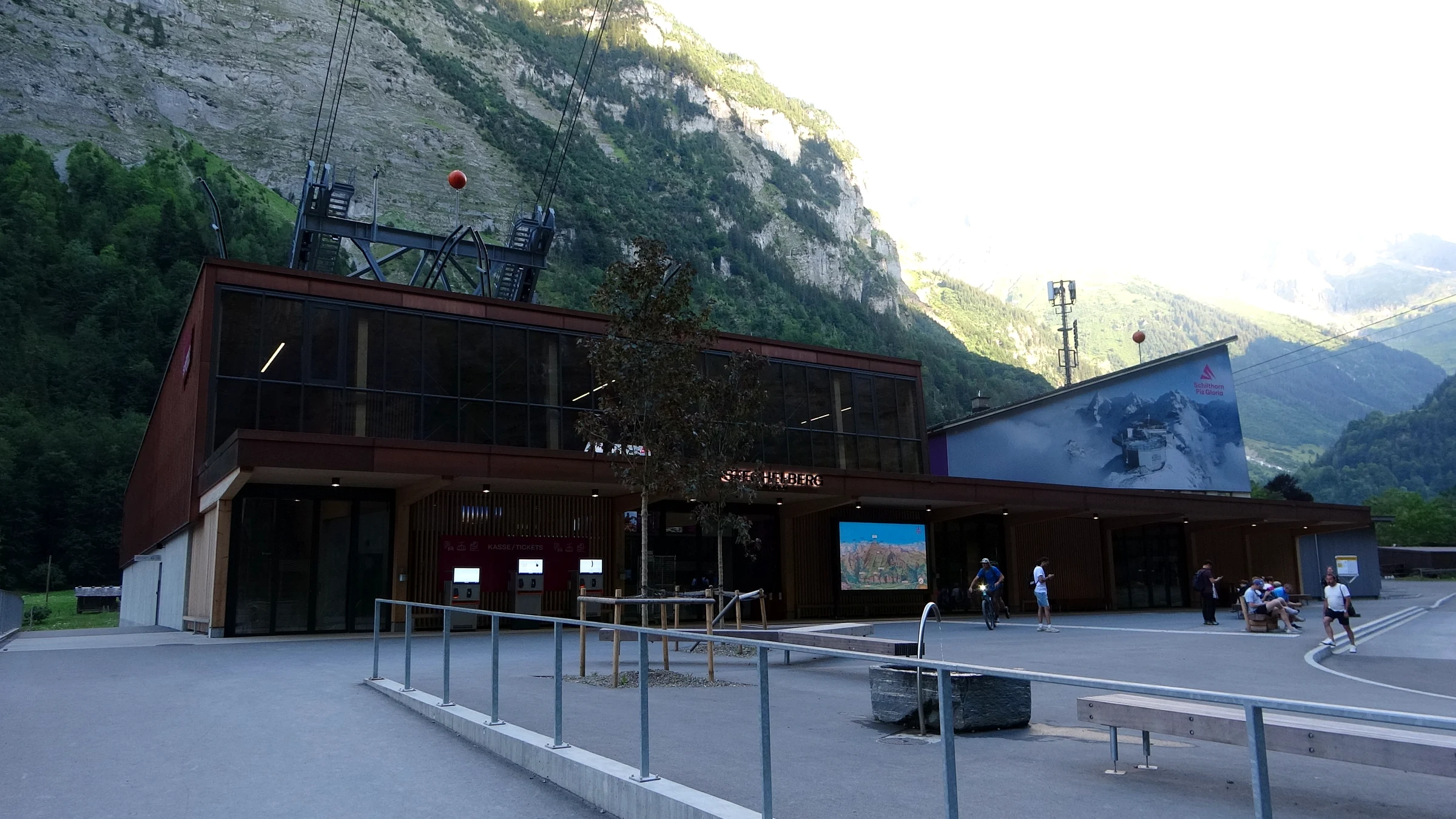
| Schilthorn from Stechelberg, return | CHF 115.00 | CHF 57.50 |
| Brienz Rothorn steam train, return | CHF 98.00 | CHF 49.00 |
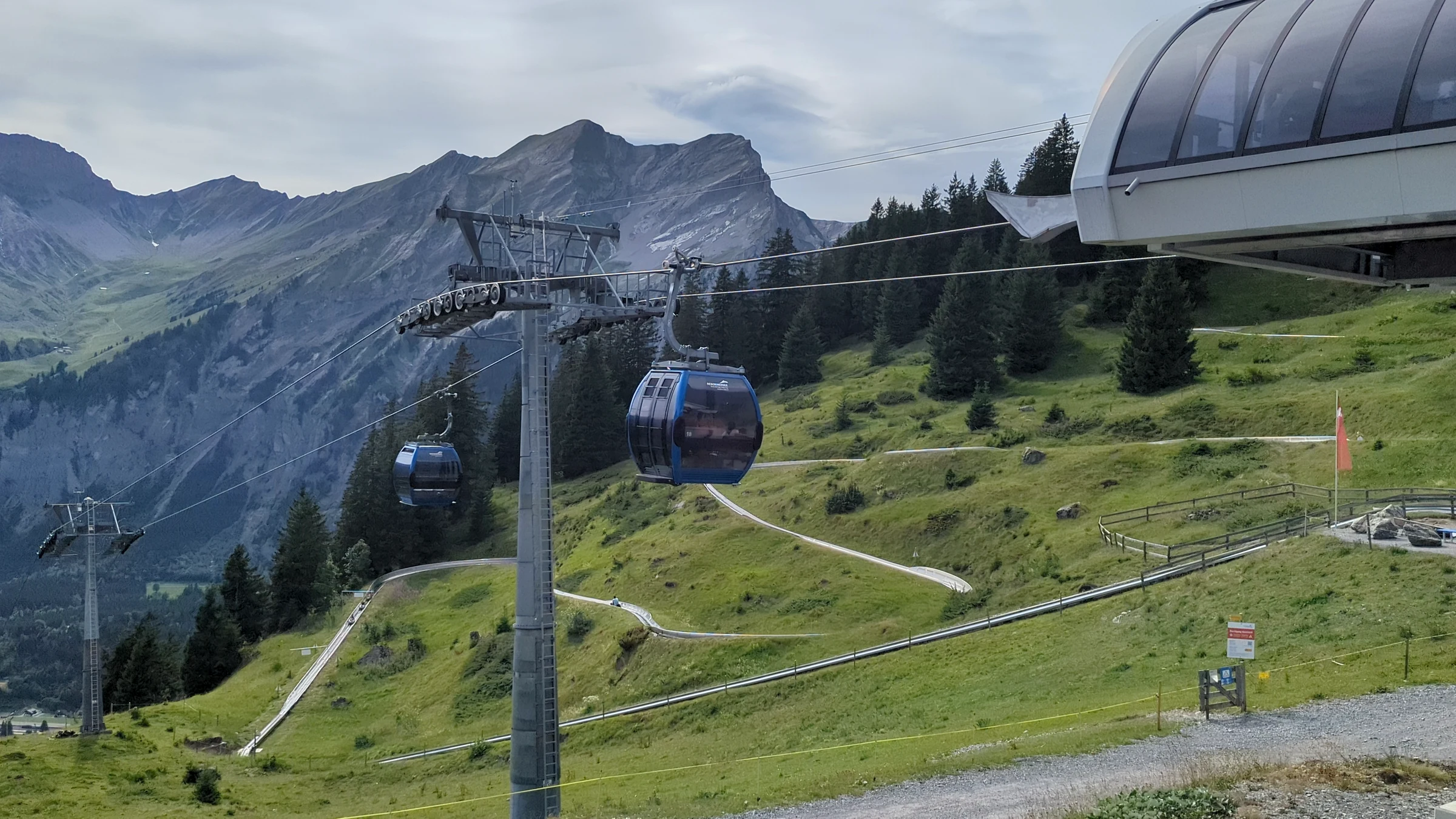
| Oeschinensee gondola, return (high season) | CHF 40.00 | CHF 22.50 |
| Lake Brienz boat day pass | CHF 75.00 | CHF 37.00 |
| Grindelwald First gondola, return | CHF 76.00 | CHF 38.00 |
| Jungfraujoch from Grindelwald Terminal, with seat reservation | CHF 249.20 | CHF 129.60 |
Train fares are SBB full fares from the online timetable for October 2026; the mountain prices come from the operators and from Swiss Activities. Two details in the table: at the Oeschinensee the discount is a little less than half, and at the Jungfraujoch the CHF 10 seat reservation is not reduced, which is why CHF 249.20 becomes CHF 129.60 and not CHF 124.60.
 PDF · 18 pages
Free PDF guide
Planning the Bernese Oberland? Don't go without this.
Our free guide, made from our own week there: the 11 places really worth your time, a ready-made 3-day route, and the pass trick that cuts the Schilthorn from CHF 115 to CHF 45.70.
- The 11 best places on one hand-drawn map, all within an hour of Interlaken
- A 3-day route that puts the Schilthorn on your clearest morning
- The ticket mistake that costs many visitors over CHF 100
- When to reach the famous Iseltwald pier before the crowds
- Every link with a QR code: use it on your phone or print it
Your free Bernese Oberland Guide
100% free · PDF straight to your inbox · Unsubscribe in one click
The CHF 300 rule
The Half Fare Card pays off when the full-fare price of everything you plan to ride within one month is more than CHF 300 per person. Below that, single tickets are cheaper; above it, every extra franc of full fare saves you fifty cents.
How to check it in five minutes: write down every train, bus, boat and mountain railway of your plan, look up the full fare in the SBB app or on the operator’s site, and add them up. Some sums for orientation:
- Arrival and departure alone: Zurich Airport to Interlaken and back costs CHF 154. Half of the way to CHF 300 is done before you see a mountain.
- One big summit: the Schilthorn (CHF 115) or the Jungfraujoch (CHF 249.20 from Grindelwald) each push you a long way past the line.
- A boat day: the Lake Brienz day pass at CHF 75 alone covers a quarter.
So for nearly everyone who arrives by train and takes at least one big mountain railway, the card pays off within the first days. The people for whom it does not pay off are those who arrive by car and use public transport only now and then.
Our week: where it would have paid off
For our own week in the Bernese Oberland from July 4 to 11, 2026, with a base in Brienz, the Half Fare Card would not have paid off by car, but it would have saved CHF 111.70 per adult without a car. In both cases, though, it was not the cheapest option.
| Our week, per adult | By car (what we did) | Same route without a car |
|---|---|---|
| Single tickets | CHF 257.00 | CHF 579.40 |
| Half Fare Card (CHF 150) | CHF 302.50 | CHF 467.70 |
| Bernese Oberland Pass, 6 days (CHF 350) | CHF 431.00 | CHF 439.00 |
| Swiss Travel Pass, 6 days (CHF 399) | CHF 539.70 | CHF 567.20 |
By car we only had six tickets: two gorges, the Trümmelbach Falls, the Oeschinensee gondola, the Rothorn cable car from Sörenberg and the Schilthorn. They added up to CHF 257, below the CHF 300 line, and the card would have halved only three of them. Without a car the train and bus rides push the total to CHF 579.40, and the card saves money, but the regional Bernese Oberland Pass saves more, because it makes the Schilthorn and the Rothorn completely free.
The lesson from our week: in one region without a car, compare the regional pass first. The Half Fare Card is the winner when you move between regions or want full flexibility.
Swiss Activities sells the Swiss Half Fare Card as a mobile ticket for CHF 150 (Oct 2026), with the free Family Card and free cancellation up to 24 hours before.
Check Half Fare Card pricesHalf Fare Card or Swiss Travel Pass?
For trips that stay in one or two regions, the Half Fare Card is almost always cheaper than the Swiss Travel Pass. The pass wins only on tours with long train journeys on most days, and even then often by little.
| Trip, per adult | Single tickets | Half Fare Card | Swiss Travel Pass |
|---|---|---|---|
| 6 days: Zurich Airport, Interlaken, Lucerne | CHF 478.40 | CHF 388.70 | CHF 493.70 |
| 8 days: Zurich, Lucerne, Interlaken, Zermatt | CHF 681.80 | CHF 490.40 to 532.40 | CHF 533.70 |
Both itineraries are calculated day by day in our guide is the Swiss Travel Pass worth it. The range for the Half Fare Card on the eight-day tour comes from the Rigi: the day pass costs CHF 84, and we could not confirm how much the card reduces it, so we calculated with half and with no discount.
The quick rule: the Swiss Travel Pass beats the card when your full-fare train, bus and boat tickets reach twice the pass price minus CHF 150. For the 6-day pass (CHF 399) that is CHF 498, or CHF 83 per pass day. Mountain railways hardly matter for this choice, because both give 50 percent on most of them. What speaks for the pass despite the price: no ticket buying at all, free museums and free rides on Rigi, Stanserhorn and Stoos. If that comfort is worth CHF 50 to 100 to you, it is a fair reason.
If you decide for the pass after all, compare the shops: the price is fixed, but in October 2026 Klook showed extra discount codes on top.
Travelling without a car? The Swiss Travel Pass covers trains, buses and boats across the country and gives discounts on many mountain railways. Our pass guide shows when it pays off. Tip: Klook often shows discount codes at checkout (in October 2026 for example 5% off orders over US$300); whether one applies to the pass you see in the cart.
Check Swiss Travel Pass prices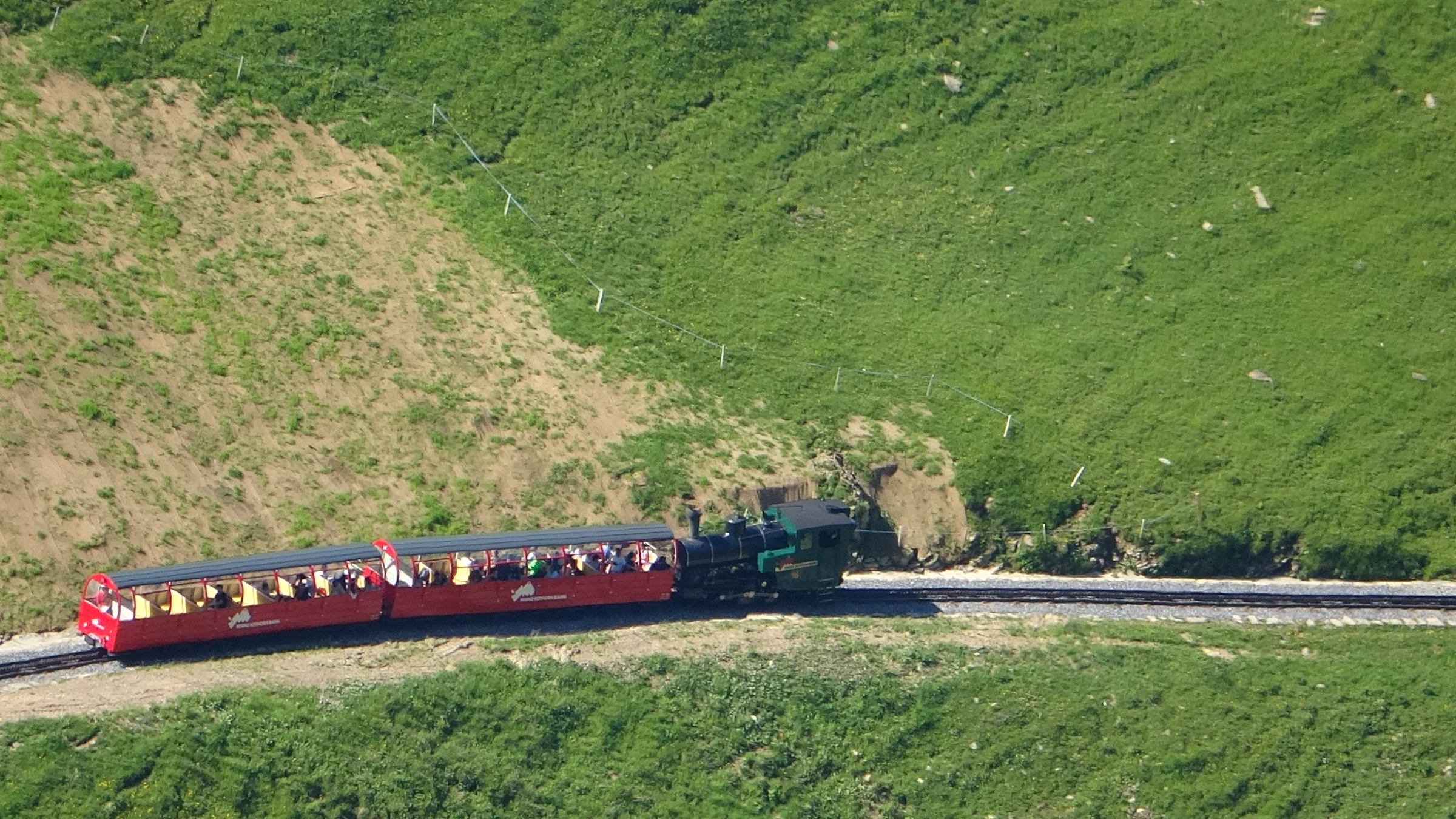
Combining it with day passes and regional passes
The card unlocks cheaper versions of three other tickets: the Saver Day Pass from CHF 29, the Day Pass for Half Fare holders at CHF 78 and the reduced regional passes. That turns the card into the base of a very flexible ticket strategy.
- Saver Day Pass: unlimited travel on one fixed day for the whole country, from CHF 29 in second class with the card instead of from CHF 52 without. Sold in price levels up to six months ahead, not refundable. Ideal for the long transfer days, such as Interlaken to Zermatt or Zermatt to the airport. More in our guide to the Saver Day Pass.
- Day Pass for Half Fare holders: CHF 78 in second class at a fixed price, available at short notice; it goes up to CHF 81 on December 13, 2026. It only pays off on very long days, for example Zermatt to Zurich Airport (CHF 67 with the card) plus a detour.
- Bernese Oberland Pass: the reduced 6-day pass costs CHF 254 instead of CHF 350. Card plus reduced pass costs CHF 404, so the combination only makes sense if you need the card anyway for other parts of a longer trip.
- Jungfrau Travel Pass: the reduced 3-day pass costs CHF 165 instead of CHF 210. Same logic as above; details in our Jungfrau Travel Pass guide.
An example of how this plays out on a two-week trip with three long transfer days: the card (CHF 150) plus three Saver Day Passes at the lowest level (3 x CHF 29) costs CHF 237, and every boat, bus and mountain railway on the other eleven days is half price. The catch is the price level of the Saver Day Pass, which climbs as the cheap contingent sells out.
Families, couples and dogs
Every adult needs their own card, but children travel free: with the free Swiss Family Card, children from 6 to 15 ride free when at least one parent has a Half Fare Card and a valid ticket. Children under 6 always travel free.
For a couple the card simply costs CHF 300 instead of CHF 150, and the break-even is the same per person. For a family it is often the best deal in the country: two cards for CHF 300, and the children cost nothing on trains, buses and boats. On many mountain railways the Family Card also applies. Order it together with the Half Fare Card, otherwise you pay for the children at the valley station.
Travelling with a dog, as we did with Miley? The card does not cover dogs. A dog needs its own ticket on trains and buses if it is taller than about 30 cm; the SBB dog day pass costs CHF 25, CHF 27 from December 13, 2026. Small dogs in a bag travel free. More in our guide to the Bernese Oberland with a dog.
How to buy and use it
You buy the Swiss Half Fare Card online as a mobile ticket or at any Swiss railway station, and it is valid from the start date you choose for one month. After that you buy each ticket at the half-fare price and show the card with your ticket.
- Buy the card online before your trip, for example from Swiss Activities (mobile ticket, free cancellation up to 24 hours before, Family Card can be added) or from the Swiss Travel System partners. You need your name, date of birth and start date. At Swiss Activities the price in October 2026 was the official CHF 150.
- Buy tickets at half price: in the SBB Mobile app, at machines and at counters you choose the half-fare reduction; at cable car stations you show the card.
- Carry ID: the card is personal; conductors may ask for your passport.
- Plan the month: pick the start date so that the month covers your whole stay, including the train back to the airport.
If you fly into Zurich, the card already halves the train at the airport; our guide from Zurich Airport to Interlaken shows the connections.
What it does not cover
The card does not reduce seat reservations, supplements or most special products, and on a few mountain railways the discount is smaller than 50 percent. It also cannot be combined with the Swiss Travel Pass for a double discount.
- Panoramic trains: the Glacier Express ticket from Zermatt to St. Moritz costs from CHF 79.50 with the card instead of from CHF 159, but the seat reservation, from CHF 54, is full price.
- Jungfraujoch: the CHF 10 seat reservation required from May to October 2026 is not reduced.
- Adventure activities such as the First Glider or mountain carts are separate products, usually without a half-fare price.
- Cars: parking at valley stations is not included; in our week it cost CHF 5 to 18 per day.
Our verdict
Buy the Swiss Half Fare Card if you travel by train and plan more than CHF 300 of full-fare tickets in a month, which is true for almost every first trip without a car. Skip it if you drive and only take one or two mountain railways, and compare a regional pass if you stay a week in one area.
- Touring Switzerland by train for 6 to 10 days? Start with the card and check the Swiss Travel Pass with the rule above.
- A week in the Bernese Oberland without a car? The Bernese Oberland Pass beat the card on our route by CHF 28.70.
- A long trip with a few long transfers? Card plus early Saver Day Passes.
- By car? Add up your mountain tickets; below CHF 300, buy single tickets, as we did.
On our next trip without a car we would buy the regional pass for the Bernese Oberland week, and the Half Fare Card if we added Lucerne or Zermatt. For the cost of the whole trip beyond transport, see our guide on how expensive Switzerland is.
Swiss Activities sells the Swiss Half Fare Card as a mobile ticket for CHF 150 (Oct 2026), with the free Family Card and free cancellation up to 24 hours before.
Check Half Fare Card pricesFAQ: Swiss Half Fare Card
How much is the Swiss Half Fare Card in 2026?
CHF 150 (about US$182) for one month. It cost CHF 120 until the end of 2025.
Is the Swiss Half Fare Card worth it?
Yes, if your full-fare tickets within the month add up to more than CHF 300 per person. Arriving by train from Zurich Airport and one big mountain usually get you there.
Does the Half Fare Card work on mountain railways?
Yes, on most of them it gives 50 percent, for example at the Schilthorn, the Rothorn, Grindelwald First and the Jungfraujoch. Seat reservations are not reduced.
Can I get the Saver Day Pass for CHF 29 with the Swiss Half Fare Card?
Yes. Swiss Activities and SBB sell the reduced Saver Day Pass to holders of the Swiss Half Fare Card, from CHF 29 in second class, as long as the cheapest level is available.
Do children need a Half Fare Card?
No. Children from 6 to 15 travel free with the free Swiss Family Card if a parent has the Half Fare Card, and children under 6 always travel free.
Is the Half Fare Card better than the Swiss Travel Pass?
Usually, yes. On a six-day trip from Zurich Airport via Interlaken and Lucerne it was CHF 105 cheaper. The pass wins only with long train journeys on most days.
Check Half Fare Card and pass prices →
Before you buy, add up your plan with the CHF 300 rule. All passes side by side are in our Swiss rail pass comparison, the places we visited with their prices in our Bernese Oberland guide, and more trips start on the Swiss Detours home page.
Your free Bernese Oberland Guide
Join the Swiss Detours newsletter and get our Bernese Oberland Guide as a free PDF. After that, we send you new travel tips for Switzerland from time to time. Unsubscribe anytime with one click.