Switzerland eSIM and Mobile Data: What We Used and What It Costs

 +5
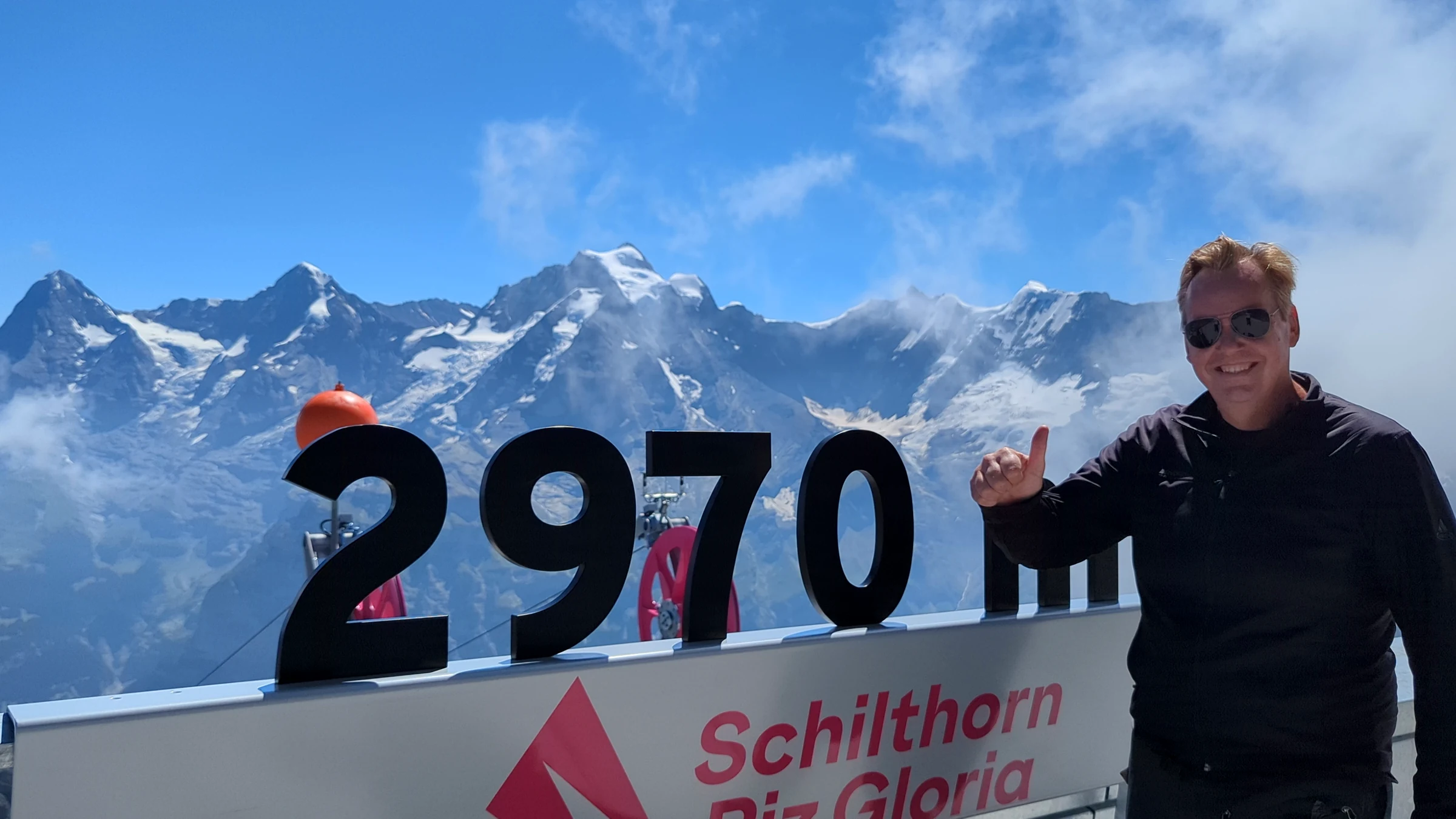
+5Do you need an eSIM for Switzerland? If your phone plan comes from outside Switzerland, you should at least check it before you go, and in most cases an eSIM is the cheapest answer. Switzerland is not part of the EU, so the EU rules that let Europeans “roam like at home” do not apply there, and US plans charge daily fees. We used an Airalo eSIM with 10 GB for our week in the Bernese Oberland from July 4 to 11, 2026, used about 6 GB, and had excellent mobile internet everywhere we went: in the valleys, in the car-free villages and even on the Schilthorn summit at 2,970 metres. In October 2026, a 10 GB Airalo plan for Switzerland costs from about US$21.50. This guide shows what roaming costs with your home plan, how much data you really need, how good coverage is in the mountains and how to set everything up before you land. It is part of our good-to-know guides for the Bernese Oberland.
Switzerland is not in the EU, so many roaming plans get expensive here. We used an eSIM on our trip: installed at home, data from the moment we crossed the border.
Get a Switzerland eSIMMobile internet in Switzerland at a glance
| EU roaming rules | Do not apply: Switzerland is neither in the EU nor in the EEA |
|---|---|
| Networks | Swisscom, Sunrise and Salt; 4G covers almost 100% of the population, 5G 99% and more |
| Our eSIM | Airalo, 10 GB for 7 days (July 4 to 11, 2026), about 6 GB used |
| Our coverage | Excellent everywhere we went, including the Schilthorn summit |
| eSIM prices | Airalo Switzerland 10 GB: from US$21.50 (7 days), US$23 (30 days); unlimited 7 days US$25 |
| US roaming passes | About US$12 per day with AT&T or Verizon |
| Swiss prepaid SIM | Passport or ID card required; Swisscom starts with CHF 20 credit |
| Free Wi-Fi | SBB-FREE at 80 Swiss railway stations, one-time registration |
| Emergency | 112 (general), 144 (ambulance), 1414 (Rega air rescue) |
Facts as of October 2026: airalo.com, esims.io, comcom.admin.ch, swisscom.ch, sbb.ch, att.com. US dollars at 1 CHF = 1.21 USD.
- Do you need an eSIM in Switzerland?
- Roaming in Switzerland: why the EU rules do not apply
- What roaming costs with your home plan
- Our eSIM: 10 GB for a week, 6 GB used
- How much data do you need?
- eSIM prices for Switzerland in October 2026
- eSIM, Swiss SIM card or roaming?
- Coverage in the mountains, villages and trains
- How to set up your eSIM before you fly
- Free Wi-Fi and offline backups
- Emergency numbers
- FAQ
Do you need an eSIM in Switzerland?
You need mobile data in Switzerland, and an eSIM is the easiest and usually the cheapest way to get it if your home plan does not include Switzerland. Only travellers whose plan already treats Switzerland like home can skip it.
A trip through the Swiss Alps runs on your phone more than you might expect. Train and bus times change with the season, mountain railways close for revisions, and the decision whether a summit day is worth CHF 115 depends on the morning webcam. On our trip we checked the webcams before every summit day, exactly as we recommend in our 7-day itinerary. Some car parks, like the multi-storey car park in Lauterbrunnen, take payment by app, the Oeschinensee needs an online time slot, and if you travel without a car, the SBB Mobile app is your timetable and your ticket office in one.
That is also where a rail pass ends up. A Swiss Travel Pass or a regional pass bought online is a ticket you show on your phone, so a working data connection is part of the plan whether you buy single tickets or a pass. If you are still deciding which ticket fits your route, our Swiss Travel Pass calculation and the Bernese Oberland Pass comparison work through real numbers from our trip.
Roaming in Switzerland: why the EU rules do not apply
Switzerland is not a member of the EU or the European Economic Area, so the EU regulation that caps roaming charges does not cover it. Whether you pay extra depends only on your provider and your plan, not on any law.
This catches out many visitors from Germany, France or Italy who are used to crossing borders without thinking about their phone. Inside the EU your home allowance simply works. At the Swiss border, a plan without Switzerland switches to roaming prices or to paid day passes. Some European providers include Switzerland voluntarily, others do not, and the same provider can treat old and new contracts differently.
Two practical points come up again and again in German consumer guides. First, near the border your phone can log onto a Swiss network before you have even crossed, for example around Lake Constance or along the Rhine; if you live near the border, set your network selection to manual. Second, the EU data cost protection still works abroad by default: your provider must warn you and block mobile data at a limit of 50 euros net per billing period unless you have switched that off. It protects you from a shock bill, but not from a useless phone in the middle of a holiday.
What roaming costs with your home plan
With a US plan, roaming in Switzerland typically costs about US$12 per day, which is around US$84 for a week. European plans range from free to a few euros per day, depending on the provider.
- AT&T: the International Day Pass costs US$12 per day on land for the first line and US$6 per day for each additional line on the same account. You never pay more than 10 daily fees per line and bill period.
- Verizon: TravelPass is reported at US$12 per day in more than 210 countries, including Switzerland.
- T-Mobile US: depends heavily on your plan. Some plans include a few gigabytes of high-speed data abroad, then slow down to 256 kbps. Check your current plan on t-mobile.com before you rely on it.
- Telekom (Germany): many current tariffs include Switzerland in the EU roaming group at no extra charge. Older contracts can differ, so check your tariff’s country group in the app.
- Vodafone (Germany): Switzerland is not included in EU roaming; you need a paid EasyTravel option.
- O2 (Germany): Switzerland is in a separate zone. For contracts from June 10, 2026, the standard day pack is 500 MB for 4.99 euros per day; an optional Roaming Plus pack offers 3 GB for 9.99 euros for one month.
- UK networks: treat Switzerland differently by network and plan; many charge a daily roaming fee. Check before you go.
Compare that with the eSIM: a week of AT&T day passes costs four times as much as a 10 GB Airalo plan. For two people with two US phones, the gap grows to well over US$100 for a week. Even if your plan includes Switzerland, check the fair-use limit; a few hundred megabytes per day goes quickly with maps, photos and video calls.

 PDF · 18 pages
Free PDF guide
Planning the Bernese Oberland? Don't go without this.
Our free guide, made from our own week there: the 11 places really worth your time, a ready-made 3-day route, and the pass trick that cuts the Schilthorn from CHF 115 to CHF 45.70.
- The 11 best places on one hand-drawn map, all within an hour of Interlaken
- A 3-day route that puts the Schilthorn on your clearest morning
- The ticket mistake that costs many visitors over CHF 100
- When to reach the famous Iseltwald pier before the crowds
- Every link with a QR code: use it on your phone or print it
Your free Bernese Oberland Guide
100% free · PDF straight to your inbox · Unsubscribe in one click
Our eSIM: 10 GB for a week, 6 GB used
We travelled with an Airalo eSIM with 10 GB for our seven days in the Bernese Oberland, from July 4 to 11, 2026. We used about 6 GB on one phone, so 10 GB left a comfortable buffer, and the connection was excellent all week. The data went on Google Maps navigation in the car, looking up addresses and parking, and checking opening hours, tickets and weather on the spot; no hotspot, no video streaming.
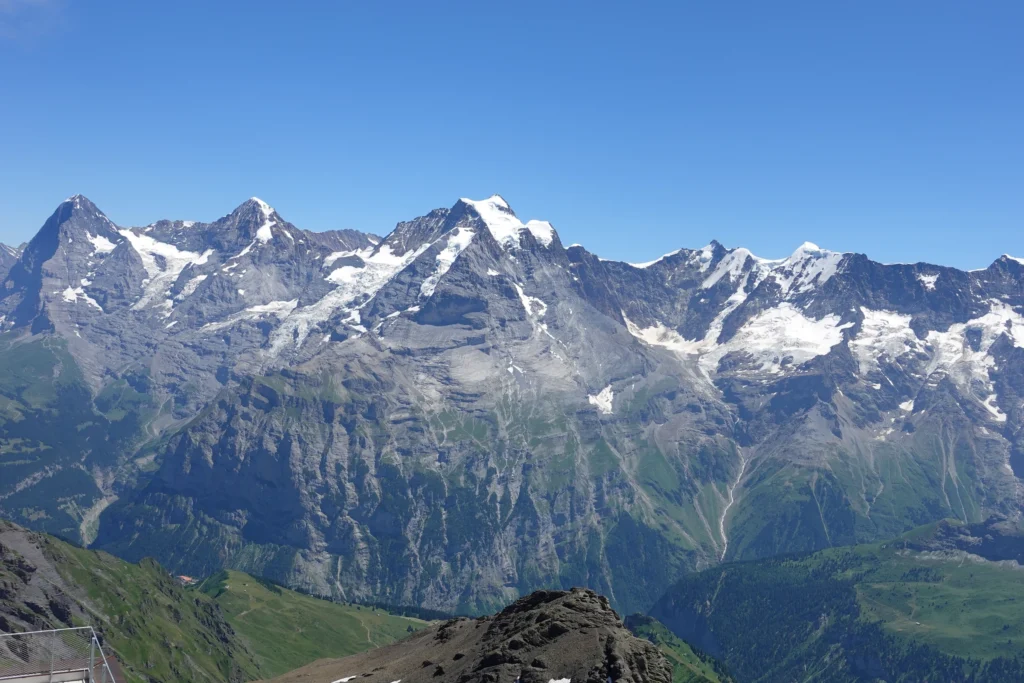
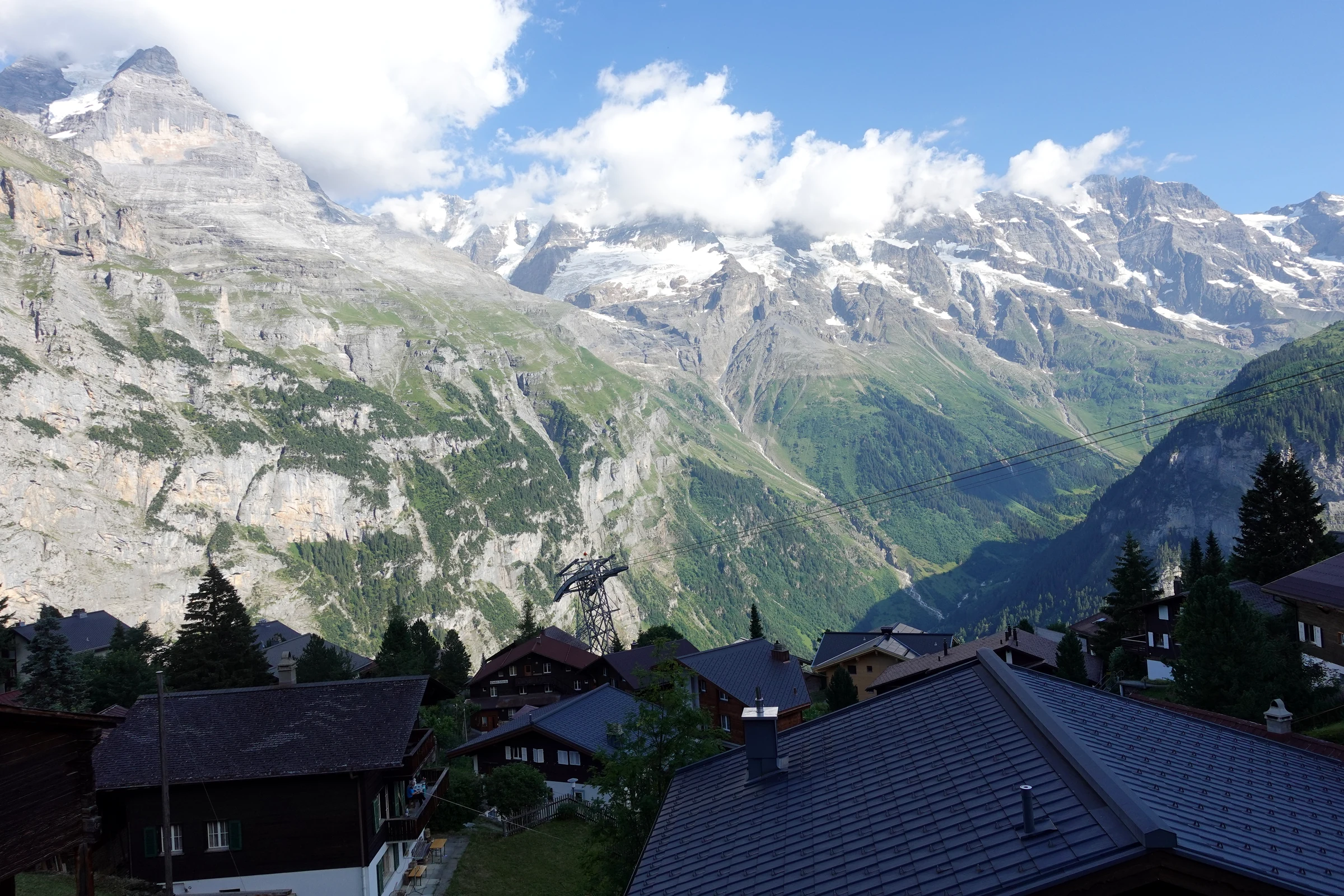
We stayed in Brienz and drove every day: to the Rosenlaui Valley, the Lauterbrunnen Valley, the Oeschinensee, the Brienzer Rothorn, the Schilthorn and the Aare Gorge. On none of these days did we lose mobile internet in a way that mattered. Pages loaded quickly in the valleys, on the lake shore at Iseltwald and in the car-free village of Mürren, and up on the summits it was just as fast. The moment that surprised us most was the Schilthorn: at 2,970 metres, with Eiger, Mönch and Jungfrau across the valley, the connection was as good as at home.
We cannot tell you exactly what we paid for the eSIM in July, because we did not keep the receipt. That is why this guide quotes the prices Airalo shows in October 2026 instead of a number from memory. What we can tell you is that the 10 GB plan was the right size: we never had to ration data, and we never ran out.
How much data do you need?
For a week of sightseeing, 5 to 10 GB is enough for most travellers. We used about 6 GB in seven days, which is a little less than 1 GB per day.
Your own number depends on three things. First, navigation: maps and route planning use data all day if you drive or hike with your phone, but much less if you download offline maps of the region in advance. Second, uploads: if you share photos and videos while you travel, the gigabytes go much faster than with messages and email. Third, Wi-Fi: if your holiday flat or hotel has good Wi-Fi, the big updates and backups happen there and your eSIM only carries what you do on the road.
- Light use (3 to 5 GB per week): messages, timetables, weather, a few maps, Wi-Fi in the evening.
- Normal use (5 to 10 GB per week): navigation every day, webcams, photos to family, some social media. This is where we were.
- Heavy use (20 GB or unlimited): video uploads, video calls, working remotely or sharing your connection with a laptop.
If you are unsure, buy the 10 GB plan. Most providers let you top up in the app if you run low, and the price difference between 5 and 10 GB is small.
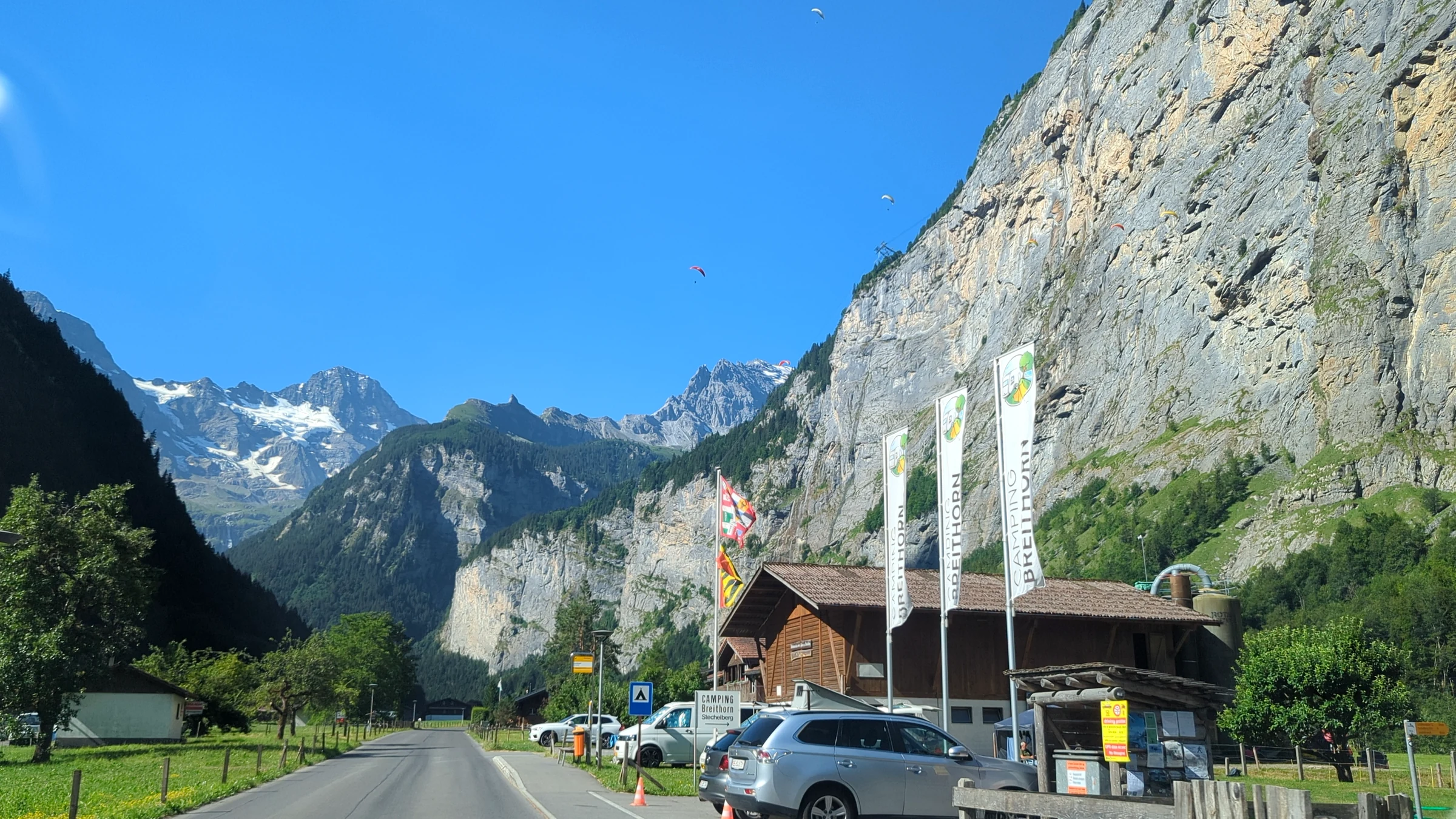
Switzerland is not in the EU, so many roaming plans get expensive here. We used an eSIM on our trip: installed at home, data from the moment we crossed the border.
Get a Switzerland eSIMeSIM prices for Switzerland in October 2026
In October 2026 Airalo sells Switzerland eSIMs from US$4 for 1 GB up to US$45 for 50 GB, and the 10 GB plan we used costs US$21.50 for 7 days or US$23 for 30 days. Unlimited plans cost US$25 for 7 days.
| Airalo Switzerland (October 2026) | Validity | Price |
|---|---|---|
| 1 GB | 3 days | US$4.00 |
| 3 GB | 7 days | US$9.00 |
| 5 GB | 7 days | US$13.00 |
| 5 GB | 30 days | US$14.00 |
| 10 GB | 7 days | US$21.50 |
| 10 GB | 15 days | US$22.00 |
| 10 GB | 30 days | US$23.00 |
| 20 GB | 15 days | US$34.50 |
| 50 GB | 30 days | US$45.00 |
| Unlimited | 3 / 7 / 15 days | US$11.50 / US$25.00 / US$46.00 |
Prices are from airalo.com and the comparison site esims.io in October 2026 and change often, sometimes with discounts. Airalo names Sunrise as the network its Swiss plans use. Travel eSIMs like these are usually data only: you keep your normal number on your home SIM for calls and texts, and use WhatsApp, FaceTime or similar apps over the eSIM. Read the plan details before you buy, especially if you want to share your connection with a laptop.
Two things are worth checking with every provider. Does the validity start when you buy, or only when the eSIM connects to a Swiss network for the first time? And are you buying a Switzerland plan or a Europe plan? Some Europe plans leave Switzerland out, because it is not in the EU.
eSIM, Swiss SIM card or roaming?
For a holiday of one or two weeks, a travel eSIM is the best mix of price and convenience. A Swiss prepaid SIM can be cheaper for long stays or heavy use, but you need a passport and a shop visit. Roaming only makes sense if your plan includes Switzerland.
| Option | Price for a week | Good | Less good |
|---|---|---|---|
| Travel eSIM (Airalo, 10 GB) | about US$21.50 to 23 | Installed at home, works on arrival, keep your number | Usually data only, phone must support eSIM and be unlocked |
| Swiss prepaid (Swisscom) | CHF 20 starting credit; Prepaid Flat 7 costs CHF 20 (about US$24) | Swiss number, local network | Passport or ID required, registration, shop or online order |
| US day pass (AT&T) | US$84 (7 days) | No setup, same number | Expensive, per line |
| Home plan with Switzerland included | 0 | Nothing to do | Check fair-use limits and your exact tariff |
The Swiss prepaid route has one hurdle many visitors do not expect: by law, every Swiss SIM card must be registered with an official ID. Swisscom accepts a passport or identity card, not a driving licence. Its prepaid SIM starts with CHF 20 credit; in Switzerland, data then costs CHF 2 per day on the basic tariff, or you add a pack such as 2 GB for CHF 19.90 (about US$24) or 5 GB for CHF 29.90 (about US$36), each valid for 30 days. That is a good deal for a month in Switzerland, but for one week it is no cheaper than an eSIM and costs you time on your first day.
Coverage in the mountains, villages and trains
Swiss mobile coverage is among the best in Europe: at the end of 2025 almost 100 percent of the population was covered by 4G, and Swisscom and Sunrise each reached 99 percent or more with 5G. In the Bernese Oberland we had a fast connection on every summit and in every village we visited.
The official figures come from the Swiss Federal Communications Commission ComCom, published in May 2026. Salt states 99.9 percent population coverage across all network generations. In the independent connect network test published in November 2025, all three networks received the top grade “outstanding”: Swisscom scored 983 of 1,000 points, Sunrise 975 and Salt 972. According to the test, Swisscom leads for data in small towns and on trains, Sunrise is slightly ahead in the big cities, and Salt improved most in rural areas thanks to its 5G expansion.
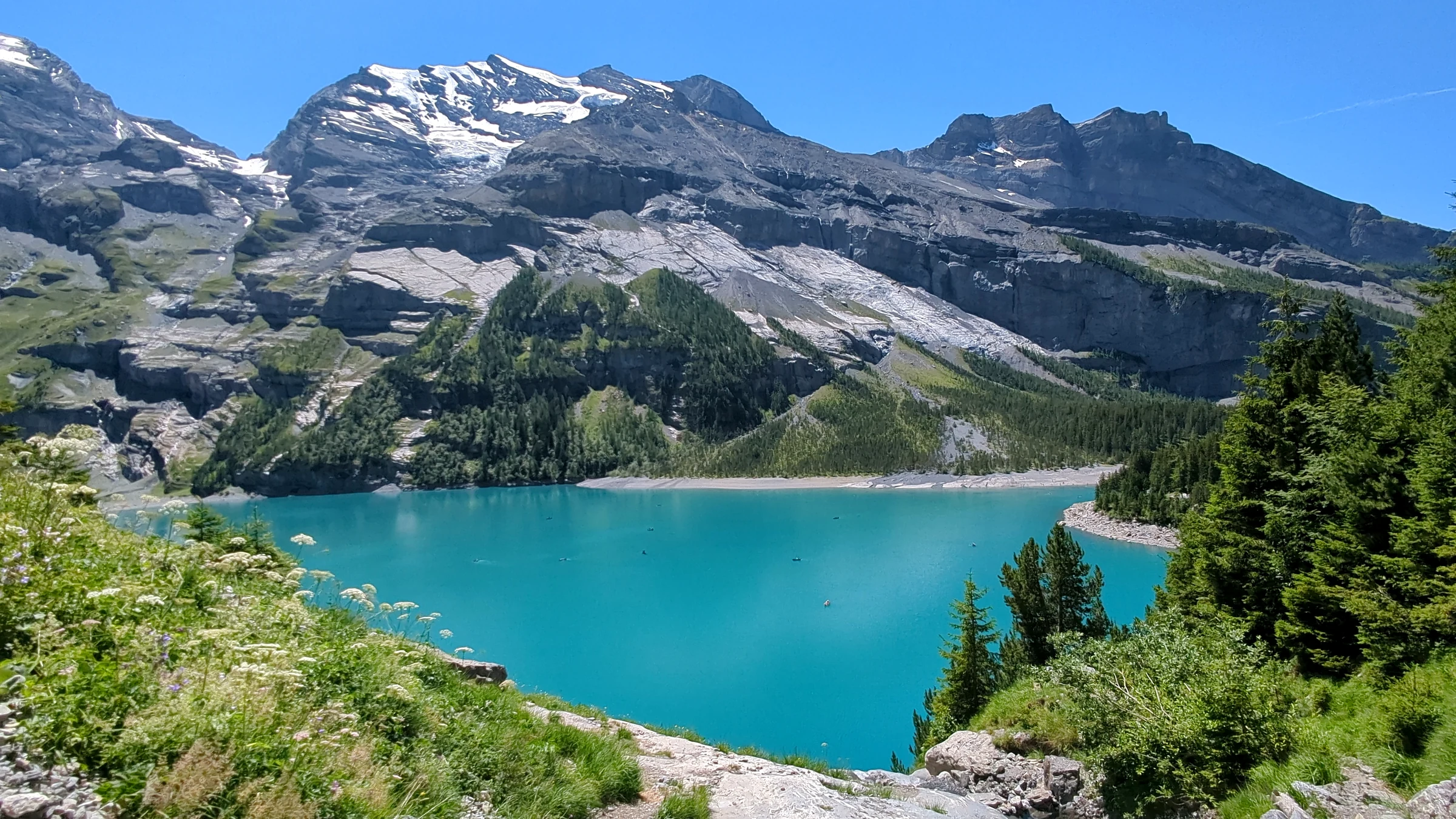
Population coverage is not the same as coverage on every hiking trail, and the Alps have deep valleys and gorges. Our own experience covered the classic places: the summits of the Schilthorn and the Brienzer Rothorn, the trail to the Grauseeli below Birg, the shore of the Oeschinensee, Mürren, Lauterbrunnen and Brienz. Everywhere there, the internet worked well. If you plan remote alpine routes, download offline maps and the route description anyway, and carry a charged phone and a power bank.
If you want to see the summit where our eSIM surprised us most, our Schilthorn guide has the ride, the prices and the best time of day.

Ticket via Viator. Check which sections are included before you book: the official round trip from Stechelberg is CHF 115.
Check prices & availability
For travellers based in Lucerne who want the Bernese Oberland in one day.
Check prices & availability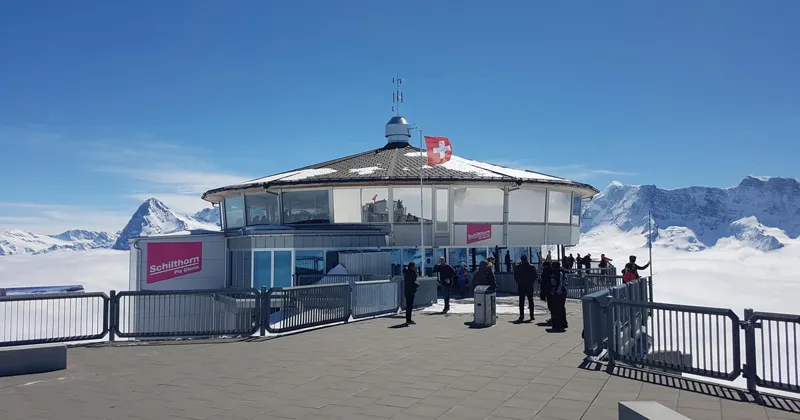
Guided half-day trip with transport from Interlaken. Good if you travel without a car.
Check prices & availability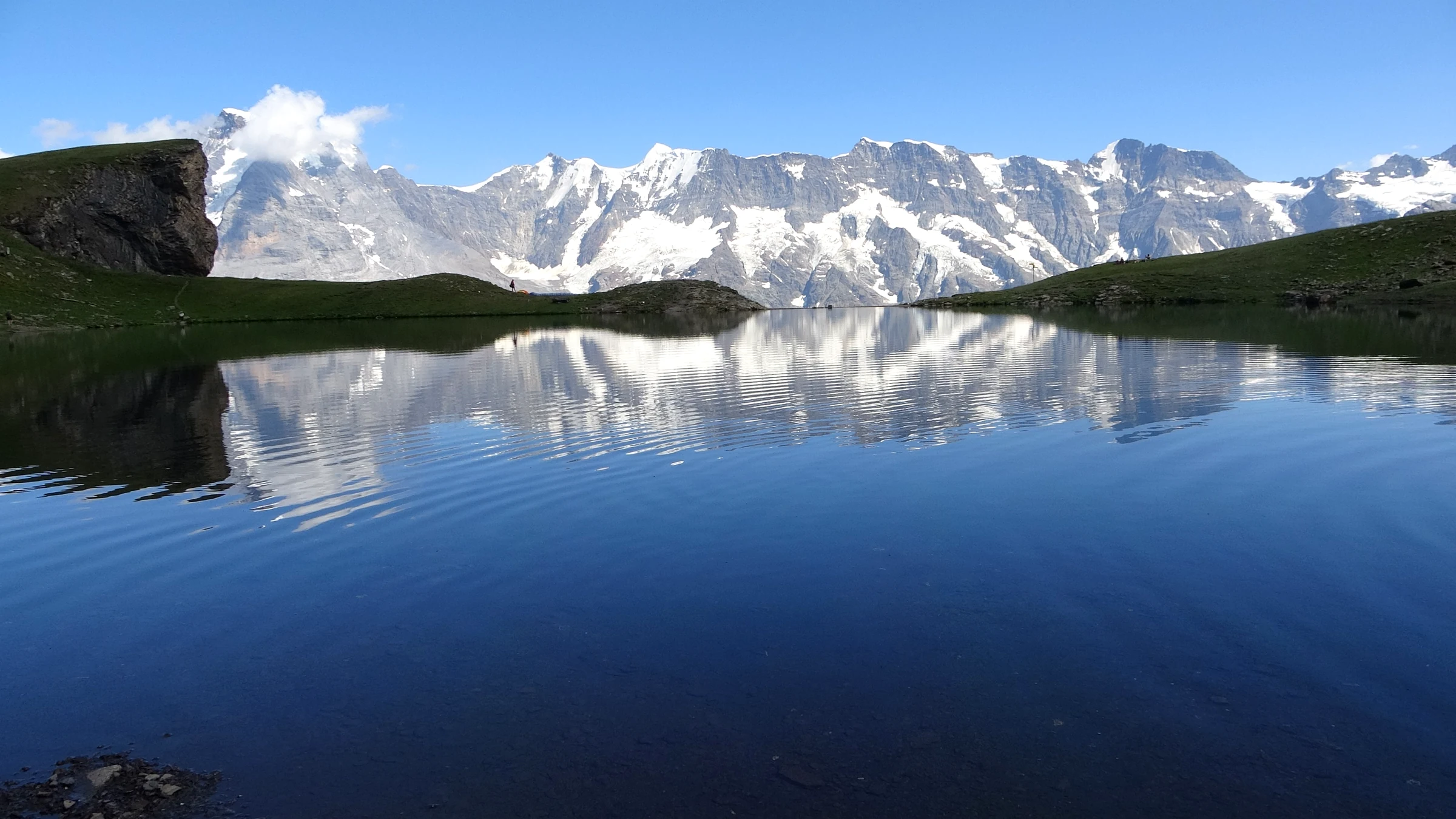
How to set up your eSIM before you fly
Install the eSIM at home over Wi-Fi a day or two before you travel, then switch it on when you arrive. Setup takes about ten minutes, and the phone must support eSIM and must not be locked to your home carrier.
- Check your phone. Most iPhones from the XS onward and many recent Android phones support eSIM. In the settings, look for “Add eSIM” or “Add mobile plan”. If your phone came from a carrier, ask whether it is unlocked.
- Buy the plan. Choose a Switzerland plan or a regional plan that clearly lists Switzerland. Note when the validity starts.
- Install it at home. Scan the QR code or use the provider’s app. Do this on Wi-Fi, because you cannot install an eSIM without a connection.
- Label your lines. Give the eSIM a name like “Swiss data” and your home SIM a name like “Home”, so you know which is which.
- On arrival, switch data to the eSIM. Set the eSIM as the line for mobile data and turn on data roaming for the eSIM. Many travel eSIMs technically roam on a local network, so this switch has to be on.
- Turn off roaming on your home SIM. That way your home number still receives calls and texts, but cannot use expensive data by accident.
If you arrive by plane at Zurich or Geneva, having data ready the moment you land makes the next steps easier: the SBB app for the train to Interlaken, the meeting point of a pre-booked transfer, or the car rental desk. Our guide from Zurich Airport to Interlaken compares the train, a private transfer and a rental car, and if you arrive with heavy bags, our guide to luggage in Switzerland explains lockers and the SBB luggage service.
Not a fan of changing trains with luggage? A private driver takes you from Zurich Airport straight to Interlaken or your hotel in about two hours, fixed price booked in advance.
Book a Zurich Airport transfer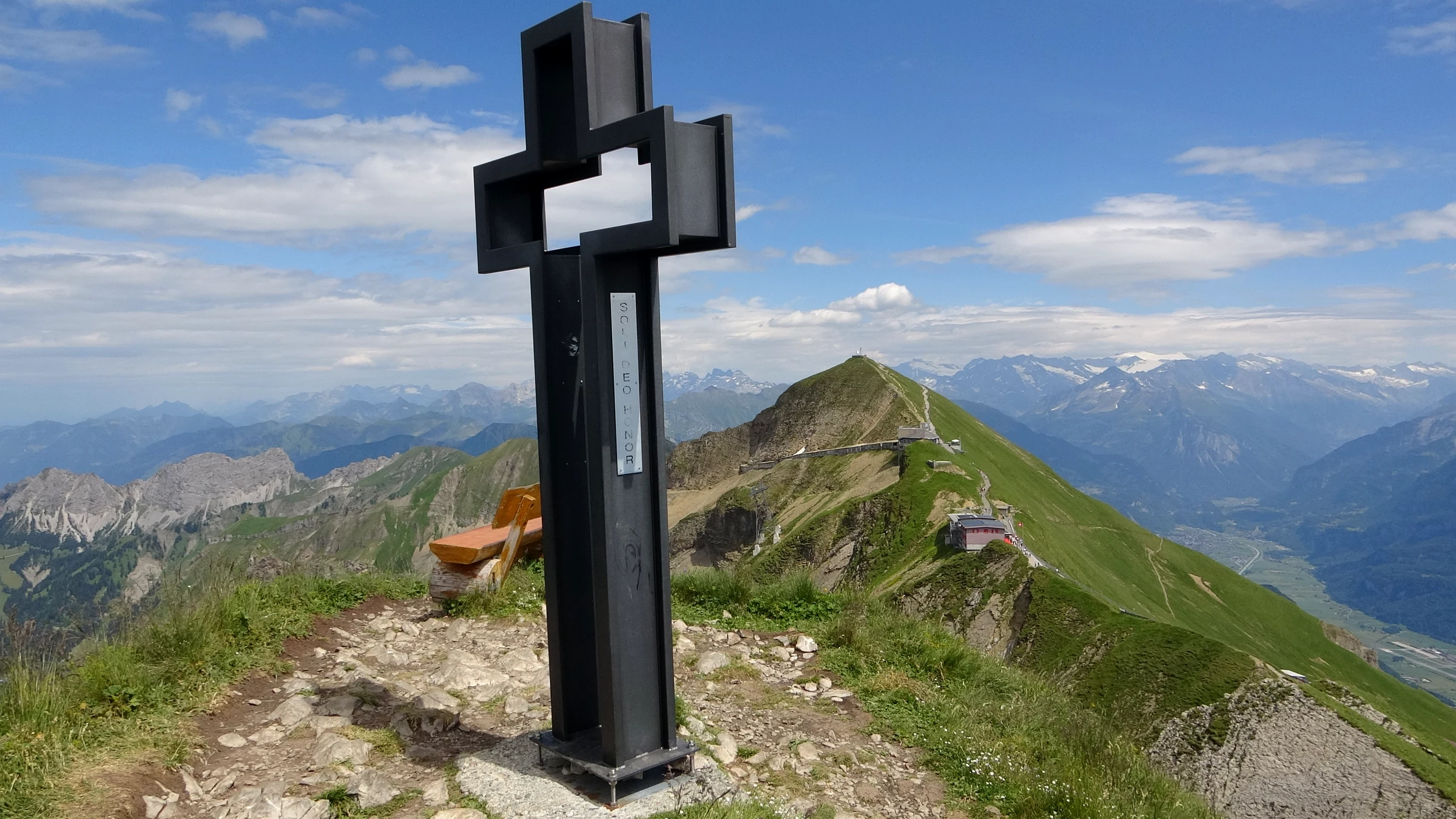
Free Wi-Fi and offline backups
Free Wi-Fi is available at 80 Swiss railway stations under the network name SBB-FREE, after a one-time registration. Hotels and holiday flats usually have Wi-Fi too, but you should not rely on Wi-Fi alone in the mountains.
Station Wi-Fi is handy for a big download while you wait for a train, but out on the trails and roads you only have what your phone carries. Before your trip, it pays to prepare a few things that work without any connection:
- Offline maps of the Bernese Oberland in your map app, especially if you drive or hike.
- Tickets and bookings saved as screenshots or in your wallet app, including time slots such as the one for the Oeschinensee gondola.
- Important addresses of your accommodation and car parks, in case a map does not load.
- A power bank. Navigation, photos and cold summit air drain a battery faster than a day in town.
The apps we would install before a trip like ours are the SBB Mobile app for timetables and tickets, a weather app, and the webcams of the mountain railways, which most operators show on their websites. For parking and the motorway vignette, our guide to driving in Switzerland has the details, and for what a week like ours costs in total, see how expensive Switzerland is.
Emergency numbers
In Switzerland you can call 112 for any emergency from any phone. The direct numbers are 117 for the police, 118 for the fire brigade, 144 for an ambulance and 1414 for Rega, the Swiss air rescue.
In the mountains, Rega is the number to know: it flies rescue missions to injured or stranded hikers. Emergency calls work through any available network, even if your own provider has no coverage at that spot. That is one more reason to keep your home SIM switched on alongside the eSIM, and to start a hike with a charged battery. If you travel with a dog, our guide to the Bernese Oberland with a dog also covers heat, grating floors and cold water.
Switzerland is not in the EU, so many roaming plans get expensive here. We used an eSIM on our trip: installed at home, data from the moment we crossed the border.
Get a Switzerland eSIMFAQ: eSIM and mobile internet in Switzerland
Does EU roaming work in Switzerland?
No, not by law. Switzerland is not in the EU or the EEA, so the EU roaming rules do not apply. Some European providers include Switzerland anyway, others charge extra. Check your tariff before you cross the border.
What is the best eSIM for Switzerland?
We used Airalo and had excellent coverage all week, including on the Schilthorn summit. In October 2026 its 10 GB Switzerland plan costs US$21.50 for 7 days. Other providers have similar prices; compare validity and whether Switzerland is really included.
How much data do I need for a week in Switzerland?
About 5 to 10 GB for most travellers. We used about 6 GB in seven days on one phone, with daily navigation and Wi-Fi in our holiday flat in the evenings.
Is there mobile coverage in the Swiss mountains?
Yes, on the popular summits and in the villages it is very good. We had a fast connection on the Schilthorn and the Brienzer Rothorn. In remote side valleys and deep gorges, signal can drop, so download offline maps.
Can I buy a SIM card at Zurich Airport?
Swiss operators sell prepaid SIM cards in their shops, but you must show a passport or ID card to register it. An eSIM installed at home avoids that step and works as soon as you land.
Can I keep my phone number with an eSIM?
Yes. Your home SIM stays in the phone for calls and texts, and the eSIM handles mobile data. Turn off data roaming on your home SIM so it does not use data by accident.
Mobile data is one item on the list; the rest of our planning tips are collected in our good-to-know section, from passes to luggage. The places themselves are in our Bernese Oberland guide, and more Swiss trips start on the Swiss Detours home page.
Your free Bernese Oberland Guide
Join the Swiss Detours newsletter and get our Bernese Oberland Guide as a free PDF. After that, we send you new travel tips for Switzerland from time to time. Unsubscribe anytime with one click.