Bernese Oberland travel guide: the best places we visited
 +11
+11The Bernese Oberland is the Alpine heart of Switzerland: the Eiger, Mönch and Jungfrau, the Lauterbrunnen Valley with its waterfalls, turquoise Lake Brienz and Lake Thun, deep gorges and car-free mountain villages, all within an hour of Interlaken. We spent a week there from July 4 to 11, 2026, with Brienz as our base and our dog Miley in the back of the car. This guide is the overview of everything we saw, how we planned it and what we would do differently, with links to our detailed guide for each place.
Bernese Oberland at a glance
| Where | Canton of Bern, central Switzerland, around Interlaken between Lake Thun and Lake Brienz |
|---|---|
| Getting there | By train from Zurich Airport to Interlaken Ost in about 2 hours, from Bern in under an hour |
| Best bases | Interlaken (central), Lauterbrunnen or Mürren (mountains), Brienz (quiet, on the lake) |
| Time needed | At least 3 full days, a week to see the places in this guide without rushing |
| Best time | Late June to mid-September for hiking and lakes; the first cable cars of the morning for clear views |
| Money | Swiss francs (CHF). A summit cable car costs around CHF 90 to 120 return |
| By car | Motorway vignette CHF 40 for 2026, digital or sticker |
| With a dog | Very dog-friendly: dogs ride many cable cars and boats, often for free or a small fee |
As of October 2026. Prices from the official operators. 1 CHF is about 1.21 US$.
- The regions of the Bernese Oberland
- The best places we visited
- How many days you need
- Getting there and getting around
- Passes and tickets
- Where to stay
- Best time to visit
- What it costs
- Our week at a glance
- How cable cars work here
- Practical tips
- The Bernese Oberland with a dog
- What we skipped (and why)
- FAQ
Want to see everything at once? All places from this guide are on our interactive Bernese Oberland map, with live cloud cover and a list you can turn into a route.
The regions of the Bernese Oberland
The Bernese Oberland splits into five areas that are easy to combine: the Jungfrau region with the Lauterbrunnen Valley, Lake Brienz, Lake Thun, the Haslital around Meiringen and the Kandertal with Kandersteg. Interlaken sits in the middle, on the strip of land between the two lakes, and almost every excursion starts within an hour of it.
- Jungfrau region and Lauterbrunnen Valley: the big mountains. Eiger, Mönch and Jungfrau, the U-shaped valley with its rock walls and waterfalls, the car-free villages of Mürren, Gimmelwald and Wengen, and the cable car up the Schilthorn.
- Lake Brienz: the turquoise lake east of Interlaken, with the woodcarving village of Brienz, the pier at Iseltwald and the Brienzer Rothorn above it.
- Lake Thun: larger and greener, with castles along the shore, Spiez on its bay and the pyramid of the Niesen behind.
- Haslital: Meiringen, the Aare Gorge and the Rosenlaui valley with its glacier gorge, quieter and wilder than the Jungfrau region.
- Kandertal: Kandersteg and the Oeschinensee, one of the most beautiful mountain lakes in the Alps.
We based ourselves in Brienz because it is quieter and cheaper than Interlaken and still central: the Lauterbrunnen Valley was 40 minutes away by car, the Aare Gorge 15 minutes, Kandersteg about an hour.
The best places we visited
These are the places we visited ourselves in July 2026, sorted by region. Each one has, or will soon have, its own detailed guide with prices, parking, timings and our photos.
Lauterbrunnen Valley
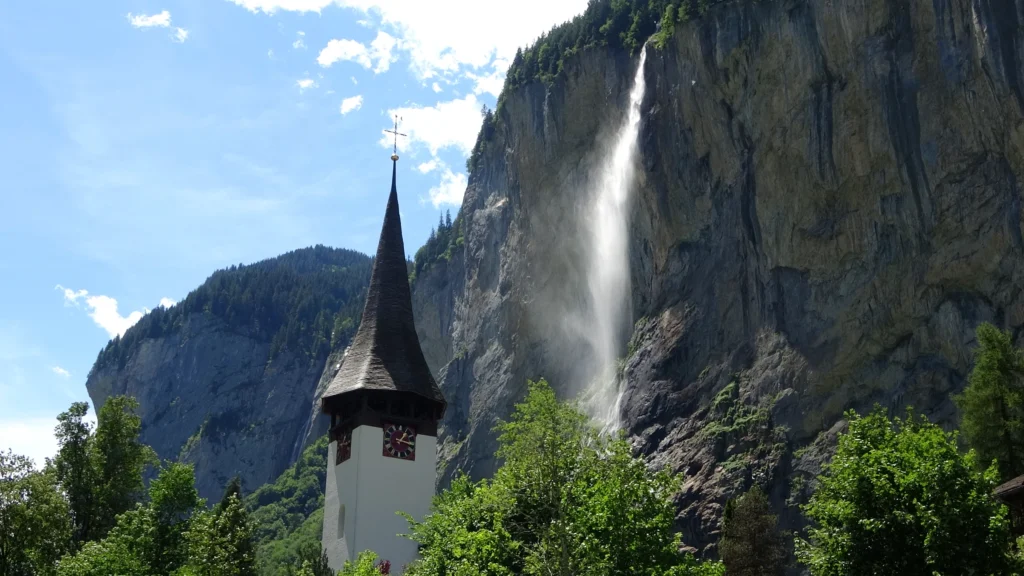
The Lauterbrunnen Valley is the most famous valley in the Bernese Oberland: a flat green floor between vertical rock walls almost 1,000 metres high, with waterfalls dropping from the cliffs on both sides. The village of Lauterbrunnen sits at the entrance, with the Staubbach Falls falling right behind the church. Many visitors only stop for the classic photo. Stay longer: the valley is the starting point for Mürren, the Schilthorn, the Trümmelbach Falls and some of the best walks in Switzerland. Our full overview is in the Lauterbrunnen Valley guide.
Staubbach Falls
The Staubbach Falls drop almost 300 metres from the cliff straight into the village of Lauterbrunnen. In summer you can walk up to a gallery behind the falls in about 15 minutes from the main street, and it costs nothing. The water turns to spray long before it reaches the ground, which is where the name comes from. Read our Staubbach Falls guide for the path, the best viewpoints and the opening times of the gallery.
Trümmelbach Falls
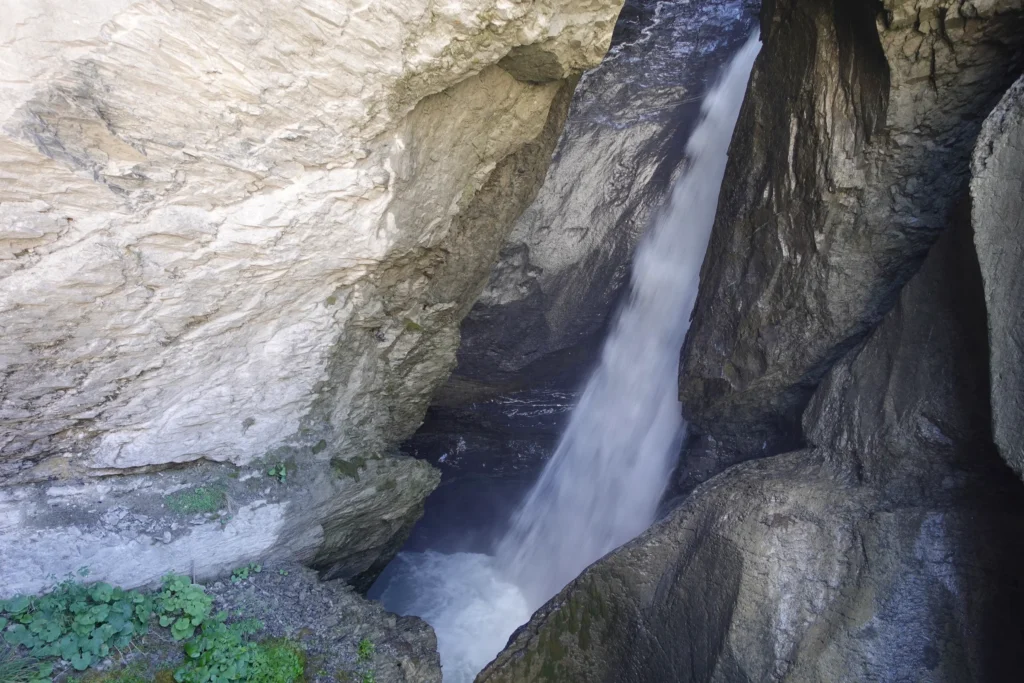
The Trümmelbach Falls are ten glacier waterfalls inside the mountain, made accessible with a tunnel lift, stairs and lit galleries. The meltwater of the Eiger, Mönch and Jungfrau thunders through the rock right next to you. It is loud, wet and one of the most impressive things we saw on the whole trip. Details on tickets and the walk in our guide to the Trümmelbach Falls.
Mürren and Gimmelwald
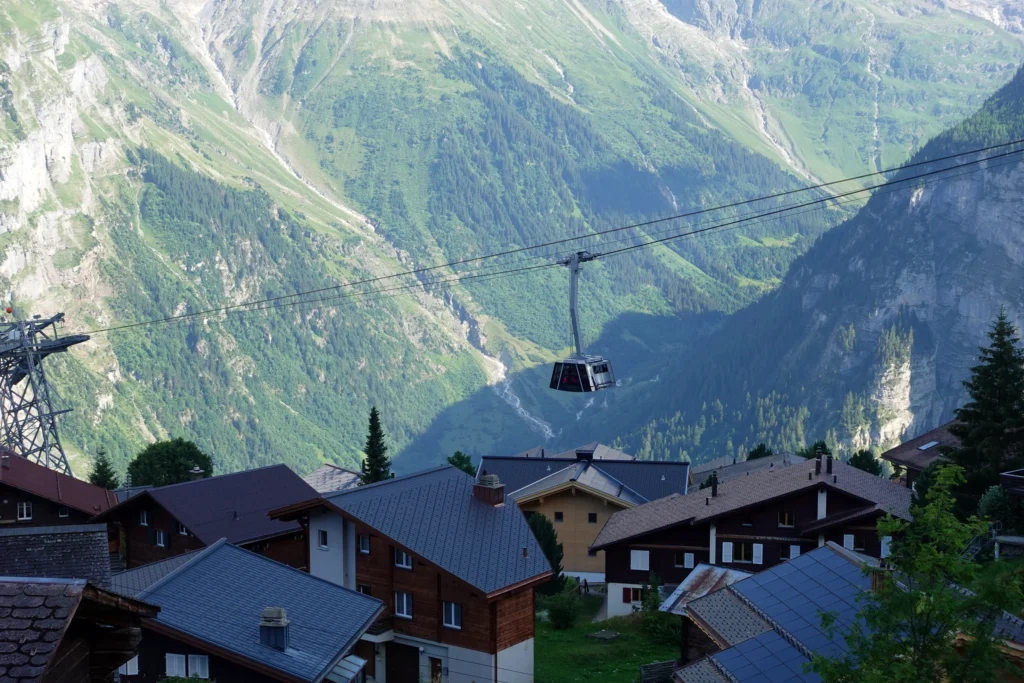
Mürren is a car-free village on a terrace 800 metres above the valley floor, with a view straight across at the Eiger, Mönch and Jungfrau. Since December 2024 the steepest cable car in the world brings you up from Stechelberg in about four minutes. In the evening, when the day visitors have left, Mürren is one of the most peaceful places in the Alps. Gimmelwald, a few minutes below, is even smaller. Our Mürren guide covers both.
Schilthorn Piz Gloria
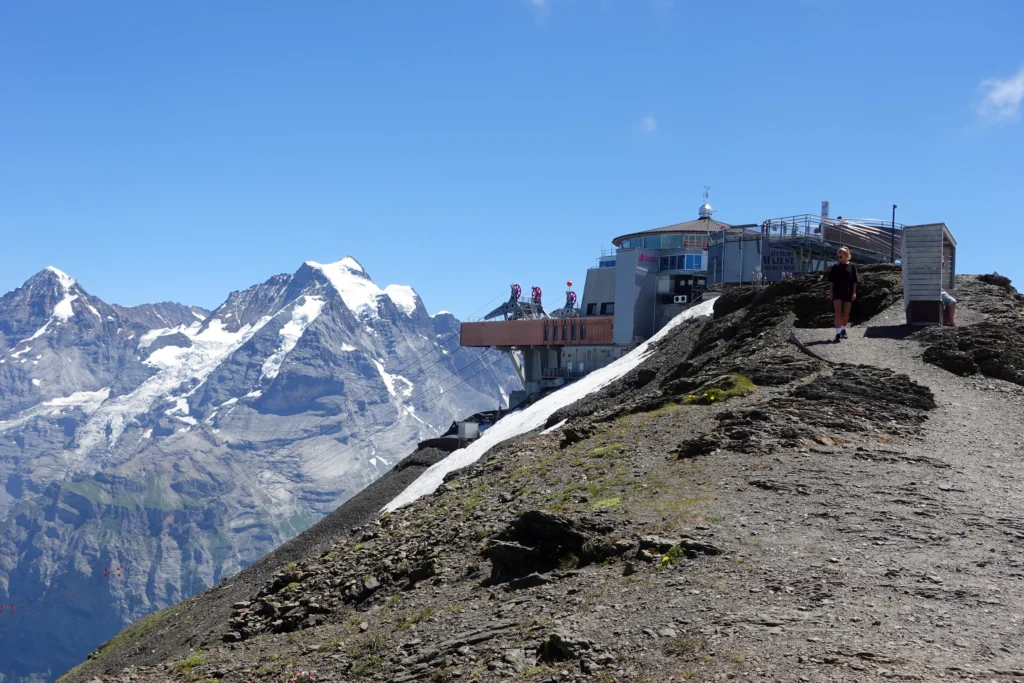
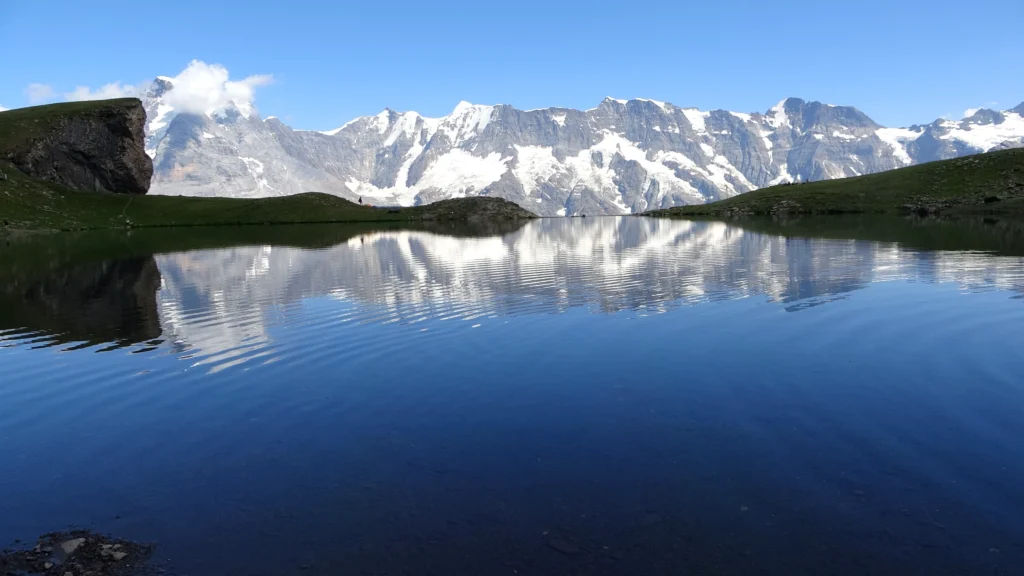
The Schilthorn is the 2,970-metre summit above Mürren where James Bond fought Blofeld in On Her Majesty’s Secret Service. From the terrace you see the Eiger, Mönch and Jungfrau side by side. Below the summit, the free Skyline Walk and Thrill Walk at Birg and the small Grauseeli lake are worth at least two extra hours. The round trip from Stechelberg costs CHF 115 in 2026, and the Berner Oberland Pass includes it. Everything else is in our Schilthorn guide.
Lake Brienz
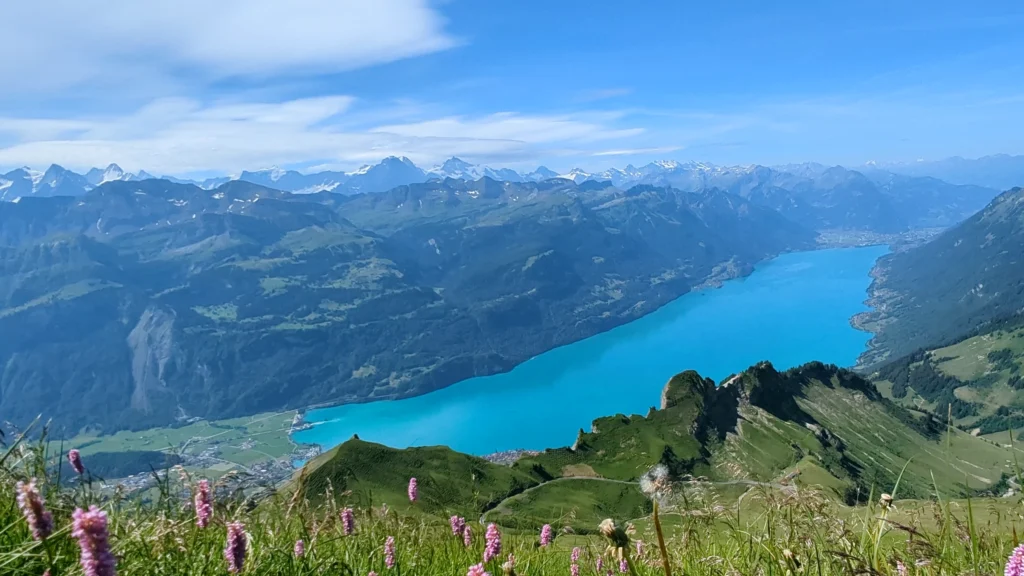
Lake Brienz is the turquoise lake east of Interlaken, 14 kilometres long and surrounded by steep wooded slopes. Its colour comes from fine glacial silt carried in by the rivers. You can take the boat from Interlaken to Brienz, swim at small pebble beaches, or simply drive along the south shore through Iseltwald. Our Lake Brienz guide has the villages, beaches and boat timetables.
Brienz
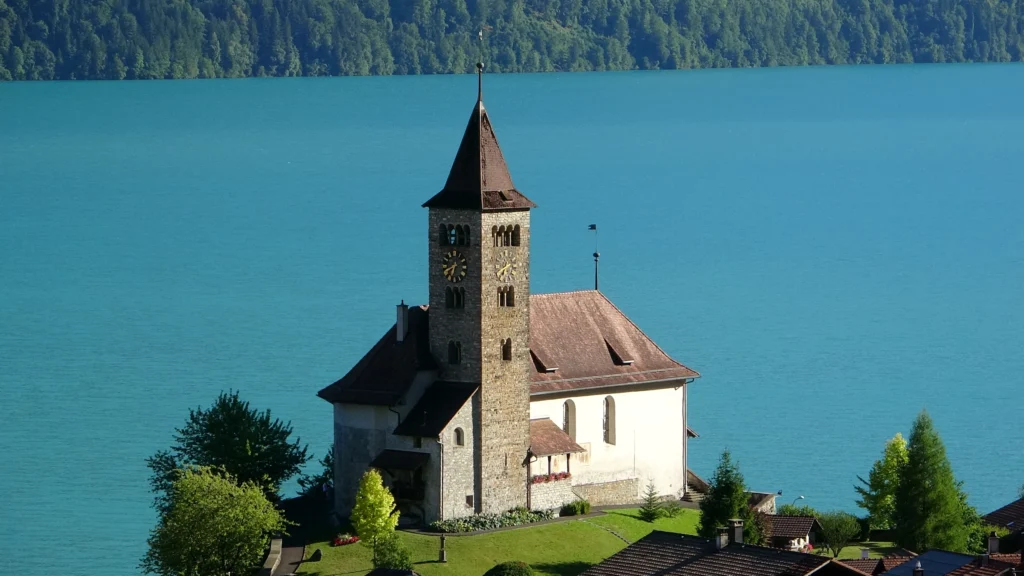
Brienz is the village at the eastern end of the lake, known for its woodcarving tradition and the old wooden houses of the Brunngasse. It is quieter than Interlaken, has a lakeside promenade and is the valley station of the steam railway up the Brienzer Rothorn. More in our guide to Brienz.
Iseltwald
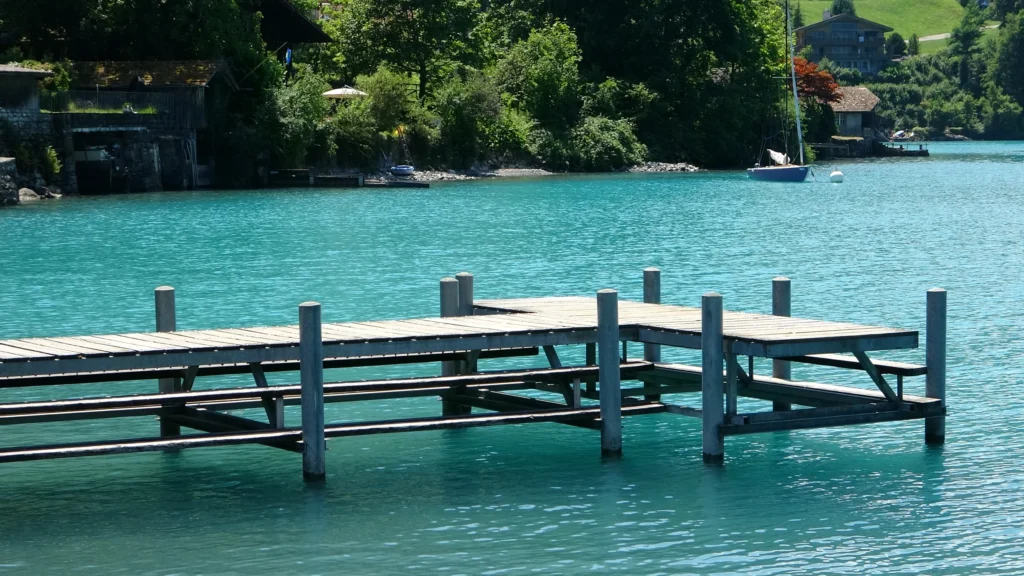
Iseltwald is a small village on a peninsula on the south shore of Lake Brienz. Its wooden pier became famous worldwide through the Korean series Crash Landing on You, and today visitors pay a small fee to stand on it. The peninsula with its little castle and the clear water make it worth a stop, ideally early in the morning or late in the afternoon. See our Iseltwald guide.
Brienzer Rothorn
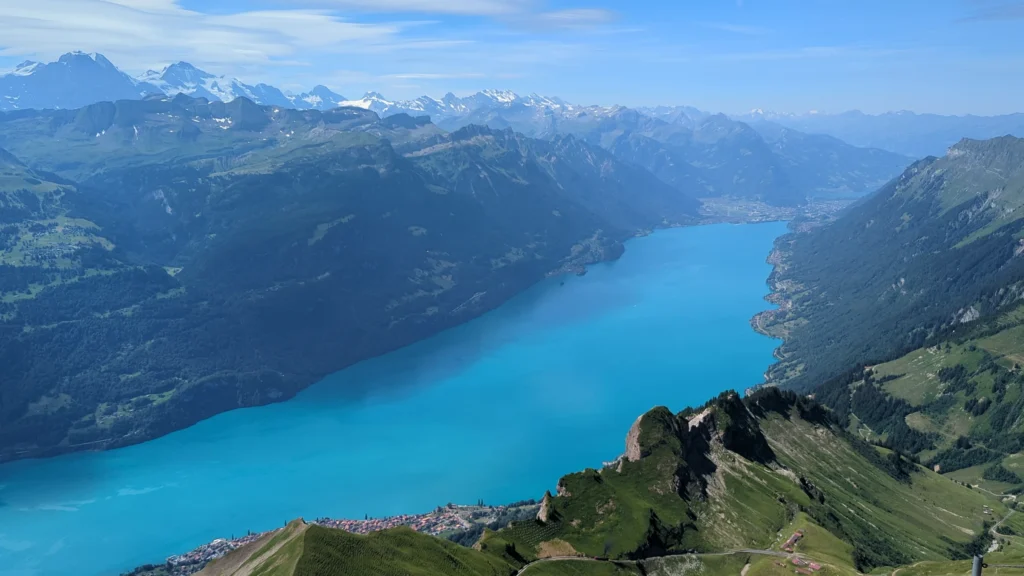
The Brienzer Rothorn rises 2,350 metres above Lake Brienz. From Brienz a historic steam railway climbs to the top; we came up from Sörenberg on the other side by cable car. From the summit you look down on the whole length of the lake. Our Brienzer Rothorn guide compares both ways up.
Aare Gorge
The Aare Gorge near Meiringen is a 1.4-kilometre walk on walkways and through tunnels between rock walls up to 200 metres high, with the river rushing below. It works in rain too, and on some summer evenings it is illuminated. We went in the morning and found it one of the best-value sights of the trip. Our Aare Gorge guide has the entrances, prices and evening dates.

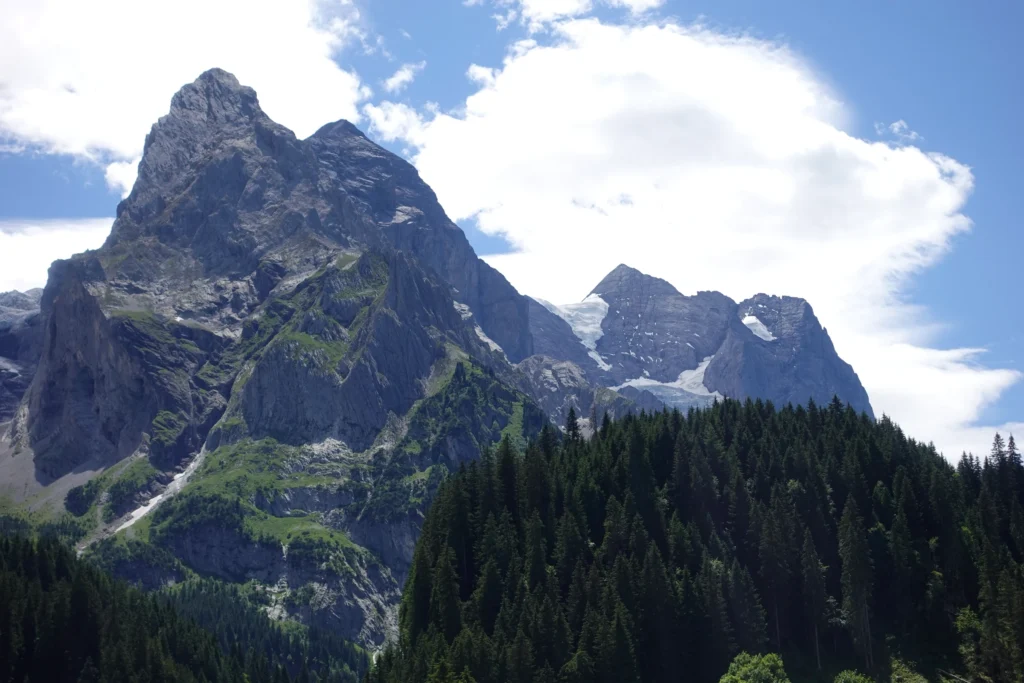
Rosenlaui valley and glacier gorge
The Rosenlaui valley above Meiringen is reached by a narrow toll road and ends below the jagged Engelhörner. Its glacier gorge is narrower and wilder than the Aare Gorge, with stairs and tunnels next to the water. It is one of the quietest places we visited. Read our Rosenlaui guide.
Oeschinensee
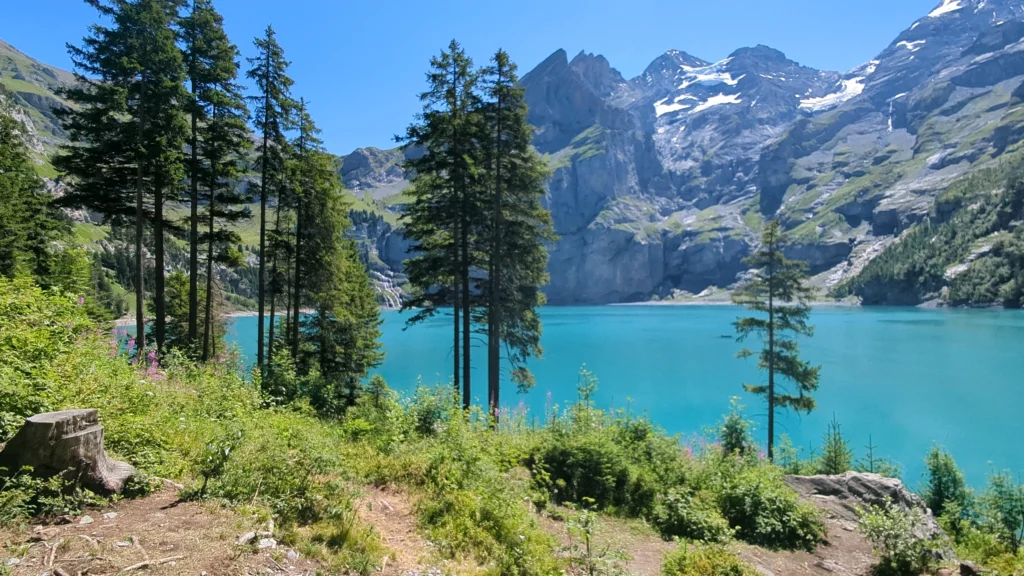
The Oeschinensee above Kandersteg is a turquoise mountain lake below 3,000-metre peaks and waterfalls. A gondola takes you most of the way, then it is a 20 to 30 minute walk to the shore. You can swim, rent a rowing boat or walk the panorama trail above the lake. On a summer weekend it gets busy, so go early. Everything is in our Oeschinensee guide.
Spiez and Lake Thun
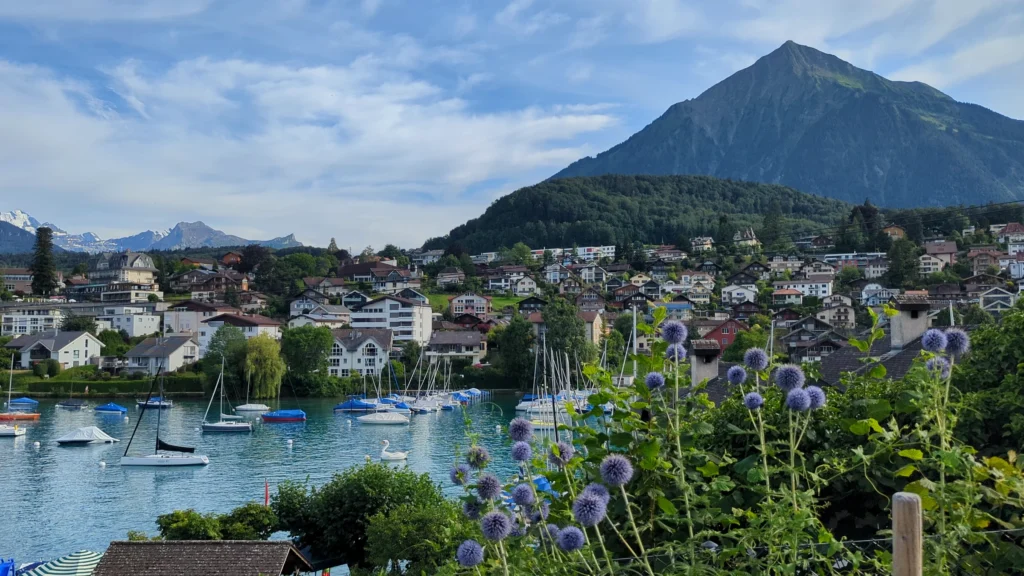
Spiez sits on a bay of Lake Thun, with its castle, a vineyard and the pyramid of the Niesen behind. It is the place for an afternoon by the water after a mountain morning, and it is on the way to Kandersteg. Our Spiez guide has the castle, the swimming spots and parking.
How many days you need
Plan at least three full days for the Bernese Oberland and a week if you want to see the places above without rushing. Mountain days depend on the weather, so a few spare days let you move the summits to the clearest mornings.
- 3 days: Lauterbrunnen Valley with Staubbach and Trümmelbach Falls; Schilthorn and Mürren; Lake Brienz with Iseltwald and Brienz.
- 5 days: add the Oeschinensee with Spiez on the way back, and the Aare Gorge with the Rosenlaui valley.
- 7 days: add the Brienzer Rothorn and keep one day free for bad weather or a second summit.
Our own week, day by day with driving times and costs, will be in our 7-day Bernese Oberland itinerary.
Getting there and getting around
Interlaken Ost is the transport hub: trains from Zurich Airport take about two hours, from Bern under an hour, and from there regional trains, buses, boats and cable cars reach almost every place in this guide. A car gives you more freedom for the Haslital, Rosenlaui and Kandersteg, but you will still use cable cars for the mountains.
- By train: Interlaken Ost to Lauterbrunnen takes about 20 minutes, Interlaken Ost to Brienz about 20 minutes along the lake. Boats run on both lakes in summer.
- By car: you need the Swiss motorway vignette (CHF 40 for 2026, best bought as an e-vignette on the official federal portal). Parking at cable car stations is usually paid, typically CHF 8 to 20 per day. Mürren, Gimmelwald and Wengen are car-free. Details in our guide to driving in Switzerland.
- Cable cars: the mountains are reached by cable car or cog railway. The first departures of the morning are the quietest and usually have the clearest views.
We drove. That worked well from Brienz, especially for the Rosenlaui toll road and Kandersteg, which are awkward by public transport.
Passes and tickets
The Berner Oberland Pass is the regional pass: for 3 to 10 consecutive days it includes most trains, buses, boats and many cable cars in the region, including the Schilthorn and the Brienzer Rothorn. The Swiss Travel Pass covers all of Switzerland and gives 50 percent off many mountain railways. The Half Fare Card halves almost every ticket.
Whether a pass pays off depends on how many mountain excursions you do. Two summits plus a boat trip and a few trains often already justify the Berner Oberland Pass; one summit and lots of driving usually do not. We worked it out with our own trip in our guide to the Berner Oberland Pass. For single excursions, you can also book tickets and guided tours in advance:
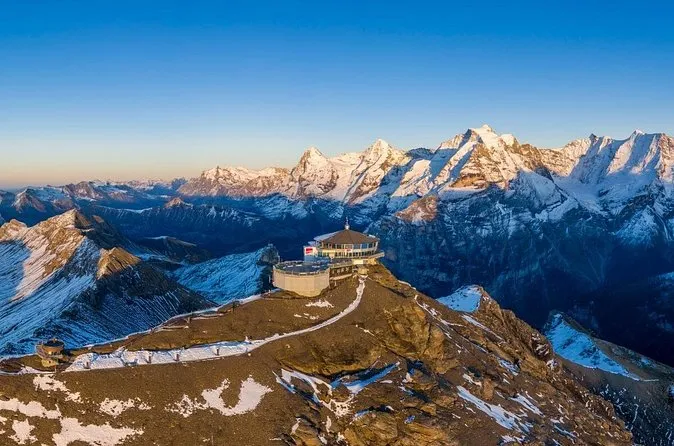
Ticket via Viator. Check which sections are included before you book: the official round trip from Stechelberg is CHF 115.
Check prices & availability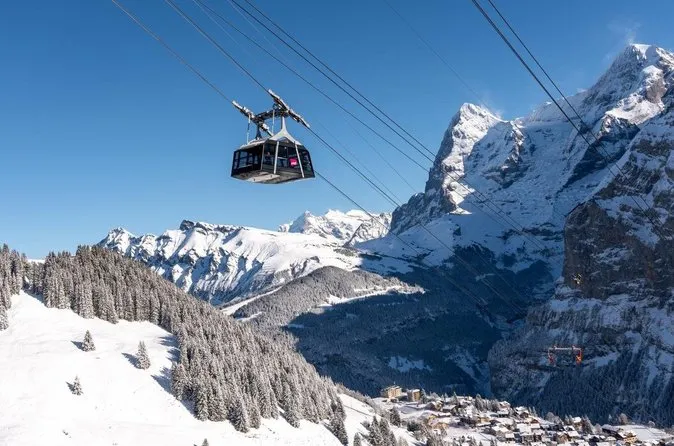
For travellers based in Lucerne who want the Bernese Oberland in one day.
Check prices & availability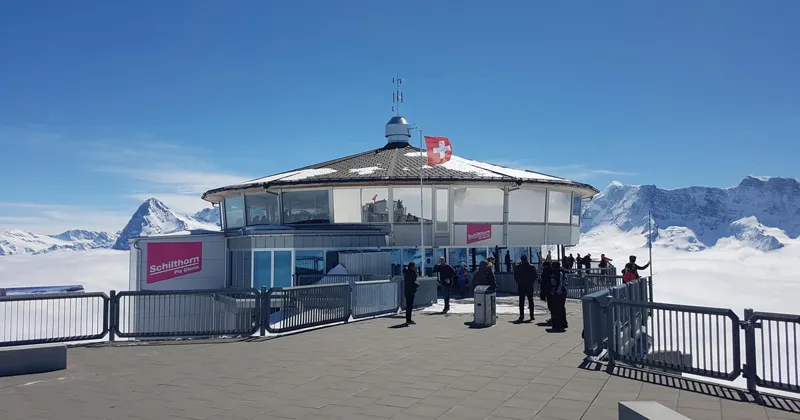
Guided half-day trip with transport from Interlaken. Good if you travel without a car.
Check prices & availabilityWhere to stay
Interlaken is the most practical base, Lauterbrunnen and Mürren the most spectacular, Brienz the quietest. Choose by what you want to do most and whether you have a car.
- Interlaken: best transport connections, most hotels and restaurants, but busy and not much of a mountain feeling.
- Lauterbrunnen: waterfalls outside your window and the shortest way to Mürren and the Schilthorn. Accommodation is limited and fills up early in summer.
- Mürren or Wengen: car-free, quiet in the evening, with the big mountains in front of you. Getting in and out takes longer.
- Brienz: on the lake, calm, good value, central for Lake Brienz and the Haslital. Our choice, and we would choose it again with a car.
We compare the options in more detail in our guide to where to stay in the Bernese Oberland.
Best time to visit
For hiking, swimming and clear mountain views, late June to mid-September is the best time; all cable cars and lake boats run and the trails are mostly free of snow. July and August are the busiest months.
Our experience from July: mornings were usually clear, and clouds often built up between 11:00 and 13:00, sometimes clearing again in the afternoon. On the Schilthorn the Eiger disappeared in cloud fifteen minutes after we arrived and came back two hours later. Check the webcams before you buy a summit ticket, and do the mountains early. Popular places such as Iseltwald, the Oeschinensee and the Staubbach Falls were busiest between 10:00 and 16:00. More in our guide to the Bernese Oberland in July.
What it costs
Switzerland is expensive, and the mountains are where you feel it most. Expect CHF 90 to 120 per adult for a summit cable car, CHF 10 to 15 for a gorge or waterfall, CHF 25 to 35 for a simple main course in a restaurant, and from roughly CHF 150 per night for a double room in summer.
Ways to keep costs down: use a pass if you do several mountains, pick one summit instead of three, eat lunch from the supermarket (Coop and Migros are everywhere), and stay in Brienz or another village instead of Interlaken. What our week really cost will be in our guide how expensive is Switzerland.
Our week at a glance
This is the route we actually drove in July 2026, with Brienz as our base. It is a good template for a first week with a car; with public transport, swap the order so that each day starts from Interlaken.
| Day | Places | Drive from Brienz | Main costs per adult |
|---|---|---|---|
| Sat, July 4 | Arrival, Brienz village and lakeside promenade | 0 min | Free |
| Sun, July 5 | Rosenlaui glacier gorge and Rosenlaui valley | about 35 min | Toll road and gorge entry |
| Mon, July 6 | Lauterbrunnen, Staubbach Falls, Trümmelbach Falls, evening swim at Lake Brienz | about 40 min | Parking and Trümmelbach entry |
| Tue, July 7 | Oeschinensee, Spiez on the way back | about 60 min | Gondola return and parking |
| Wed, July 8 | Brienzer Rothorn from Sörenberg | about 40 min | Cable car return |
| Thu, July 9 | Schilthorn, Birg, Grauseeli, Mürren | about 45 min | CHF 115 cable car return |
| Fri, July 10 | Aare Gorge, Iseltwald, beach at Lake Brienz | 15 to 25 min | Gorge entry, pier fee |
| Sat, July 11 | Departure |
Two things we would change: do the Schilthorn earlier in the week to keep a reserve day for the weather, and start every mountain day at least an hour earlier than we did.
How cable cars and mountain railways work here
Almost every summit in the Bernese Oberland is reached by cable car, gondola or cog railway, and they all work in a similar way: you buy a return ticket at the valley station or online, the first departures start between 7:00 and 8:30 in summer, and the last descent is usually between 17:00 and 18:00.
- Return tickets are the norm. One-way tickets cost a little more than half and make sense if you hike down.
- Morning departures are quieter and clearer. From about 10:00 the queues at popular stations grow, and by midday clouds often hide the peaks.
- Webcams are on the operators’ websites. Look before you pay: in fog a CHF 100 ticket buys you nothing.
- Revisions: in spring and late autumn many lifts close for a few weeks of maintenance. Check the dates before an April, May, October or November trip.
- Dogs are allowed on most lifts, sometimes free, sometimes with a dog ticket.
Practical tips for your trip
A few practical things make a trip to the Bernese Oberland much easier, and most of them are different from the rest of Europe.
- Mobile data: Switzerland is not part of the EU roaming zone. Check your plan before you go; an eSIM or a Swiss prepaid card avoids expensive surprises.
- Paying: cards and contactless payment work almost everywhere, including most cable cars and huts. Some small kiosks and honesty boxes for farm products only take cash or Twint, so carry a few francs.
- Timetables: the SBB Mobile app shows trains, buses, boats and many cable cars in one place, including platform changes.
- Shops: most supermarkets close early on Saturday and stay closed on Sunday, except at large stations such as Interlaken Ost.
- Water: tap water and the water from village fountains is drinkable unless a sign says otherwise. Bring a bottle.
- Clothing: even in July it is about 13 degrees colder on a 3,000-metre summit than in the valley, and windy. Pack a jacket, sunglasses and sun cream for every mountain day.
- Trails: yellow signs mark walking paths, white-red-white marks mountain trails that need sturdy shoes. The signs show walking times, not distances.
The Bernese Oberland with a dog
The Bernese Oberland is one of the most dog-friendly regions we have travelled. Miley came with us everywhere: on the Schilthorn cable cars (free for dogs), into restaurants, to the gorges and into almost every lake.
- Dogs must be on a leash on cable cars and boats, and in many places a dog ticket is required or the dog travels free; the guides list the rules for each place.
- Gorges with metal grating floors and the Thrill Walk at Birg are not for every dog.
- The lakes are ideal for a swim, but mountain lakes are cold even in July.
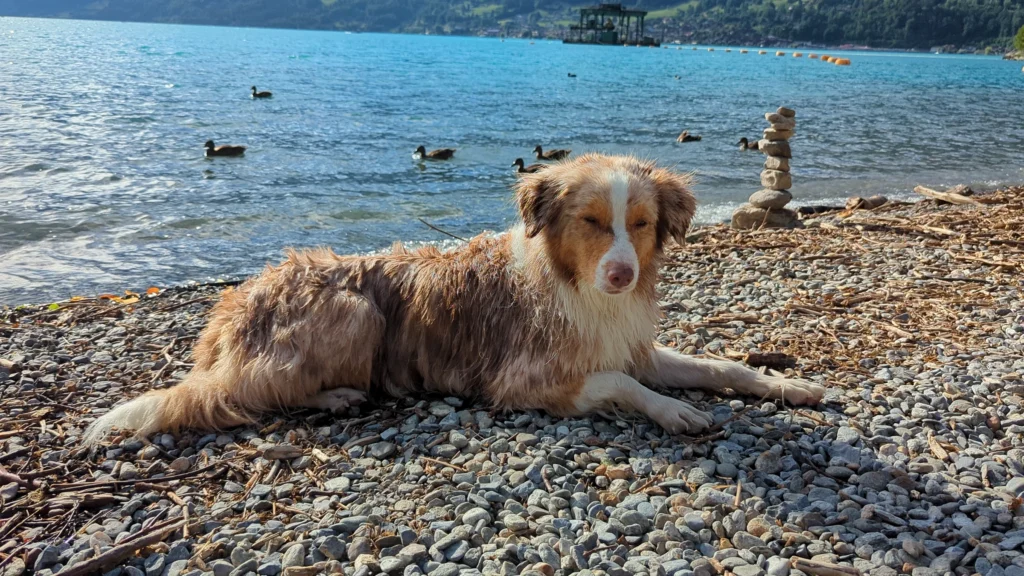
Our tips for each place are collected in our guide to the Bernese Oberland with a dog.
What we skipped (and why)
We did not go up the Jungfraujoch, and we did not visit Grindelwald, Wengen or Harder Kulm on this trip. With a week and a dog we preferred the Schilthorn for the classic view of the Eiger, Mönch and Jungfrau, and quieter places such as the Rosenlaui valley and the Grauseeli. We only write about places we have been to, so these will follow when we go back.
FAQ: Bernese Oberland
What is the most beautiful place in the Bernese Oberland?
For us it was a tie between the Lauterbrunnen Valley seen from Mürren and the Oeschinensee. For a single day with the biggest view, the Schilthorn on a clear morning is hard to beat.
Is Interlaken or Lauterbrunnen the better base?
Interlaken is better connected and has more choice. Lauterbrunnen is closer to the mountains and more beautiful, but smaller and fully booked earlier in summer.
Do you need a car in the Bernese Oberland?
No. Trains, buses, boats and cable cars reach almost everywhere. A car helps for the Rosenlaui valley, Kandersteg and flexible early starts.
Is the Berner Oberland Pass worth it?
It is worth it if you take at least two mountain railways plus some trains or boats within its validity. For one summit and mostly driving, single tickets are cheaper.
How many days do you need in the Bernese Oberland?
Three full days for the highlights, a week to see the places in this guide with time for bad weather.
Is the Bernese Oberland good for a trip with a dog?
Very good. Dogs are welcome on most cable cars, boats and in restaurants, often for free or a small fee.
Start planning with our newest guide, the Schilthorn and Piz Gloria, open the map, or go back to our Switzerland home page.