Trümmelbach Falls: the glacier waterfalls inside the mountain
 +13
+13Trümmelbach Falls are ten glacier waterfalls that thunder down inside a mountain in the Lauterbrunnen Valley, reached by a tunnel lift and lit by floodlights. Up to 20,000 litres of meltwater per second from the Eiger, Mönch and Jungfrau pour through a narrow limestone gorge, and you walk right next to them on stairs, galleries and bridges. We visited on July 6, 2026, on a sunny morning, and spent about an hour and a half between the tunnel lift, the upper falls in the dark and the lower falls in the daylight. This guide has the 2026 admission prices, opening hours, parking, the PostBus stop and everything we would tell a friend before they go.
Trümmelbach Falls at a glance
| What it is | 10 glacier waterfalls inside the mountain, accessible by tunnel lift and stairs |
|---|---|
| Location | Lauterbrunnen Valley, about 3 km beyond Lauterbrunnen village towards Stechelberg |
| Admission 2026 | Adults CHF 18 (about US$22), children 6 to 15 CHF 8 (about US$10), no group rates |
| Opening hours | Early April to early November, daily 9:00 to 17:00; July and August 8:30 to 18:00 |
| Water | Up to 20,000 litres per second in summer, from a catchment of 24 km² |
| Time needed | 1 to 2 hours; we needed about 75 minutes inside |
| Dogs | Not allowed |
| Children | Not allowed under 4 years; not suitable for strollers or wheelchairs |
| Parking | Free car park at the entrance, visitors only, max. 2 hours |
| PostBus | Line 141 from Lauterbrunnen station, stop “Trümmelbachfälle”, 7 minutes |
Prices and hours: truemmelbachfaelle.ch, as of October 2026. US dollars at 1 CHF = 1.21 USD.
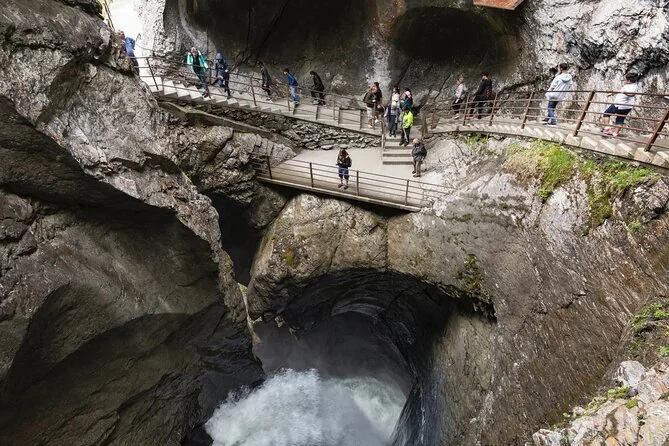
Van transfer from Interlaken and back, entrance ticket included, about 3 hours.
Check prices & availability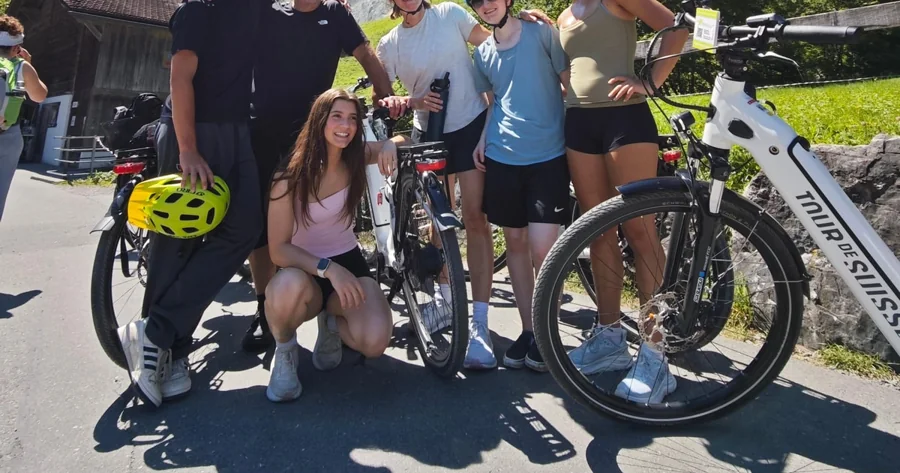
Guided 6-hour e-bike tour with Staubbach Falls and 45 minutes at Trümmelbach Falls, entrance fee included.
Check prices & availability- Are Trümmelbach Falls worth it?
- What makes the falls unique
- Trümmelbach Falls tickets and admission 2026
- Opening hours, season and the best time to go
- The tunnel lift
- The route through the gorge, fall by fall
- How to get to Trümmelbach Falls
- Parking at Trümmelbach Falls
- Dogs, small children and accessibility
- Our visit, step by step
- How to combine it with the rest of the valley
- Tips for your visit
- FAQ
Are Trümmelbach Falls worth it?
Yes. For CHF 18 you get something you will not see anywhere else in the Alps: a glacier river that has drilled its way through the rock and now falls in ten steps inside the mountain, so close that you feel the spray. It is one of the best value sights in the Lauterbrunnen Valley and works in any weather.
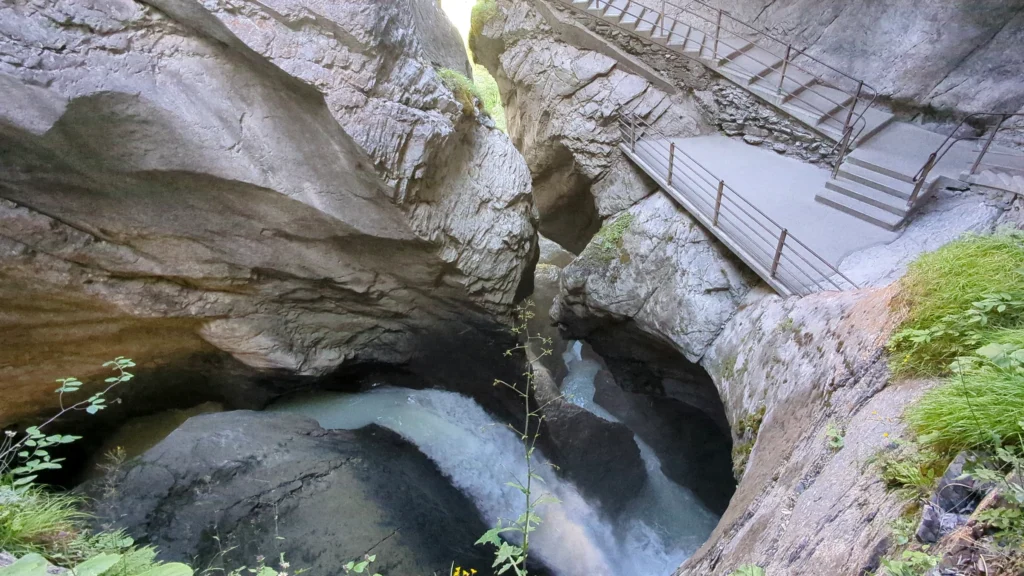
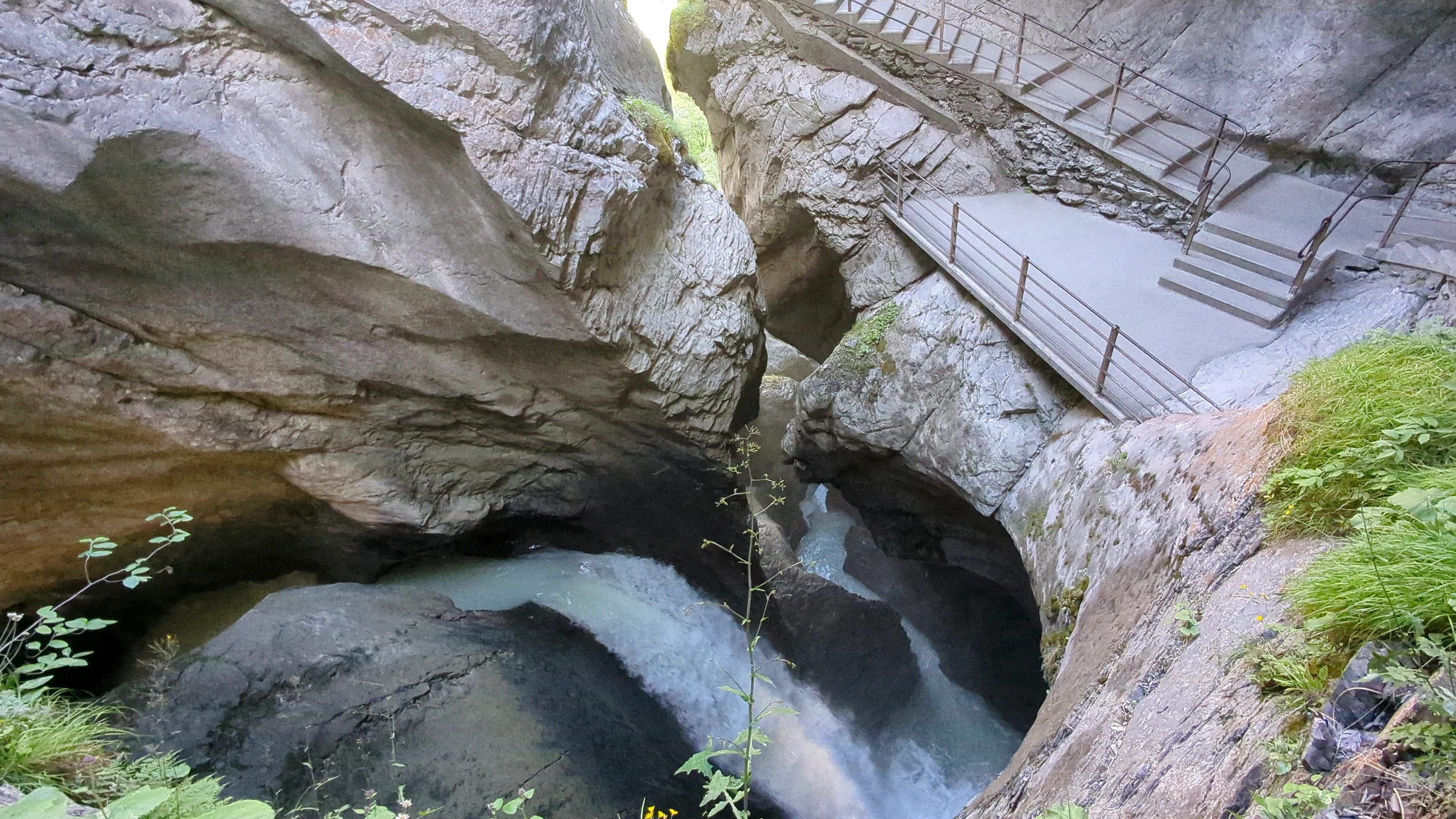
Most waterfalls in the valley, like the famous Staubbach Falls, drop freely over the cliffs and you look at them from below. The Trümmelbach has instead cut a twisting slot into the limestone, and the water corkscrews from one round basin to the next while the whole gorge roars. According to the operator, the name describes a sound, roughly “drum brook”.
What surprised us most was the variety. The upper part is dark and lit by spotlights, almost like a cave. The lower part opens up, with daylight and plants on the rock. If you have only one rainy morning in the valley, this is the place to spend it.
What makes the falls unique
Trümmelbach Falls are the only glacier waterfalls in Europe that are inside a mountain and still open to visitors, according to the operator. The stream drains the glacier walls of the Eiger (3,970 m), Mönch (4,099 m) and Jungfrau (4,158 m) on its own, from a catchment of about 24 km², half of it covered by ice and snow.
A few numbers from the operator’s information panels and website help to understand what you are looking at:
- Water: up to 20,000 litres per second during snowmelt and glacier melt. In April and October, after frosty nights, it can drop to a few dozen litres per second. In winter the falls freeze and fall silent.
- Debris: according to a study by the hydraulics laboratory of ETH Zurich, the Trümmelbach carries around 20,200 tonnes of rock, gravel and sand down the valley every year. This load works like sandpaper and keeps cutting the gorge deeper.
- Age: the stream started drilling into the rock during the last ice age and has been roaring through the limestone for about 15,000 to 20,000 years.
The fine sand in the meltwater gives the Trümmelbach its milky colour in summer, and that is exactly what we saw in July. According to the operator, the water turns clear blue and green in autumn.
The lowest falls were made accessible between 1877 and 1886, the tunnel lift was built in 1913, and in 1990 the lower and upper halves of the gorge were connected. Today 10 falls are accessible over about 600 metres, with 140 metres of height difference, 400 metres of galleries, 5 tunnels and 16 floodlights. The Trümmelbach is listed in the Swiss federal inventory of landscapes and natural monuments of national importance.
Trümmelbach Falls tickets and admission 2026
Admission to Trümmelbach Falls costs CHF 18 for adults (about US$22) and CHF 8 for children aged 6 to 15 (about US$10) in 2026. The tunnel lift is included. Tickets are sold only at the entrance, and the operator offers no group rates.
| Ticket (2026) | Price | In US dollars |
|---|---|---|
| Adult | CHF 18 | ≈ US$22 |
| Child 6 to 15 | CHF 8 | ≈ US$10 |
| Family example: 2 adults, 2 children | CHF 52 | ≈ US$63 |
| Children under 4 | Not admitted | |
A few things worth knowing before you go:
- No online tickets: you buy your ticket at the ticket office at the start of the tunnel. There is no need to book ahead and no timed entry.
- Ages 4 and 5: the official price list has no separate fare for this age group. Ask at the ticket office.
- Passes: the official website mentions no Swiss Travel Pass or Half Fare Card discount. Plan to pay the full price.
- Tours: some e-bike and minibus tours from Interlaken include the entrance fee (see the end of this guide).
Opening hours, season and the best time to go
Trümmelbach Falls are open from early April to early November, every day from 9:00 to 17:00, and in July and August from 8:30 to 18:00. The exact opening and closing dates depend on the weather, so check the official website at the start and end of the season.
The falls are at full power from late spring to late summer: snowmelt from April to June, glacier melt from June to September, and more after heavy rain. In October the flow drops noticeably.
- Morning: we arrived at about 9:20 on a Monday in July, and the car park and the lift were still quiet. By the time we reached the lower viewing platforms around 10:15, a tour group was crowding the railings.
- Bad weather: rain is no reason to skip Trümmelbach Falls. Most of the route is inside the rock or under overhangs, and the water is even stronger after rain.
The tunnel lift
The tunnel lift is a small funicular inside the rock that takes you about 100 metres up in 60 seconds, so you start your visit in the middle of the gorge without climbing. It holds about 40 people, runs on a 45 degree slope over 105 metres and can carry close to 500 people per hour.
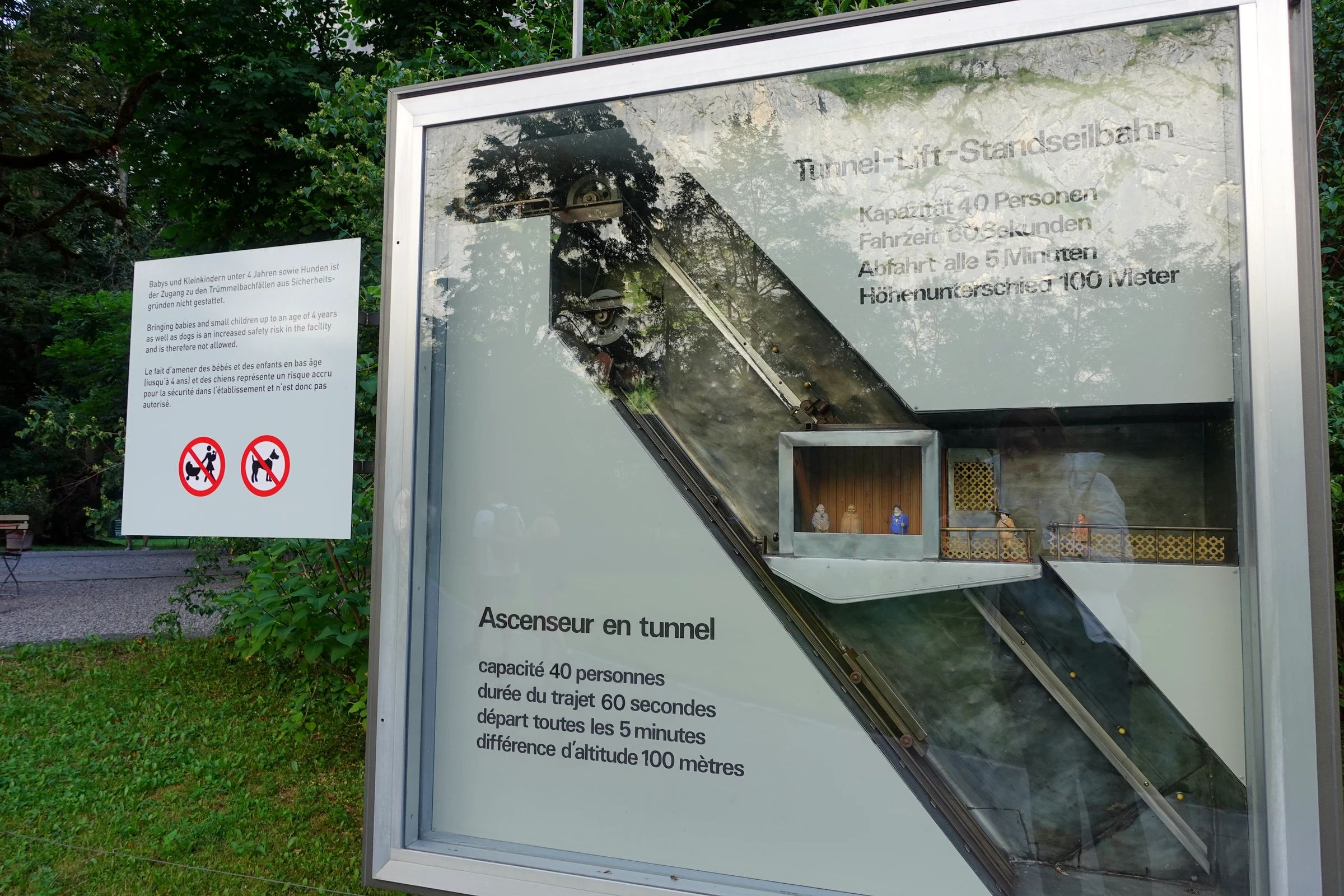
The lift was first built in 1913; the current cabin with glass walls and roof dates from 1983 and is the third installation on this spot. A counterweight equivalent to a cabin with about 15 passengers saves energy. You enter through a short tunnel in the cliff, buy your ticket and wait at the lower station. A sign at the entrance gives departures every 5 minutes. We reached the tunnel at 9:34 and were in the cabin five minutes later.
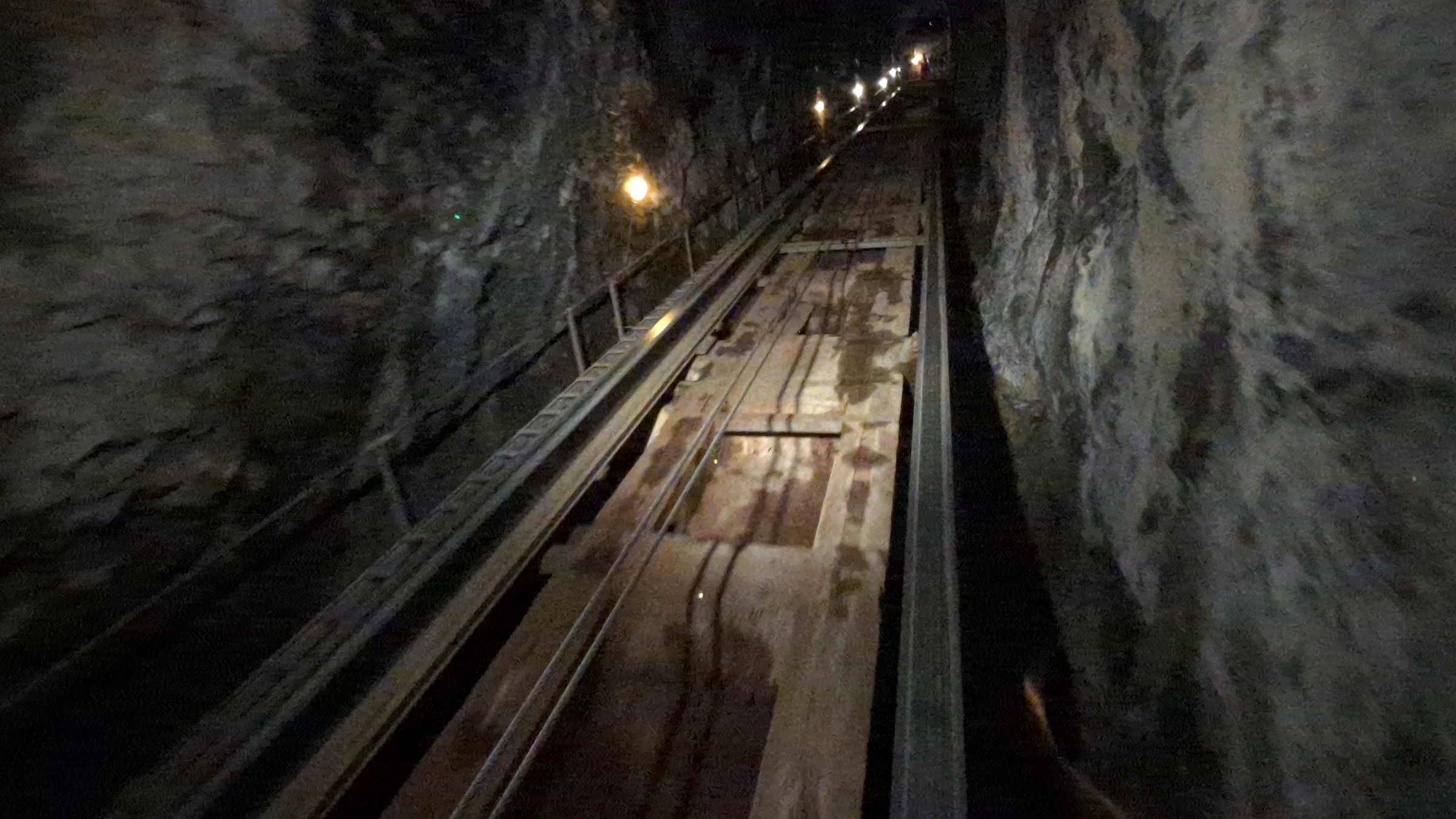
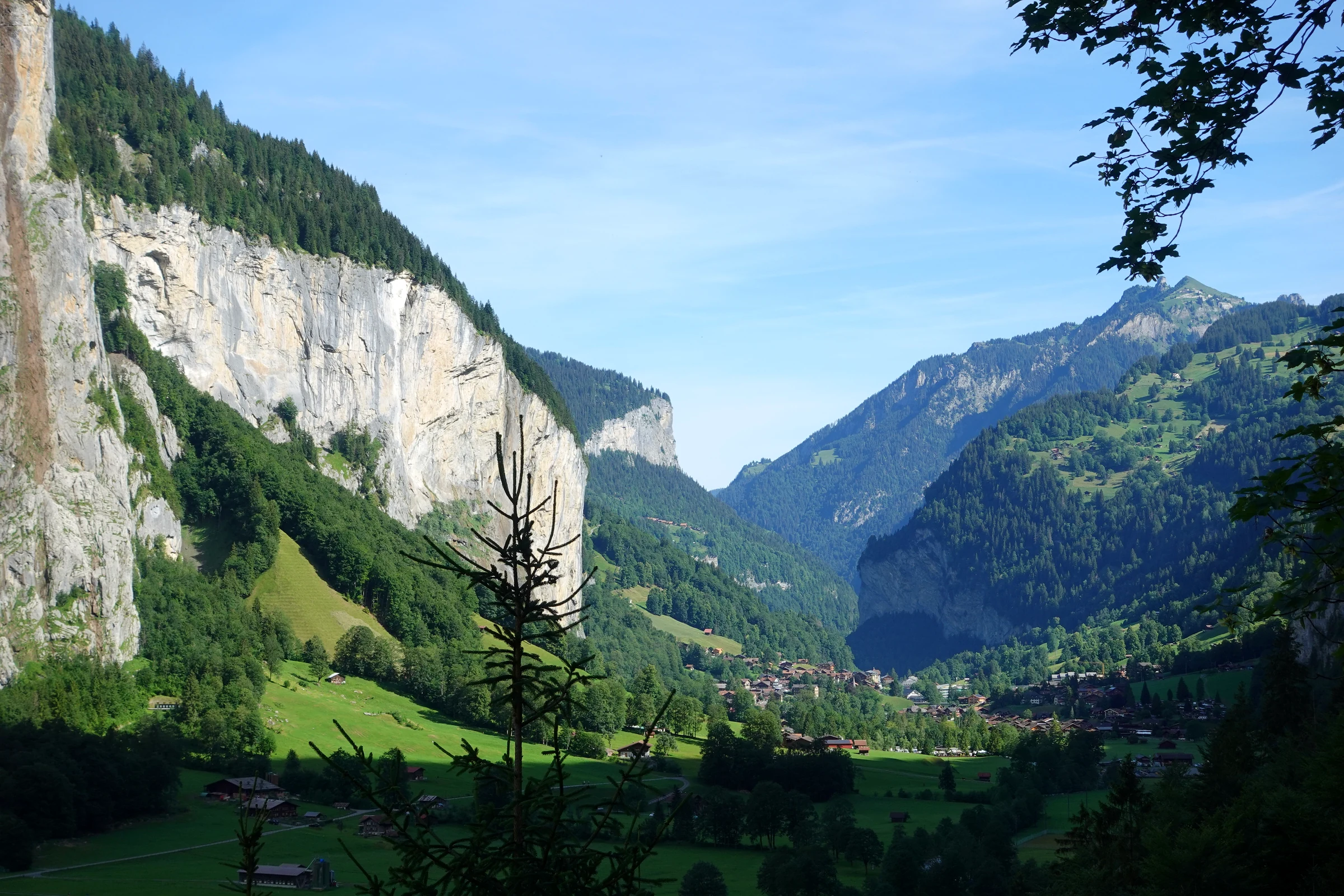
During the ride you look up the inclined shaft, hewn into the rock and lit by a row of lamps. At the top the first thing you see is not a waterfall but the Lauterbrunnen Valley.
If you prefer, you can also walk the whole route on foot. Stairs run alongside the gorge from the valley floor to the upper falls. Most visitors take the lift up and walk down, and the route map at the entrance is laid out for exactly that.
The route through the gorge, fall by fall
From the upper lift station you first climb a series of stairs and galleries to the highest falls, then walk back down past all ten falls to the exit at the bottom. The path is well secured with railings everywhere, but it is steep, wet and narrow in places.
The route map at the entrance numbers the falls from 1 at the bottom to 10 at the top. The lift brings you out between falls 6 and 7. From here the signs lead you up through the dark upper part to falls 7 to 10, and then back down past the upper station to falls 6 to 1.
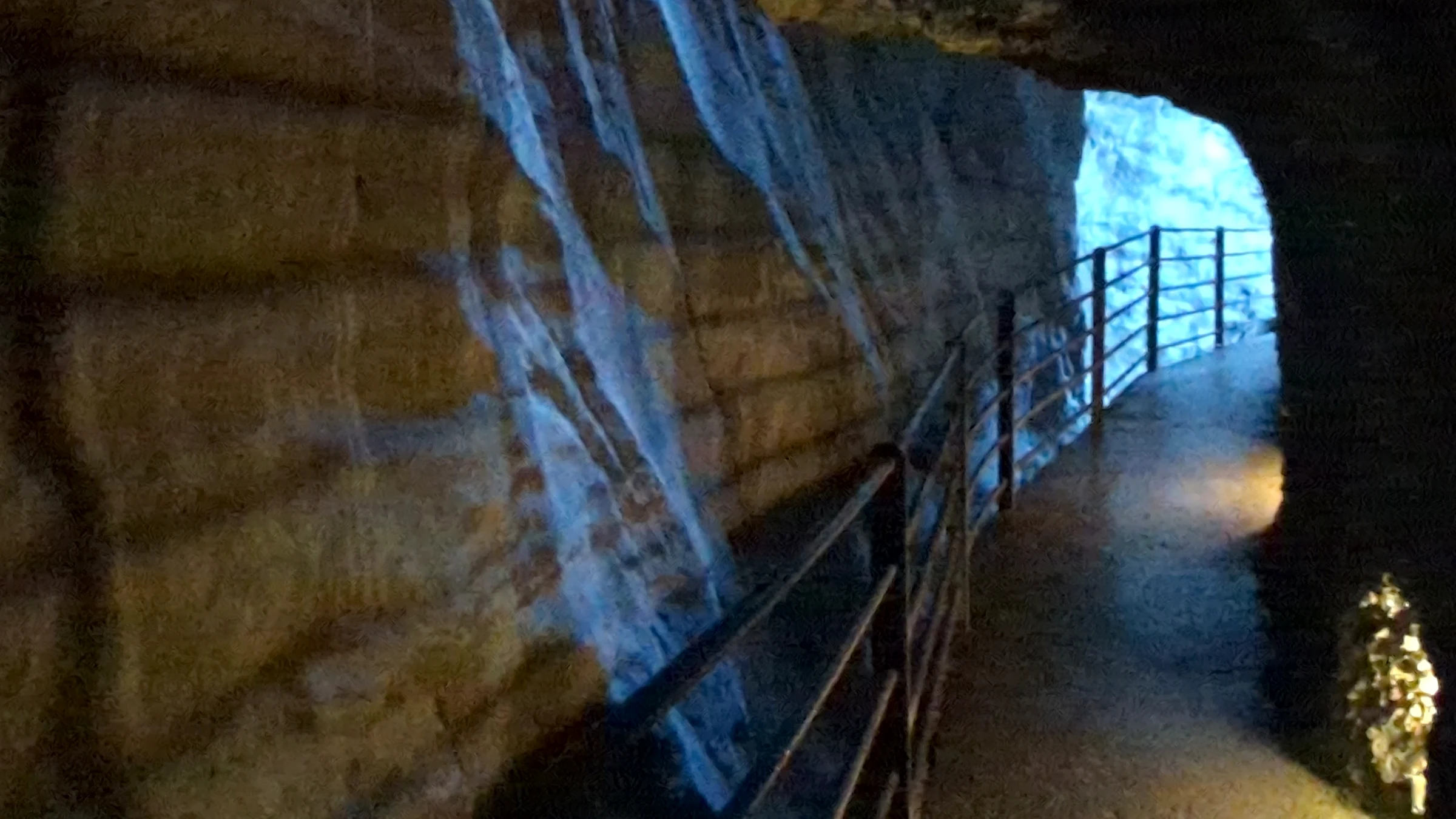
The upper falls: inside the mountain
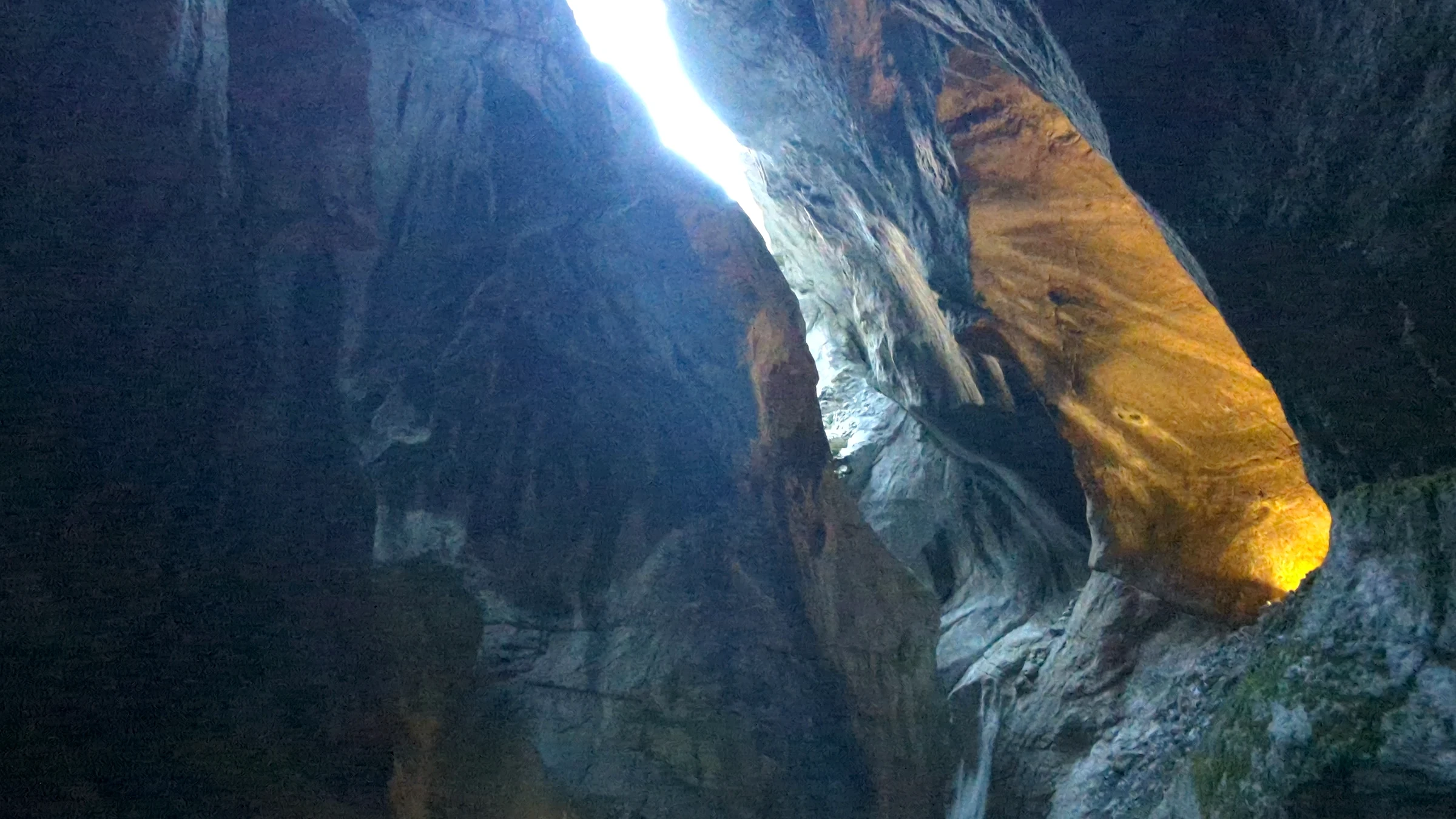
Falls 7 to 10 are the most spectacular part. The gorge narrows to a slot, you walk through short tunnels and along galleries cut into the rock, and floodlights light up the water and the polished walls. Some of the lights are coloured, and the rock glows orange and blue. In places a crack of sky is visible high above you, otherwise you could think you were in a cave. It is loud: you have to raise your voice to talk.
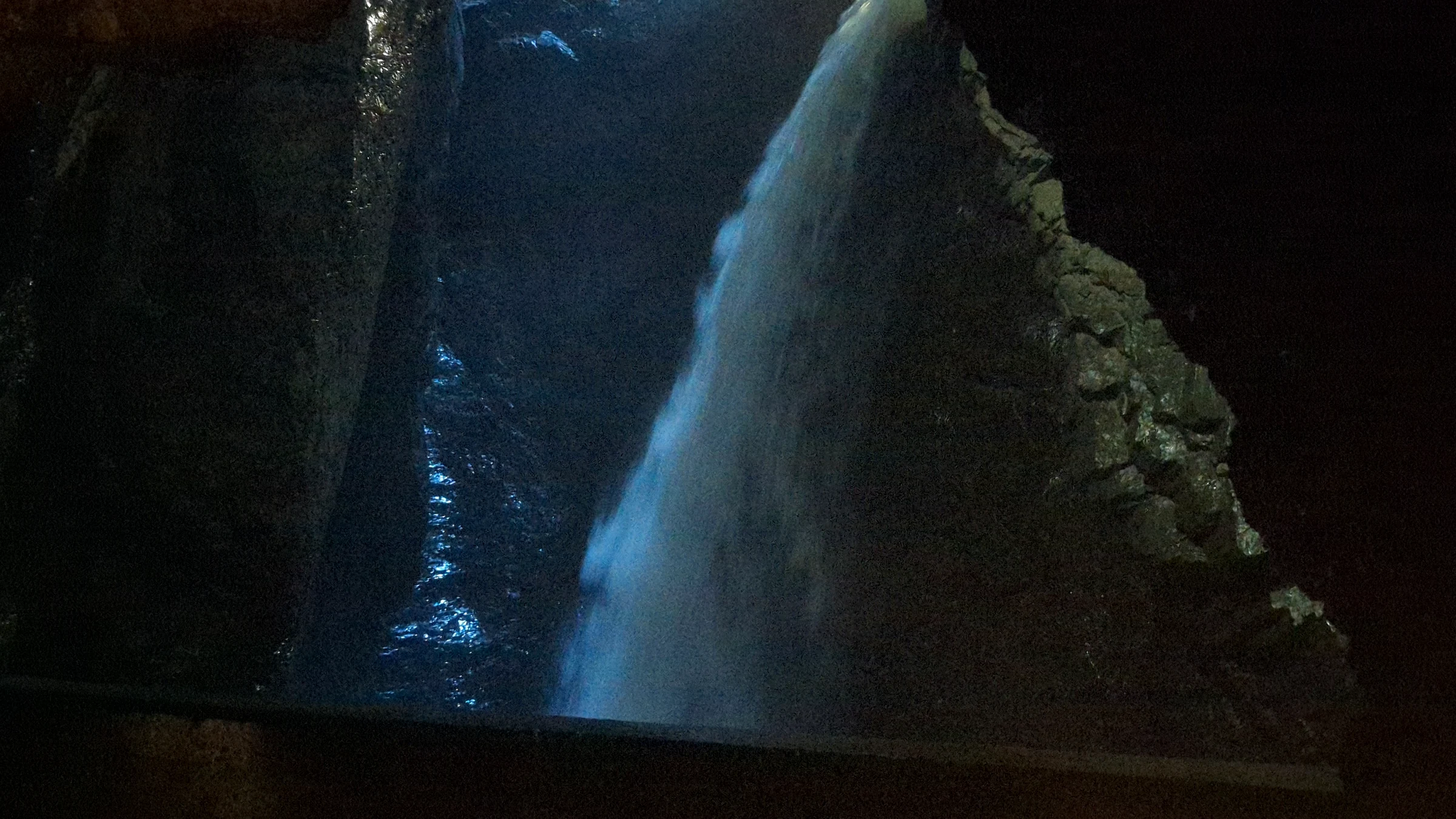
In the darkest section, the falls are lit from the side by floodlights. From one platform you look directly into a waterfall that drops through a black cavern, and the light catches every drop. The spray reaches the walkway, so keep your camera covered between shots.
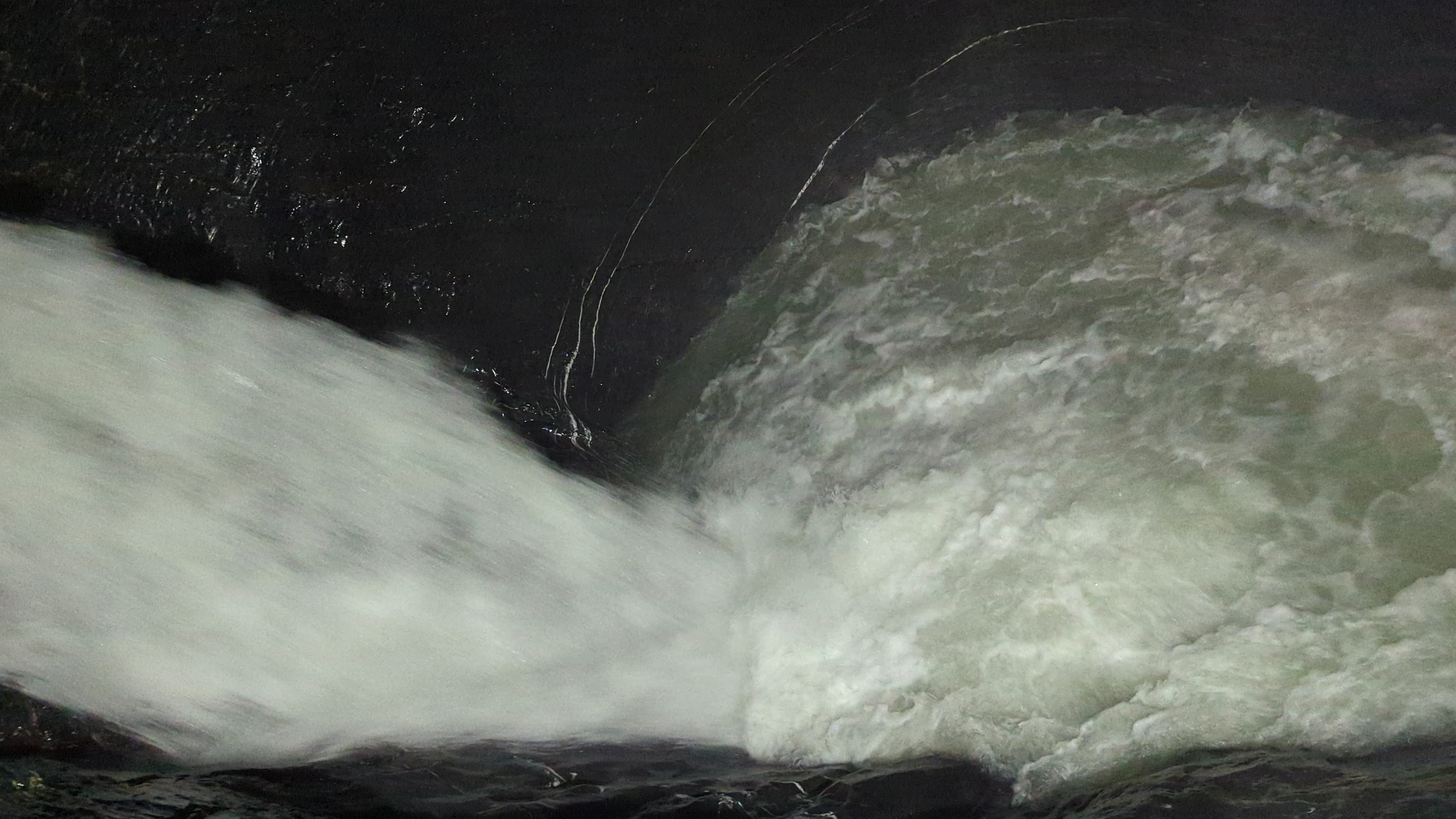
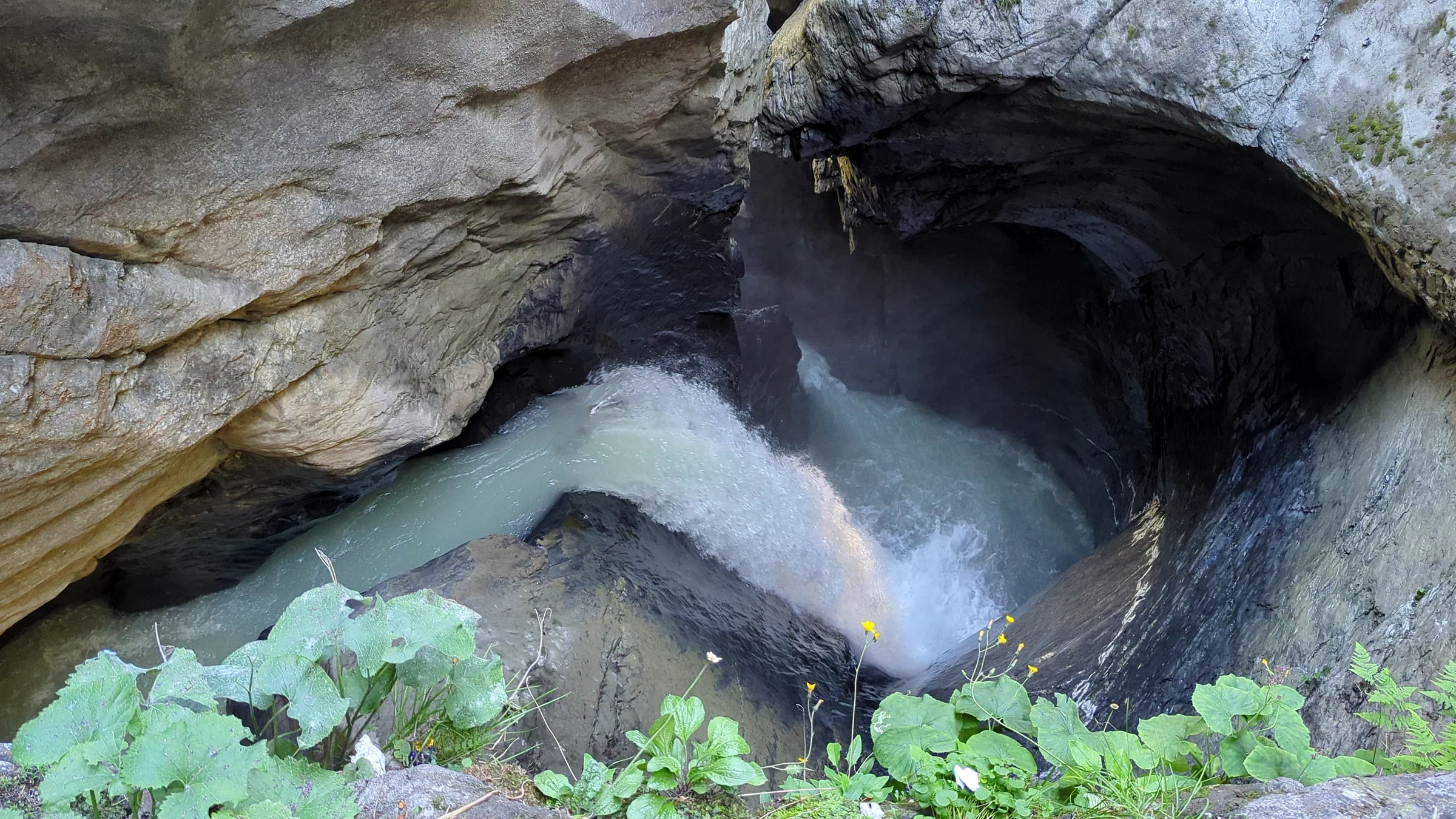
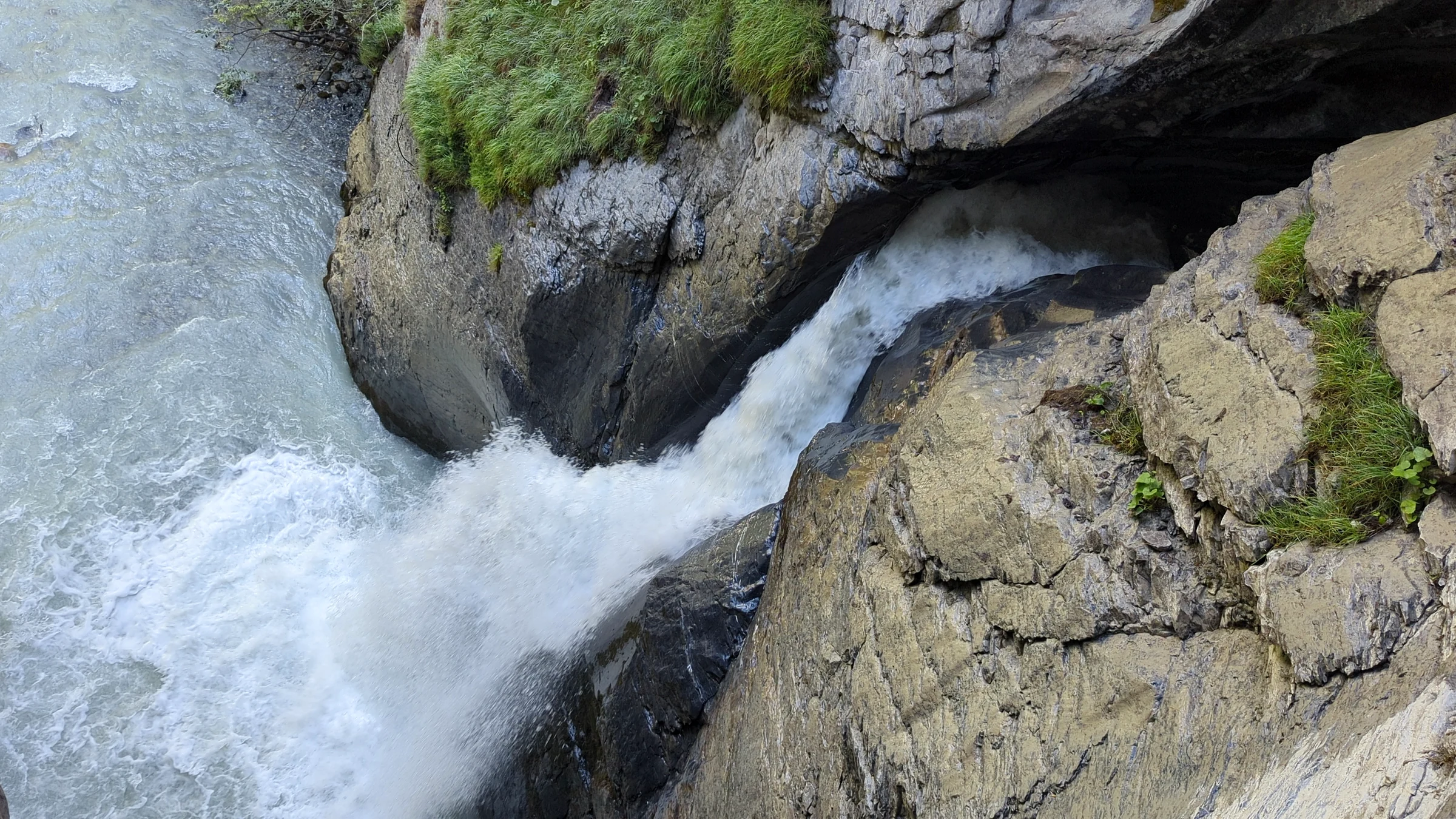
Further down in the dark section you stand right above a basin and look into the water from a few metres away. In July it was milky and grey-green, loaded with fine rock flour from the glaciers above. The force of it is hard to describe: the water does not fall so much as explode from one basin into the next.
The middle section: the corkscrew basins
Around the upper lift station the gorge is open to the sky. Here you find the famous corkscrew basins, where the water has drilled round potholes into the rock and swirls through them like a spiral. This is the best photo spot of the visit, because daylight reaches the water from above. We passed it twice: at 9:50 on the way up it was almost empty, at 10:18 on the way down a tour group filled the platform for a few minutes. Wait a moment and the railings clear again.
The lower falls: back in the daylight
Below the lift station the path follows the gorge downhill in the open air. Plants grow on the ledges, and the falls are broader and easier to photograph than in the dark upper part.
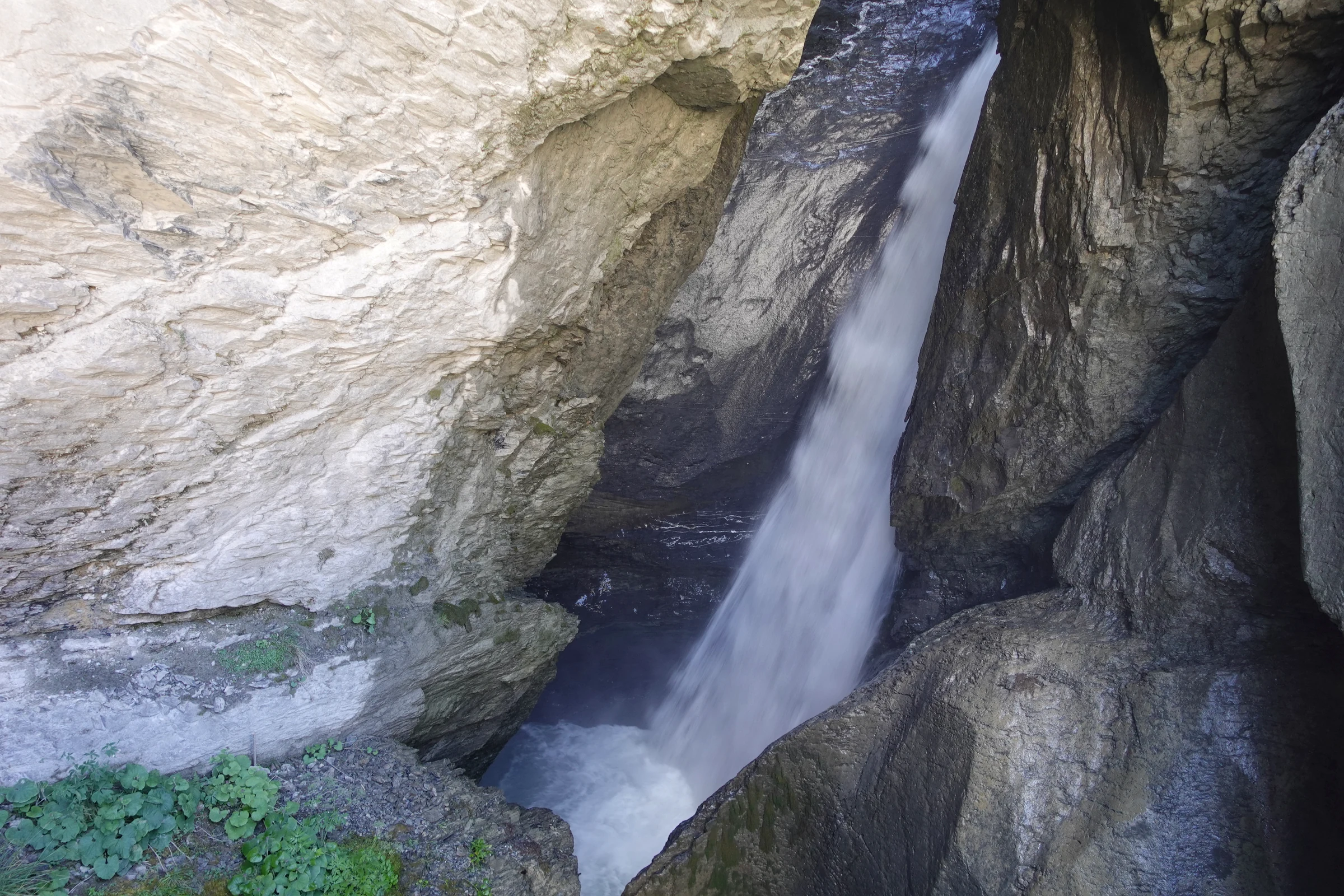
The last stretch leads down a long staircase along the outer wall of the gorge, with a view of the cliffs above. At the bottom you come out next to the entrance, where the stream leaves the mountain and flows out into the White Lütschine. In total we needed about 75 minutes from the lift to the exit, at a relaxed pace with plenty of photo stops.
How to get to Trümmelbach Falls
Trümmelbach Falls are about 3 km beyond Lauterbrunnen village on the road to Stechelberg. By public transport you take the PostBus line 141 from Lauterbrunnen station to the stop “Trümmelbachfälle”, which takes 7 minutes; by car you follow the valley road and park directly at the entrance.
- By train and PostBus: from Interlaken Ost take the train to Lauterbrunnen, then the PostBus 141 towards Stechelberg. In the timetable we checked for October 2026, buses run every 30 minutes, and the whole trip from Interlaken Ost takes about 38 minutes. The stop is right in front of the entrance.
- By car: take the motorway to Interlaken, leave at the Wilderswil exit and follow the signs to Lauterbrunnen. Drive through the village and continue for about 3 km towards Stechelberg. For navigation enter “Trümmelbach, 3824 Lauterbrunnen”.
- On foot: an easy valley path along the White Lütschine connects Lauterbrunnen, Trümmelbach and Stechelberg. Count on about 1 hour 10 minutes from Lauterbrunnen station to the falls, and about the same from Stechelberg. On the way from Lauterbrunnen you pass close to the Staubbach Falls and see several more waterfalls on the cliffs.
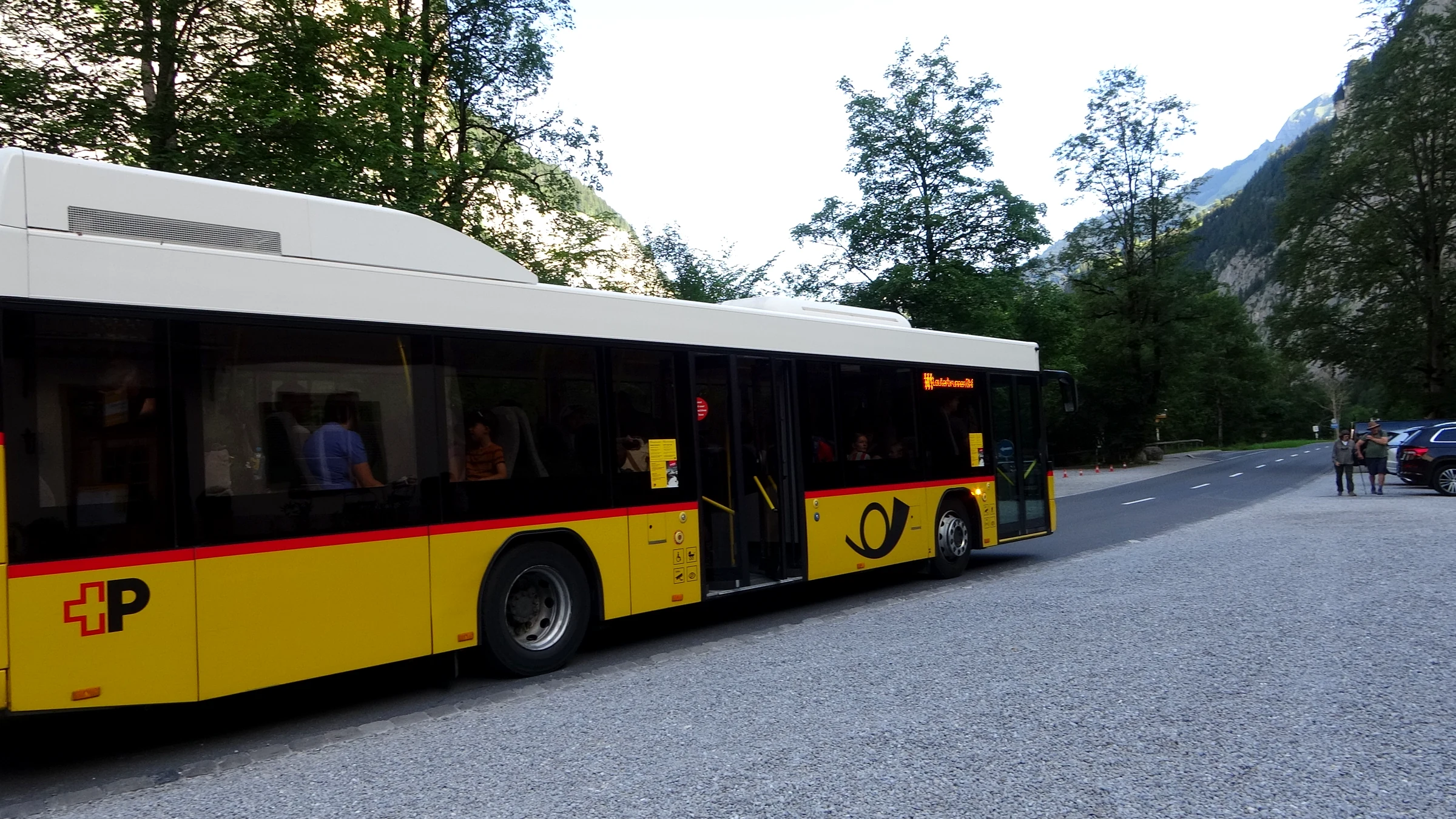
From the falls the same bus continues to Stechelberg, Schilthornbahn in about 5 minutes. That makes it easy to combine the falls with the cable car to the Schilthorn on the same day.
Parking at Trümmelbach Falls
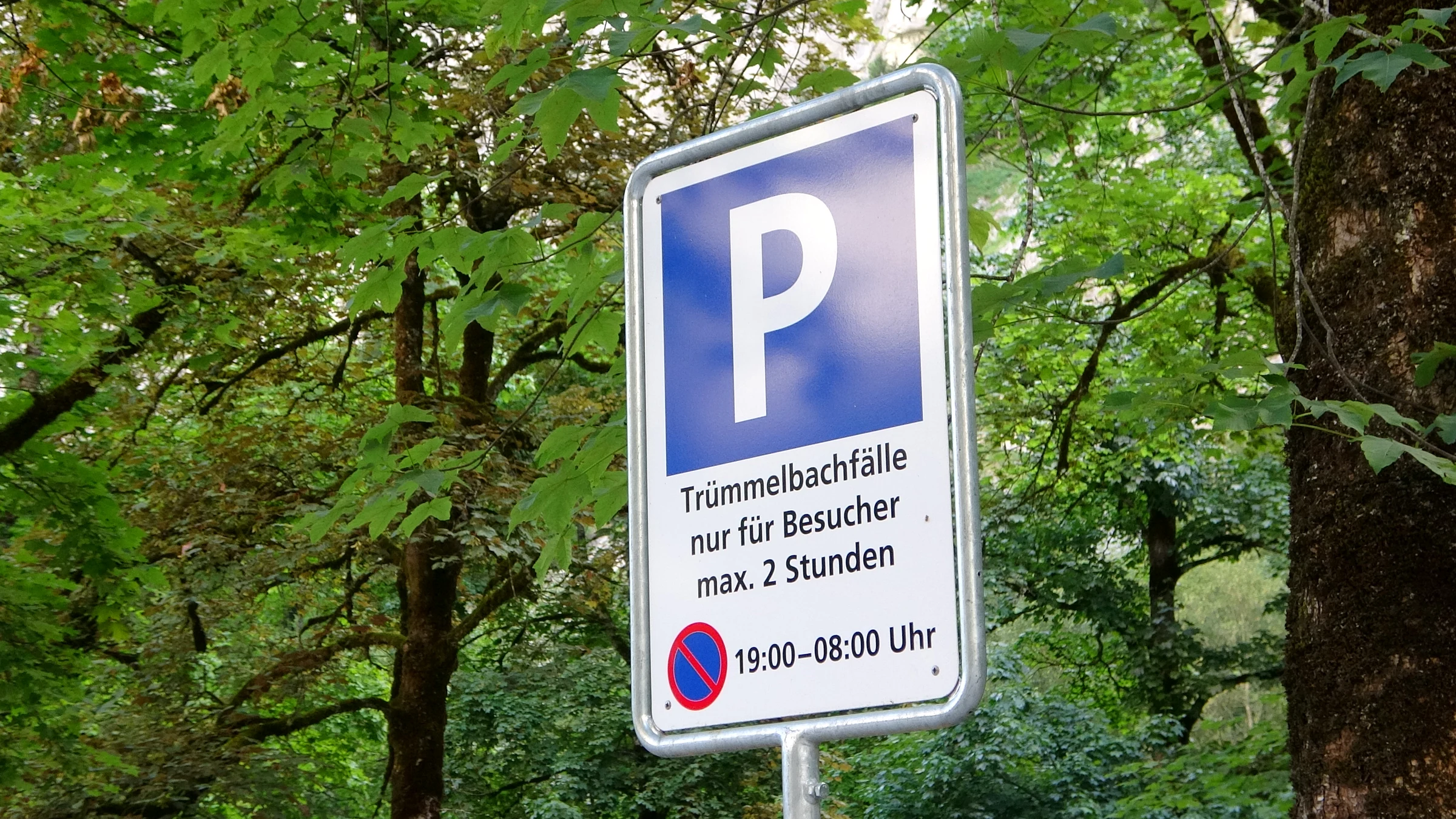
There is a large, free car park right at the entrance of Trümmelbach Falls. The sign at the car park limits parking to visitors of the falls and to a maximum of 2 hours, and parking is not allowed between 19:00 and 8:00.
Two hours are enough for the falls, but not for a valley hike; for that, park in Lauterbrunnen. We came by car from our base in Brienz, about 45 minutes away, and had no trouble finding a space at 9:20 on a weekday morning in July.
Dogs, small children and accessibility
Dogs are not allowed at Trümmelbach Falls, and neither are babies and children under 4 years. The operator bans both for safety reasons, and the route is not suitable for strollers or wheelchairs.
This was the one stop of our day where Miley could not come along. If you travel with a dog, plan the falls when someone can stay outside, or combine them with a walk in the valley where dogs are welcome. Right after the falls we drove on to Lauterbrunnen, where Miley could explore the meadows below the Staubbach Falls with us.
Older children love the falls, but the operator asks parents to hold them by the hand. Even with the lift you climb and descend a lot of stairs, and there is no step-free route.
Our visit, step by step
This is how our morning went on Monday, July 6, 2026. The weather was sunny with a blue sky, and the visit took about an hour and a half from the car park back to the car park.
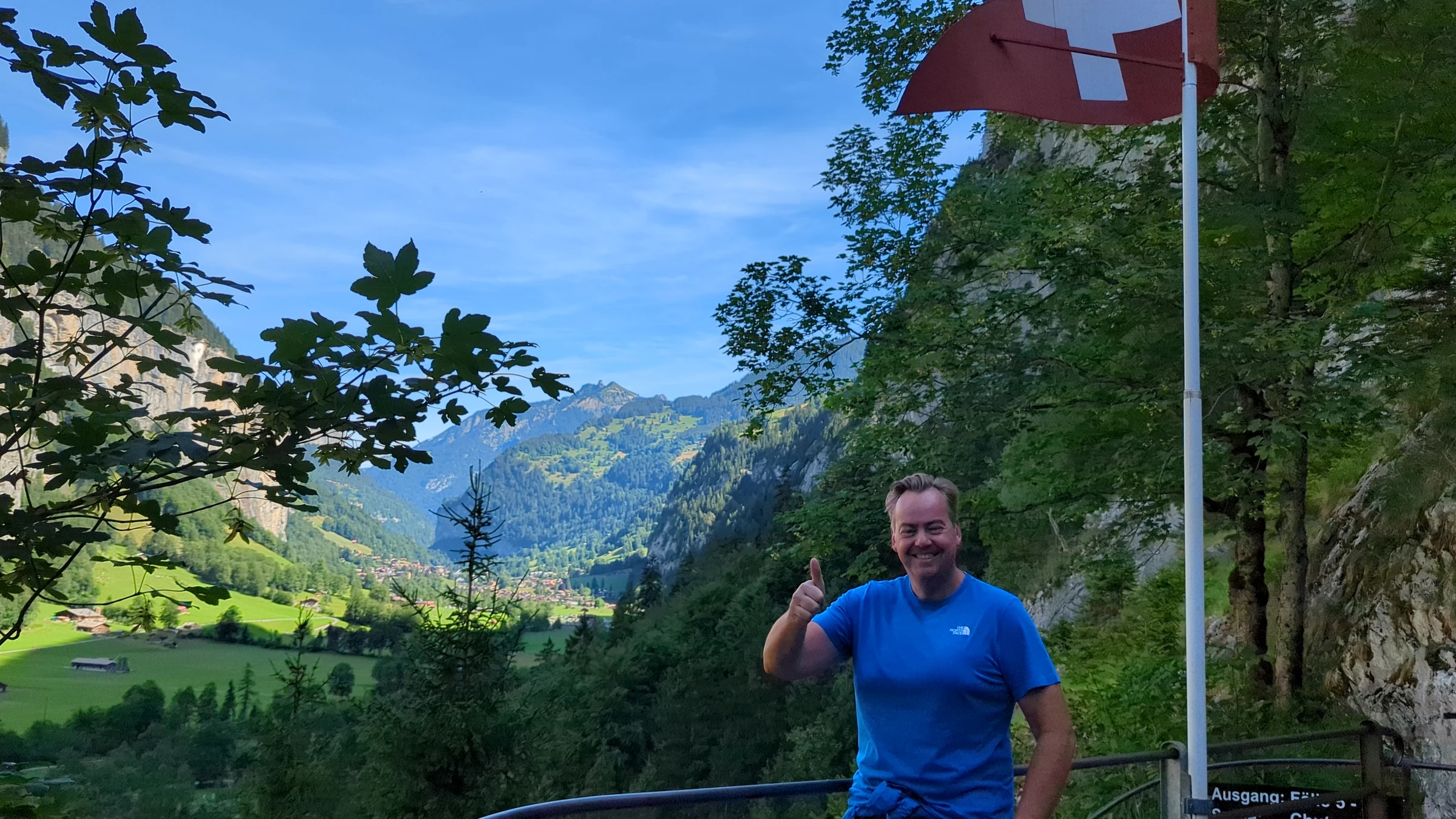
- 8:50: drive from Brienz via Interlaken into the Lauterbrunnen Valley.
- 9:20: arrival at the car park, plenty of spaces left.
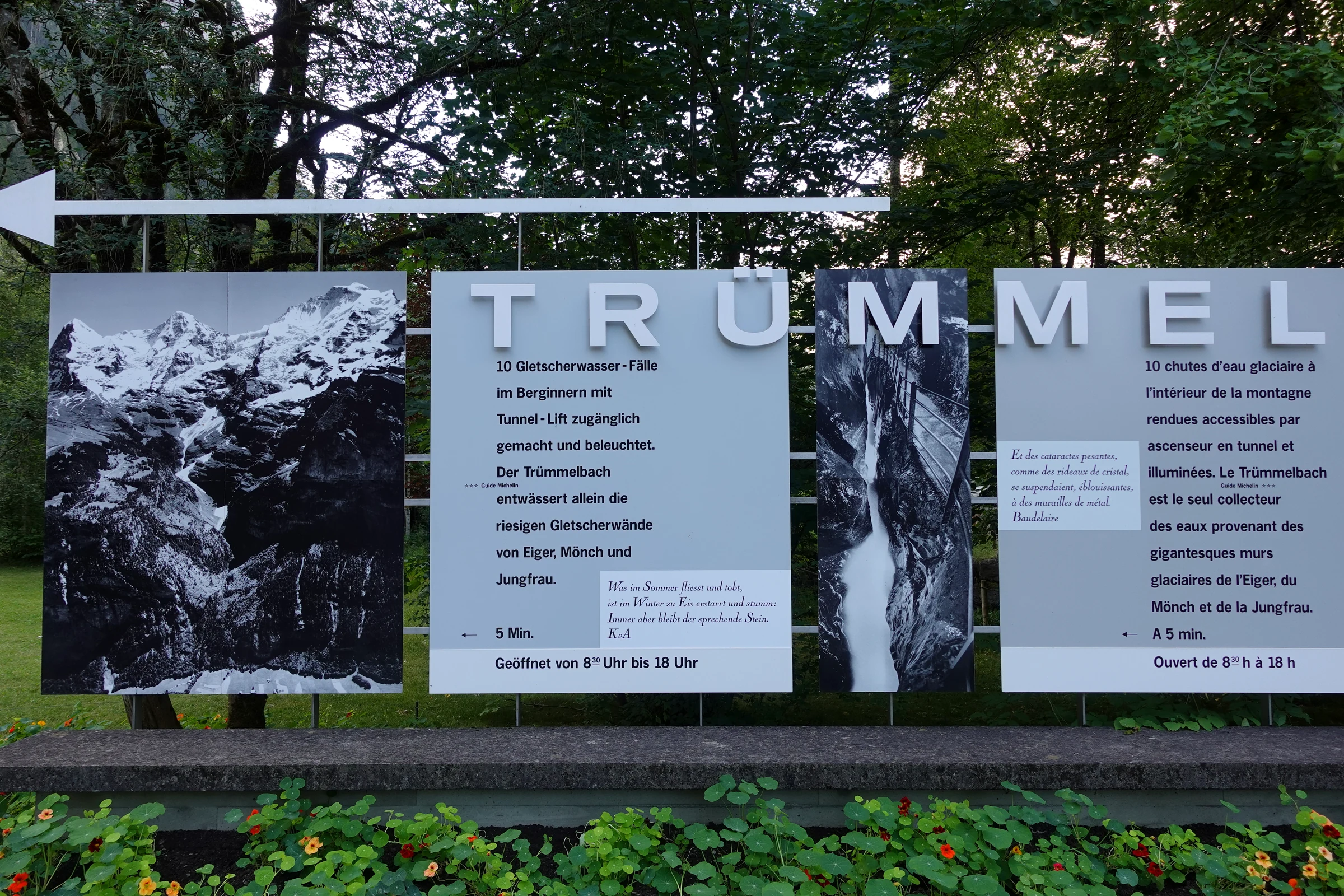
- 9:25: a short walk past the signboards and the old chalet to the entrance. The PostBus stops right next to it.
- 9:34: entrance tunnel and ticket office, with the route map on the wall.
- 9:39: tunnel lift up, one minute of ride.
- 9:42: view over the Lauterbrunnen Valley at the upper station.
- 9:47 to 10:12: the upper falls in the dark, illuminated part of the gorge.
- 10:18: the corkscrew basins, crowded with a tour group for a few minutes.
- 10:25 to 10:45: descent past the lower falls in the daylight.
- 10:50: back at the kiosk, then a short break in the garden under the trees.
- 11:30: on to Lauterbrunnen and the Staubbach Falls.
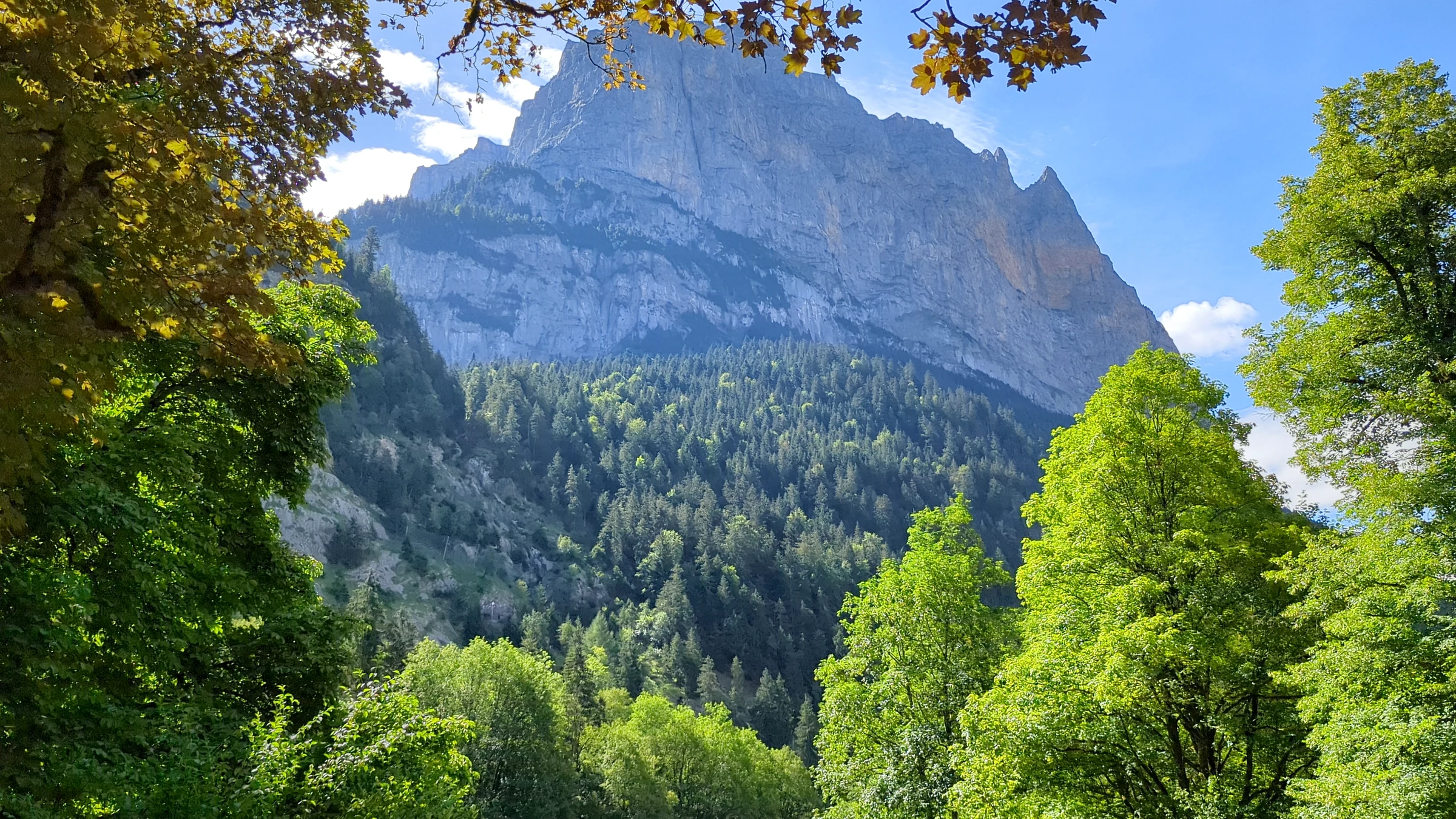
Next to the entrance there is a self-service restaurant with a terrace, a small souvenir shop and a garden with tables in the shade. It is a pleasant place to dry off before you move on.
How to combine it with the rest of the valley
Trümmelbach Falls take only half a morning, so combine them with other sights in the valley. The classic combination is the falls in the morning and the Staubbach Falls and Lauterbrunnen village in the afternoon, or the falls first and then the cable car up to Mürren and the Schilthorn.
- Staubbach Falls: the free waterfall that drops right next to Lauterbrunnen village is the perfect contrast: one waterfall falls freely over the cliff, the other one drills through the mountain. Our guide to the Staubbach waterfall has the details.
- Mürren and the Schilthorn: the Schilthorn cable car in Stechelberg is only 5 minutes by bus from the falls. Do the falls at opening time, then go up to the car-free village of Mürren for lunch.
- More gorges: if you like the Trümmelbach, you will like the other gorges of the Bernese Oberland too. We compare them in our guide to gorges and waterfalls in the Bernese Oberland.
All of these are covered in our Lauterbrunnen Valley guide.
Tips for your visit
- Go early. Arrive at opening time, at 8:30 in July and August, to beat the tour buses from Interlaken.
- Wear shoes with a good grip. The stairs and rock are wet, and some steps are worn smooth. Flip-flops are a bad idea.
- Bring a light jacket. The spray reaches the walkways in several places, and the gorge is shaded. A rain jacket with a hood is more practical than an umbrella in the narrow galleries.
- Protect your camera. A cloth to wipe the lens is useful; a tripod is not practical on the narrow paths.
- Do not rush the upper part. The illuminated falls inside the mountain are the highlight.
- Check the season. The exact opening in early April and closing in early November depend on the weather. Check the official website if you visit at the edge of the season.
Tours and tickets
You do not need a tour to visit Trümmelbach Falls: tickets are sold only at the entrance and the bus stops right in front. Tours make sense if you are based in Interlaken without a car and want transport, entry and a guide in one. These are the options that include the entrance fee:
Van transfer from Interlaken and back, entrance ticket included, about 3 hours.
Check prices & availabilityGuided 6-hour e-bike tour with Staubbach Falls and 45 minutes at Trümmelbach Falls, entrance fee included.
Check prices & availability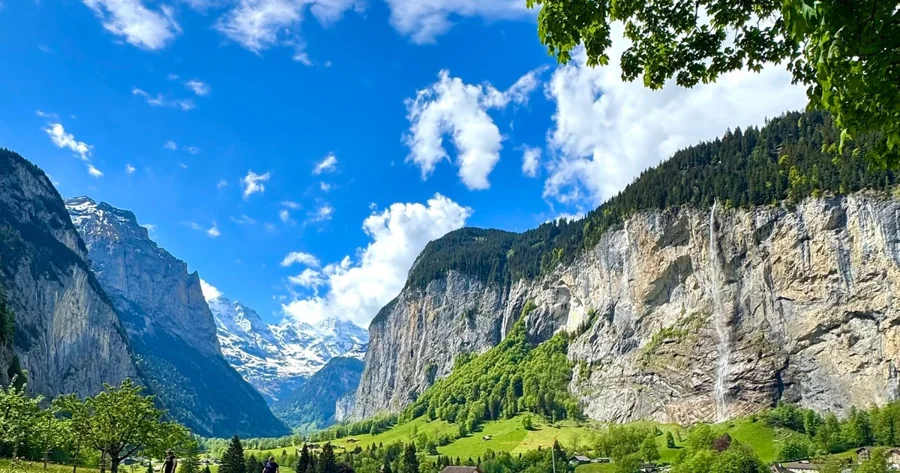
Starts in Stechelberg with pickup in Interlaken or Lauterbrunnen; cheese tasting and Trümmelbach entry included. No reviews yet.
Check prices & availabilityFAQ: Trümmelbach Falls
How much does Trümmelbach Falls cost in 2026?
CHF 18 for adults (about US$22) and CHF 8 for children aged 6 to 15 (about US$10). The tunnel lift is included. There are no group rates, and tickets are only sold at the entrance.
Can you buy Trümmelbach Falls tickets online?
No, the operator sells tickets only on site, and you do not need to book ahead. Some tours from Interlaken include the entrance fee.
How long does it take to visit Trümmelbach Falls?
Plan 1 to 2 hours. We needed about 75 minutes from the lift to the exit, plus some time at the car park and the kiosk.
Are dogs allowed at Trümmelbach Falls?
No. Dogs and children under 4 are not admitted for safety reasons. If you travel with a dog, someone has to stay outside.
When are Trümmelbach Falls open?
From early April to early November, daily from 9:00 to 17:00, and in July and August from 8:30 to 18:00. In winter the falls are closed and frozen.
Is Trümmelbach Falls worth it if it rains?
Yes. Most of the route is inside the rock or under overhangs, and the falls carry even more water after rain. It is one of the best bad weather options in the Lauterbrunnen Valley.
Check Trümmelbach Falls tours →
Planning more days in the region? Start on our Switzerland travel home page, see what else to do in the Lauterbrunnen Valley, and if you have a clear day, take the cable car from Stechelberg up to the Schilthorn summit for the view of Eiger, Mönch and Jungfrau, the mountains whose glaciers feed these falls.