Good to Know Before You Go: Planning the Bernese Oberland
 +7
What should you know before a trip to the Bernese Oberland? Mainly five things: which ticket fits your route, how you get there, how you stay online, where your luggage goes and what the week will cost. We spent July 4 to 11, 2026, in the region with our dog Miley, based in Brienz and travelling by car, and wrote a separate guide for each of these questions, with our real numbers wherever we had them and researched 2026 prices wherever we did not. This page is the overview: one short answer per topic and the link to the full guide. The destinations themselves are in our Bernese Oberland guide.
Good to know: the short version
| Regional pass | Bernese Oberland Pass, 6 days CHF 350 (about US$424). By car it would have cost us CHF 174 more than single tickets; without a car it would have saved CHF 140 |
|---|---|
| Swiss Travel Pass | 6 days CHF 399 (about US$483). On our route only CHF 12.20 cheaper than single tickets |
| Zurich Airport to Interlaken | By train about 2 hours 20 minutes, usually with a change in Bern |
| Driving | Motorway vignette CHF 40 for 2026; parking at valley stations about CHF 5 to 18 per day |
| Mobile data | EU roaming rules do not apply. Our Airalo eSIM: 10 GB, about 6 GB used in a week |
| Luggage | Lockers at Interlaken Ost CHF 10 per 24 hours; SBB sends bags ahead for CHF 12 per item |
| Costs | Our tickets, parking and vignette for two adults and a dog: CHF 613 (about US$742) |
| July weather | Average high in Interlaken 24.3 °C (76 °F); our week was hot and dry |
| Dogs | Welcome on most cable cars, trains and boats; not allowed in the Trümmelbach Falls |
Prices as of October 2026 from the operators and from our own trip, July 4 to 11, 2026. US dollars at 1 CHF = 1.21 USD.
- Bernese Oberland Pass or single tickets?
- Is the Swiss Travel Pass worth it?
- From Zurich Airport to Interlaken
- Driving: vignette, parking and mountain roads
- eSIM and mobile internet
- Luggage storage and luggage service
- What a week costs
- Cash, cards and Twint
- Weather and crowds in July
- Travelling with a dog
- Our checklist before the trip
- FAQ
Bernese Oberland Pass or single tickets?
It depends on whether you have a car. On our week by car, single tickets were CHF 174 cheaper than the six-day Bernese Oberland Pass; on exactly the same route by train, bus and boat, the pass would have saved CHF 140 per adult.
The pass costs CHF 350 for six days in 2026 and makes the big rides free, including the Schilthorn and both ways up the Brienzer Rothorn. It no longer covers the Oeschinensee gondola since January 2026, which many older blogs still get wrong. We added up every ride and entrance of our week, with and without a car, in our Bernese Oberland Pass calculation. The short rule: if you travel by public transport on most days and plan at least two of the big summits, buy the pass.
Travelling without a car? The Swiss Travel Pass covers trains, buses and boats across the country and gives discounts on many mountain railways. Our pass guide shows when it pays off. Tip: Klook often shows discount codes at checkout (in October 2026 for example 5% off orders over US$300); whether one applies to the pass you see in the cart.
Check Swiss Travel Pass pricesIs the Swiss Travel Pass worth it?
For a week that stays in the Bernese Oberland, usually not: on our route it would have saved only CHF 12.20. It pays off when you also cross Switzerland by train, for example from Zurich Airport to Lucerne, Interlaken and Zermatt.
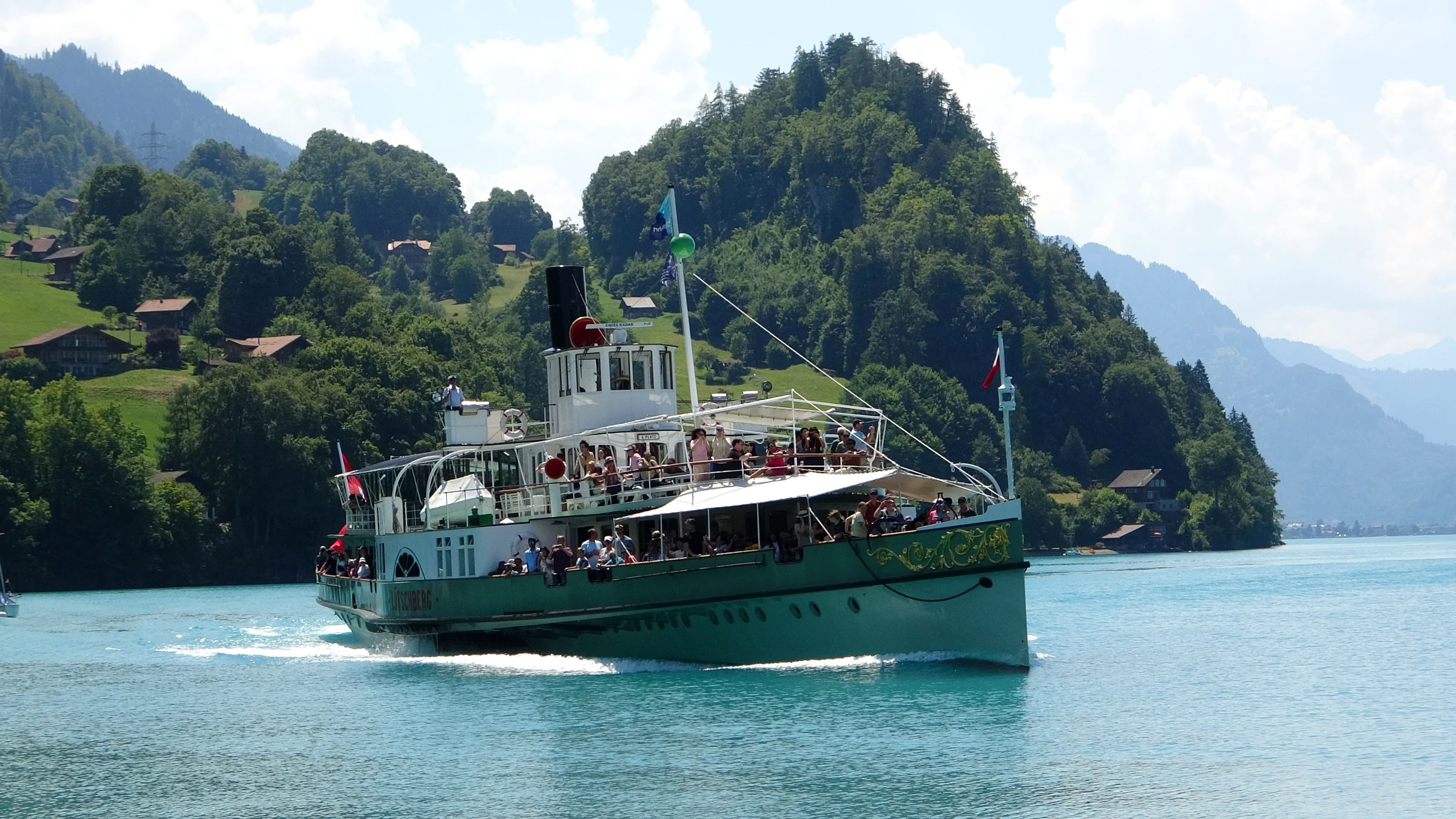
In 2026 the Swiss Travel Pass costs CHF 254 for three days, CHF 399 for six and CHF 439 for eight in second class. It covers trains, buses and boats across the country, but gives only 50 percent off most mountain railways, so the Schilthorn costs CHF 45.70 with it instead of being free. Our guide is the Swiss Travel Pass worth it puts the pass against the Half Fare Card and the regional pass with worked examples.
Planning beyond the Bernese Oberland? Our guide to all Swiss rail passes compares every pass with prices, the scenic trains overview covers the Glacier Express and its siblings, and mountain tickets across Switzerland lists the summits outside this region. For a cold-season trip, see Switzerland in winter by train.
From Zurich Airport to Interlaken
By train the trip takes about 2 hours 20 minutes, usually with a change in Bern; a private transfer or a rental car are the alternatives. We came by car from southern Germany, so we did not do this journey ourselves.
Our guide Zurich Airport to Interlaken compares the three options with travel times, changes, luggage and 2026 prices, based on the official timetable and the operators. If you arrive with heavy bags, read the luggage section below too: the Swiss railways can send your suitcases to your destination station, so you travel the scenic line with a small bag.
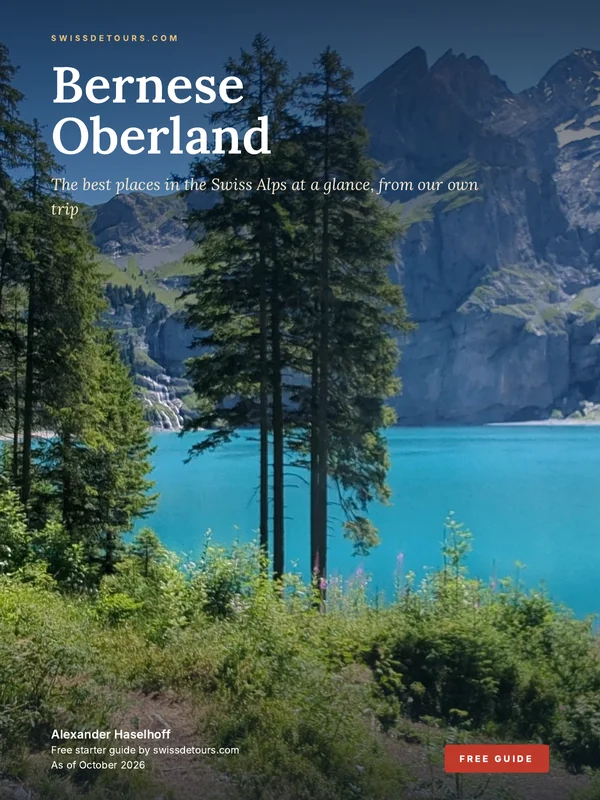 PDF · 18 pages
Free PDF guide
Planning the Bernese Oberland? Don't go without this.
Our free guide, made from our own week there: the 11 places really worth your time, a ready-made 3-day route, and the pass trick that cuts the Schilthorn from CHF 115 to CHF 45.70.
- The 11 best places on one hand-drawn map, all within an hour of Interlaken
- A 3-day route that puts the Schilthorn on your clearest morning
- The ticket mistake that costs many visitors over CHF 100
- When to reach the famous Iseltwald pier before the crowds
- Every link with a QR code: use it on your phone or print it
Your free Bernese Oberland Guide
100% free · PDF straight to your inbox · Unsubscribe in one click
Driving: vignette, parking and mountain roads
You need the motorway vignette, CHF 40 for 2026, and coins or a card for the parking machines at the valley stations, which charge about CHF 5 to 18 per day. On narrow mountain roads, the car driving uphill and the PostBus have priority.
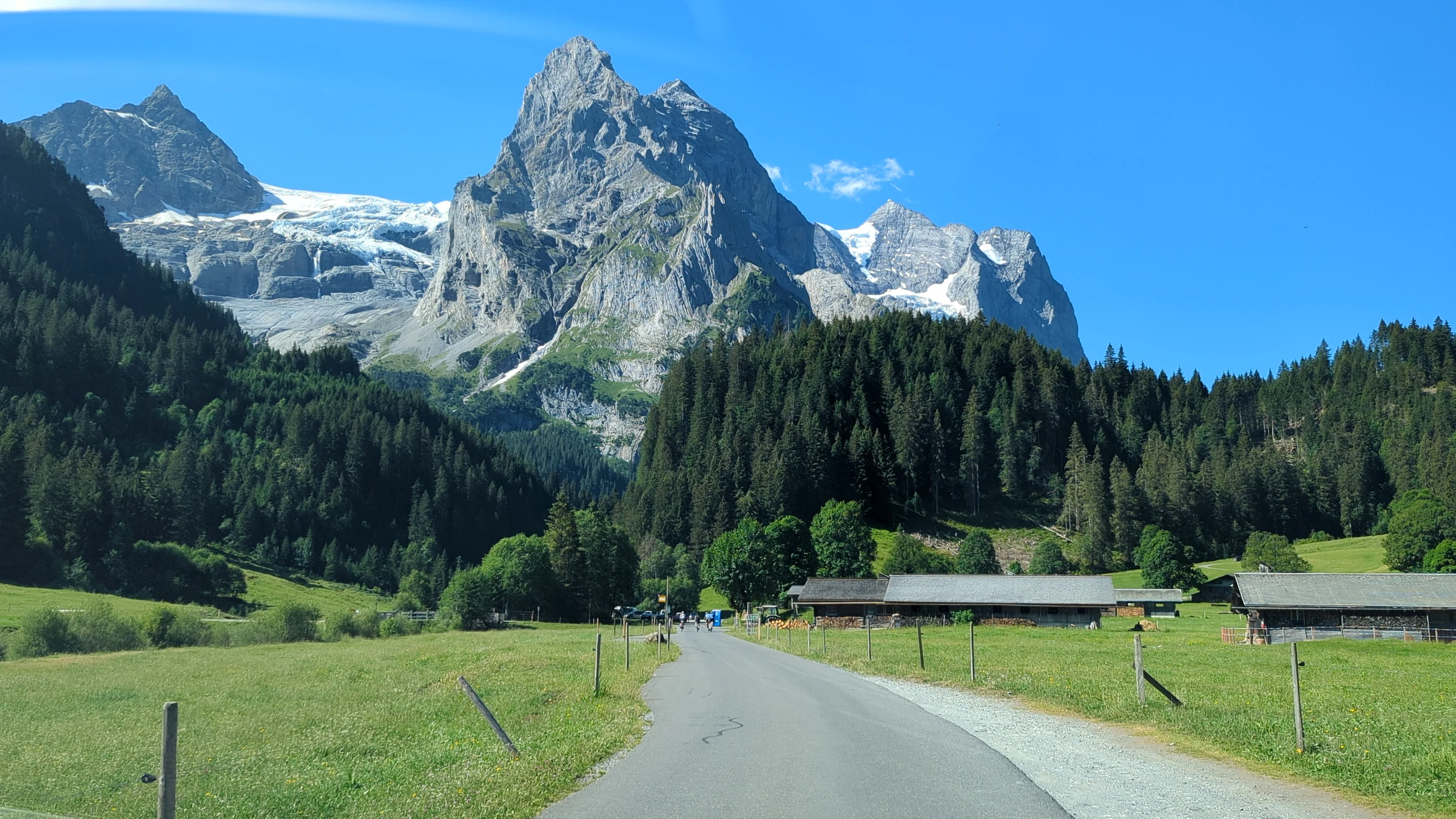
We drove 1,328 km in July 2026, from home to Brienz, six day trips and back. A car makes places like Rosenlaui, Sörenberg and the Kander Valley easy, and with one base you unpack only once. Speed limits are strict and fines start at CHF 20. Every car park we used, with its price, and the rules on mountain roads are in our guide to driving in Switzerland. Our 7-day itinerary shows the drive times from Brienz day by day.
eSIM and mobile internet
Switzerland is not in the EU, so EU roaming rules do not apply, and US plans charge day passes of about US$12. We used an Airalo eSIM with 10 GB, used about 6 GB in the week and had excellent coverage everywhere, even on the Schilthorn summit.
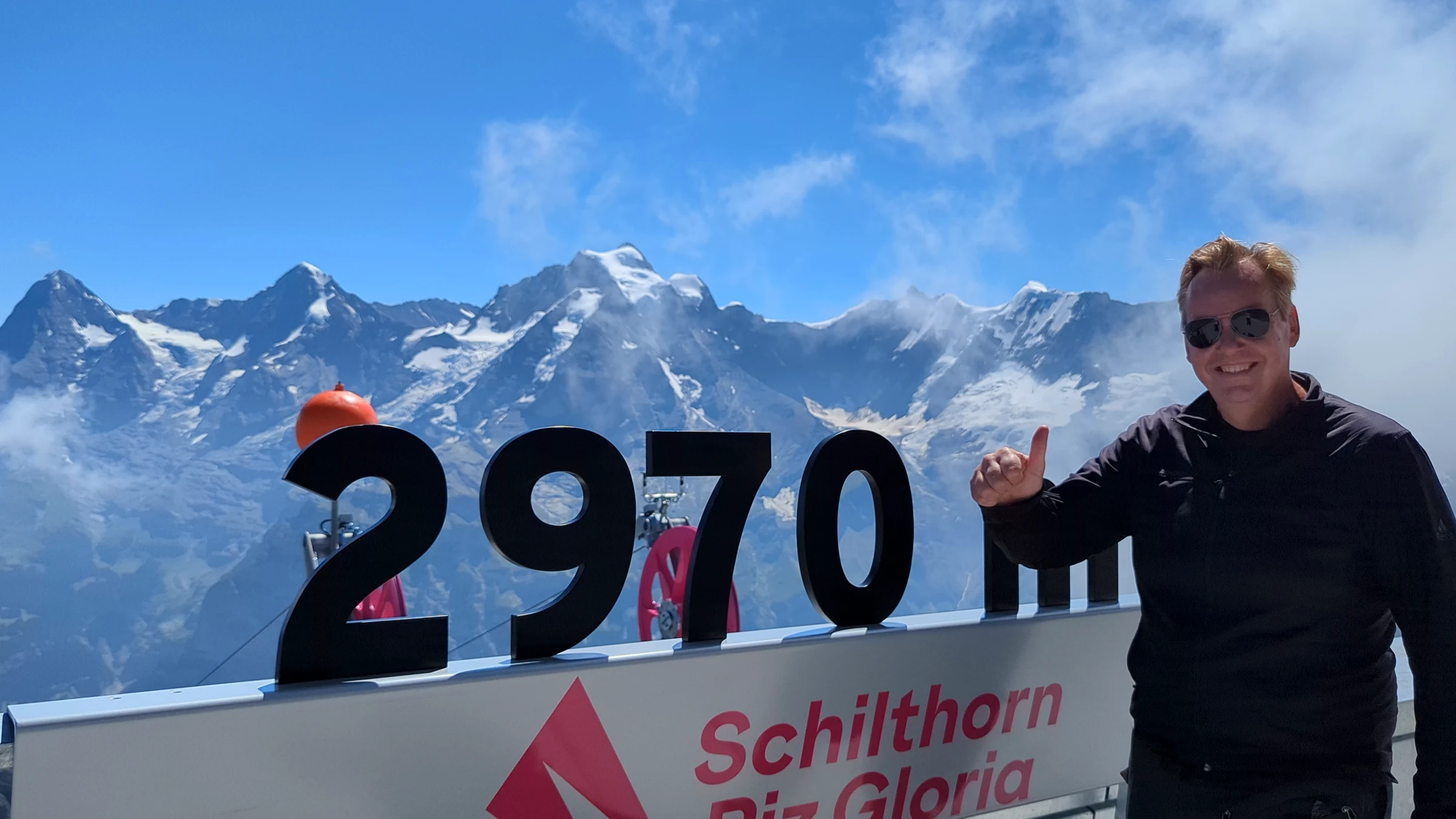
In October 2026 a 10 GB Airalo plan for Switzerland costs from US$21.50. Install it at home before you travel and switch your data to it when you arrive. Our guide to eSIMs and mobile internet in Switzerland compares eSIM, Swiss prepaid SIM and roaming, shows how German, Austrian and US plans treat Switzerland and explains how good coverage is in the mountains.
Switzerland is not in the EU, so many roaming plans get expensive here. We used an eSIM on our trip: installed at home, data from the moment we crossed the border.
Get a Switzerland eSIMLuggage storage and luggage service
Lockers at Interlaken Ost cost CHF 10 per 24 hours and are open around the clock; Interlaken West, Lauterbrunnen and Brienz have lockers too. The SBB luggage service sends bags from station to station for CHF 12 per item.
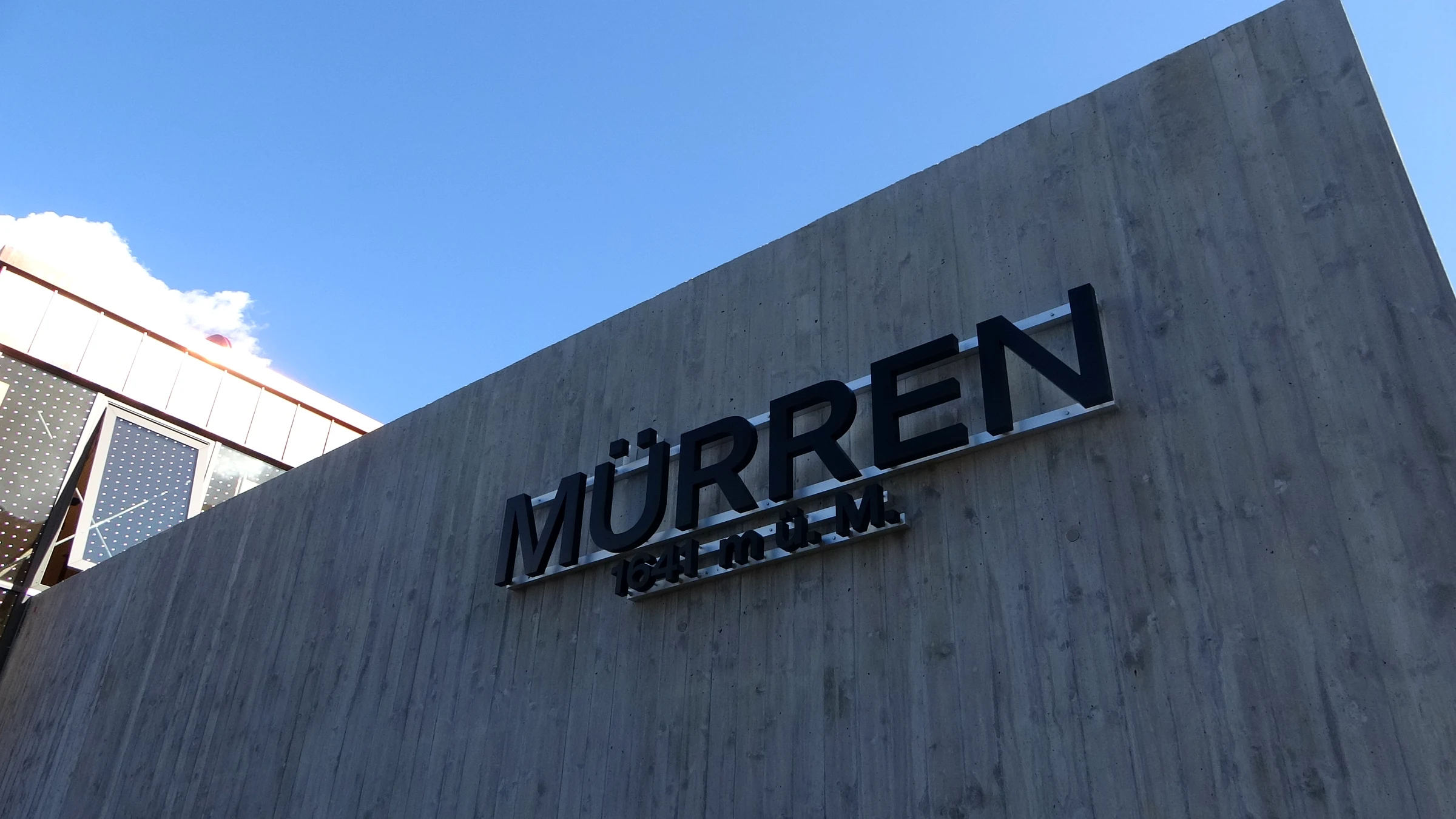
This matters most if you travel by train and change places, or if you stay in car-free Mürren or Wengen. Your bags can also go straight to Zurich Airport for CHF 24 per item. We had our car and one holiday flat, so we never needed storage; our guide to luggage in Switzerland lists every locker with size, price and payment, plus the staffed counters and storage apps in Interlaken.
What a week costs
Our tickets, parking and vignette for two adults and a dog came to CHF 613 (about US$742), plus about CHF 170 for fuel. With a holiday flat and food at typical July prices, a realistic week for two lands between roughly CHF 2,200 and 3,300.
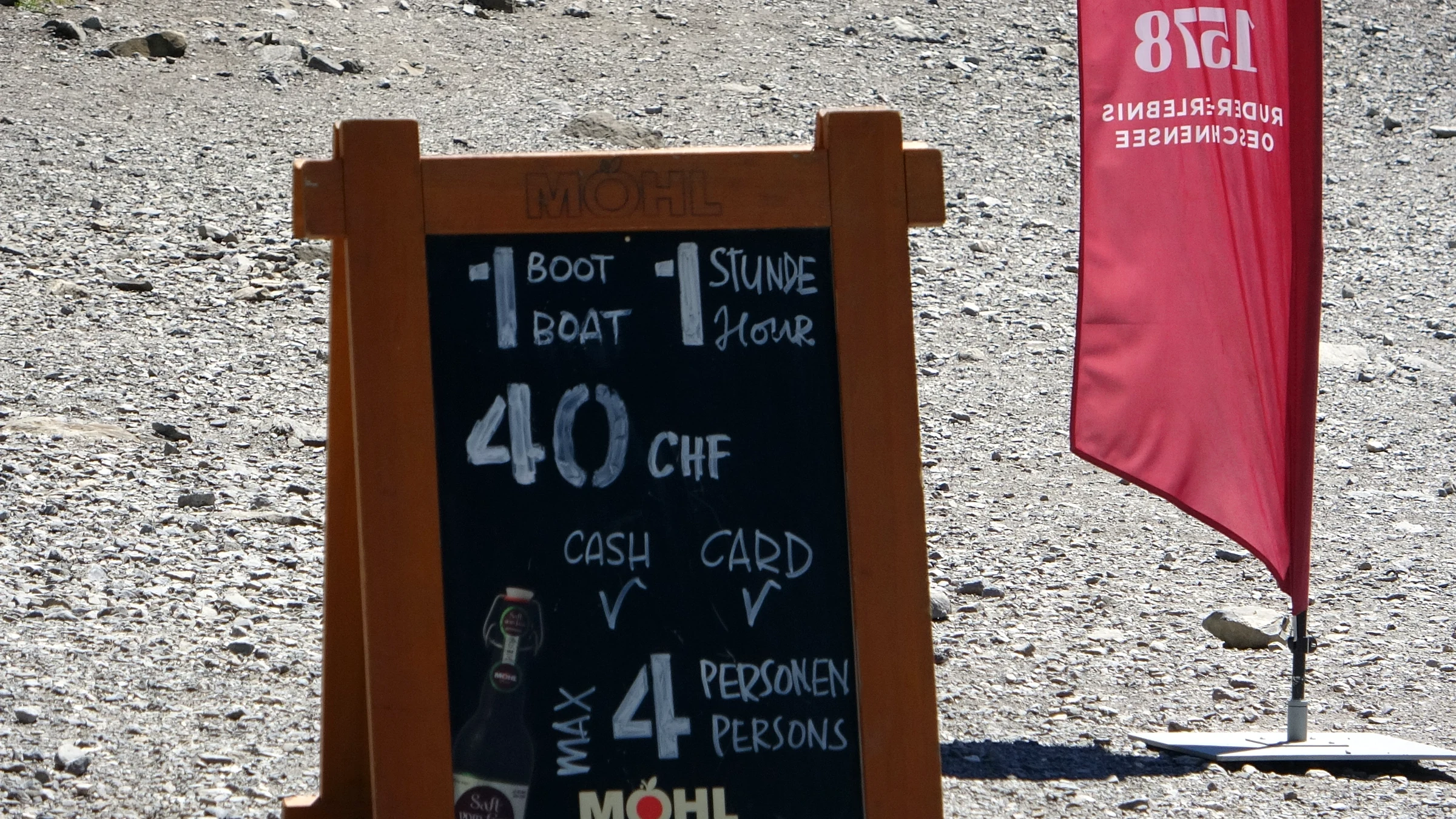
The single biggest ticket of our week was the Schilthorn at CHF 115 per adult; some of the best places, like Staubbach Falls and the beaches on Lake Brienz, are free. Our guide how expensive is Switzerland breaks the week down into tickets, parking, fuel, accommodation and food, and separates our own receipts from researched typical prices.
Cash, cards and Twint
Cards work almost everywhere, but a few Swiss coins still save you trouble at parking machines, toilets and turnstiles. Euros are often not accepted at machines, and they give no change.
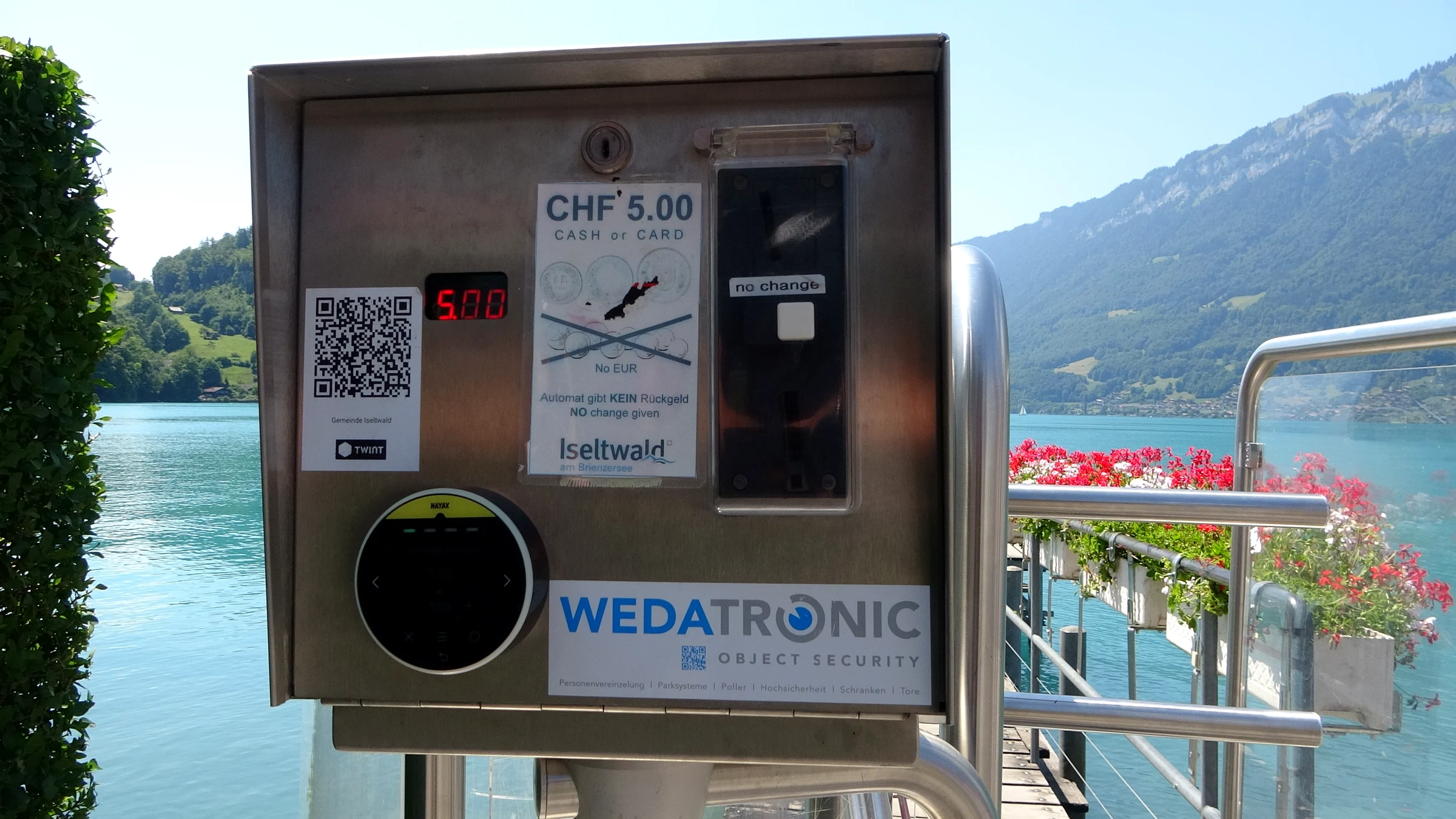
We met this several times. The turnstile at the famous pier in Iseltwald takes Swiss coins, cards or Twint, the Swiss payment app, but no euros. The public toilet on the Dorfplatz there costs CHF 1 at a turnstile. The parking machine in Sörenberg took only Swiss coins. And in the other direction, the lockers at Brienz station take only cards. Bring a card that works abroad without fees and a handful of one, two and five franc coins. More about the village and the pier is in our Iseltwald guide.
Weather and crowds in July
July is the warmest and sunniest month, with an average high of 24.3 °C (76 °F) in Interlaken, but together with August also the wettest, mostly in short showers and thunderstorms. The famous places get busy from about 10:00.
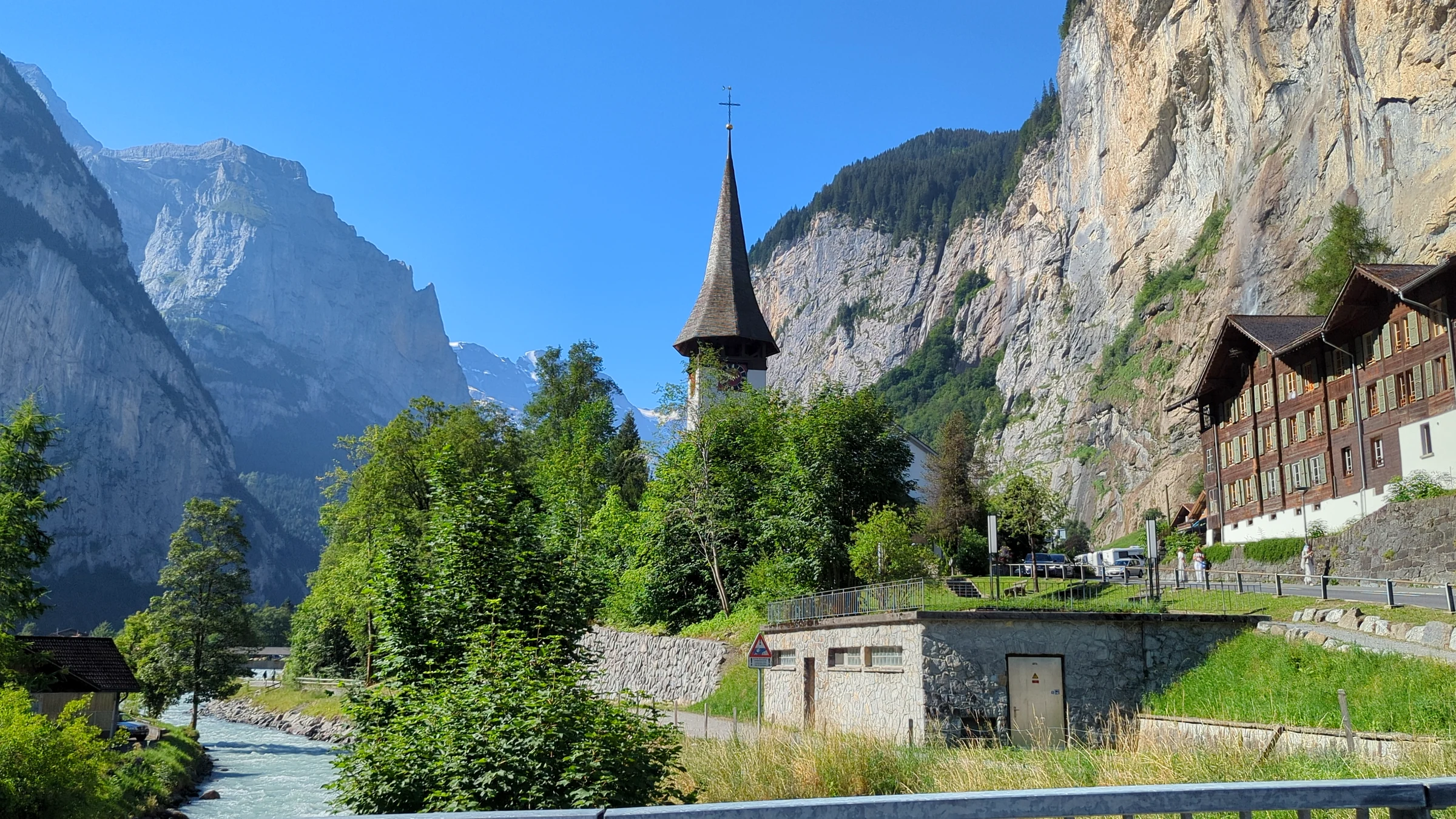
Our week was hot and completely dry, with clear mornings and clouds building around midday, which is why we went up the summits early. Our guide to the Bernese Oberland in July combines the official MeteoSwiss climate normals with what we saw hour by hour, explains the midday cloud rule and lists what to pack.
Travelling with a dog
The Bernese Oberland is very dog-friendly: dogs ride most cable cars, trains and boats, often for free or a few francs, and can swim in almost every lake. The big exception is the Trümmelbach Falls, where dogs are not allowed.
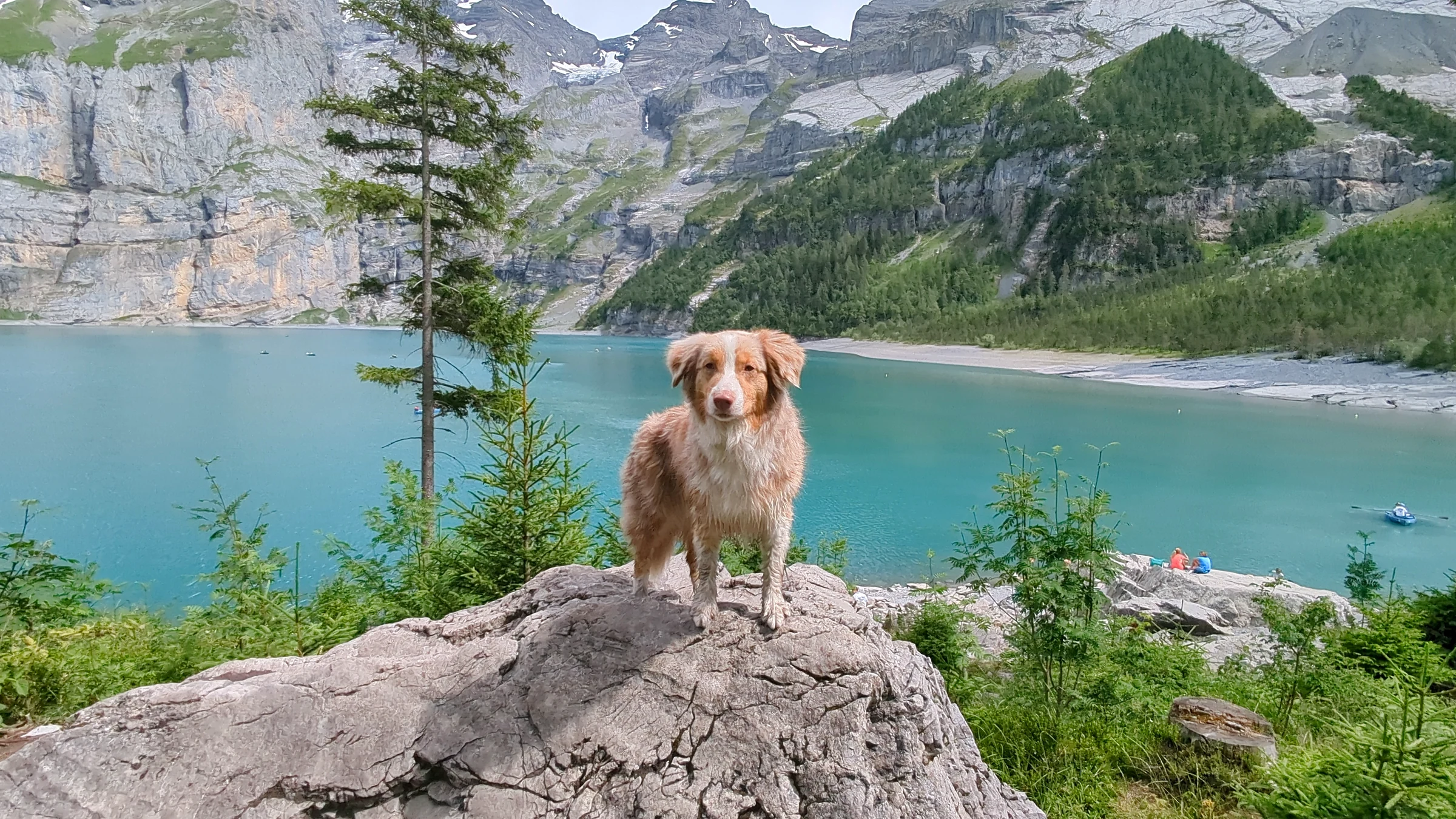
Miley came with us everywhere except into the Trümmelbach Falls: on the Schilthorn, into the Aare Gorge and into Lake Brienz. Our guide to the Bernese Oberland with a dog lists what every cable car charges for a dog, which gorges allow dogs, the rules on trails and pastures and the entry rules at the border.
Our checklist before the trip
If you only have five minutes, go through this list. Each point links to the guide with the details.
- Tickets: decide between single tickets, the regional pass and the Swiss Travel Pass; book the Oeschinensee time slot ahead.
- Car: buy the e-vignette before the border and keep coins for parking.
- Phone: check whether your plan includes Switzerland, otherwise install an eSIM at home.
- Arrival: plan the trip from the airport with the airport guide and send heavy bags ahead with the SBB luggage service.
- Weather: check the webcams before every summit day and go up early.
- Dog: pet passport, leash and water; leave the dog outside at the Trümmelbach Falls.
Where to sleep is the last big decision: our guide on where to stay in the Bernese Oberland compares Brienz, Interlaken and Lauterbrunnen.
FAQ: planning a trip to the Bernese Oberland
Do I need the Bernese Oberland Pass?
Only if you travel by train, bus and boat on most days. On our week by car, single tickets were CHF 174 cheaper; on the same route without a car, the six-day pass would have saved CHF 140 per adult.
Does my phone work in Switzerland?
Yes, but roaming may cost extra, because Switzerland is not in the EU. Check your plan or use an eSIM. We used about 6 GB in a week and had excellent coverage everywhere, including the Schilthorn summit.
Do I need cash in Switzerland?
Not much, but carry a few Swiss coins. Some parking machines, toilets and turnstiles take only francs or cards, not euros.
How do I get from Zurich Airport to Interlaken?
By train in about 2 hours 20 minutes with a change in Bern, by private transfer or by rental car. Our airport guide compares all three.
Where can I leave my luggage in Interlaken?
In the lockers at Interlaken Ost, CHF 10 per 24 hours and open around the clock, or at Interlaken West from CHF 5. The SBB luggage service also sends bags ahead for CHF 12 per item.
For the full picture of the region, from the Lauterbrunnen Valley to Lake Brienz, start with our Bernese Oberland guide and the 7-day itinerary we drove ourselves. More Swiss trips are on the Swiss Detours home page.
Your free Bernese Oberland Guide
Join the Swiss Detours newsletter and get our Bernese Oberland Guide as a free PDF. After that, we send you new travel tips for Switzerland from time to time. Unsubscribe anytime with one click.